
Servicing a thriving freshwater tank, demonstrating professional aquarium cleaning and maintenance in Brisbane
If you keep an aquarium long enough, cloudy water will happen at least once. One day, the tank looks fine. Next, the water has a milky haze, a green tint, or floating particles that seem to appear overnight. For many aquarium owners, cloudy water immediately triggers panic. Is something wrong with the fish? Has the tank crashed? Do you need to do a massive water change? This guide explains why cloudy aquarium water happens
In most cases, cloudy aquarium water is not an emergency. It is a sign that something in the system has shifted, often quietly and gradually, before becoming visible. The key is understanding what type of cloudiness you are dealing with, what caused it, and how to correct it without making the situation worse.
This guide explains why aquarium water becomes cloudy, how to tell the difference between harmless and harmful causes, and what steps actually work to restore clarity. It is based on real-world aquarium maintenance experience across Brisbane, the Gold Coast, and the Redlands, not guesswork or quick fixes.
Why Aquarium Water Turns Cloudy
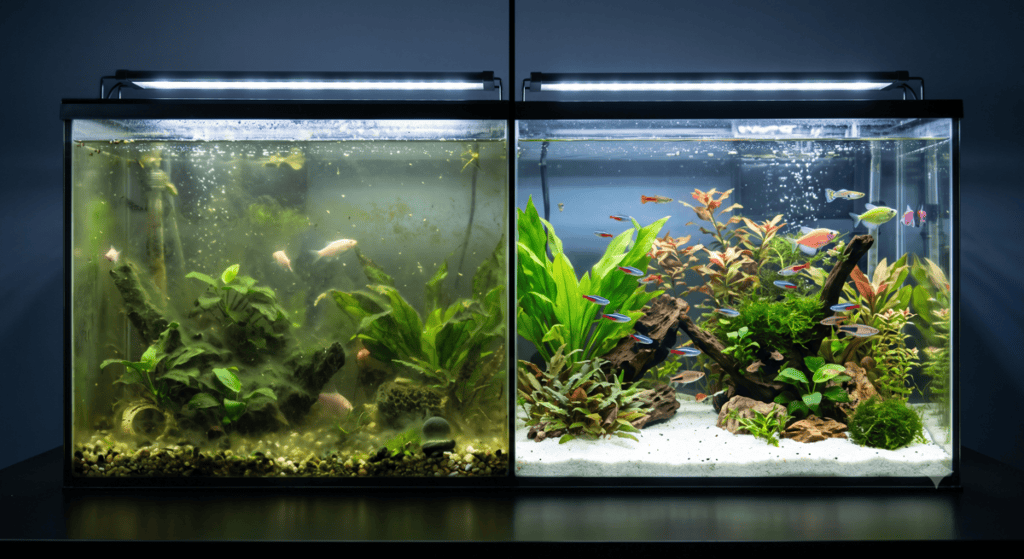
Cloudy aquarium water is almost always the result of an imbalance, not dirt floating in the tank. The cloudiness you see is usually made up of microscopic bacteria, algae, or fine debris that has been stirred up or allowed to build over time.
There are three common types of cloudiness:
- White or milky water, often caused by bacterial blooms
- Green water, caused by suspended algae
- Brown or dusty water, usually fine substrate particles or debris
Each type has a different cause and solution. Treating all cloudy water the same way is one of the fastest ways to make the problem worse. Most cases of cloudy water come back to how your aquarium filtration systems are set up and maintained.
Fish Fact: Clear water does not always mean healthy water. Ammonia, nitrite, and bacterial blooms are invisible until they reach a point where the system can no longer hide them.
Cloudy Water in a New Aquarium
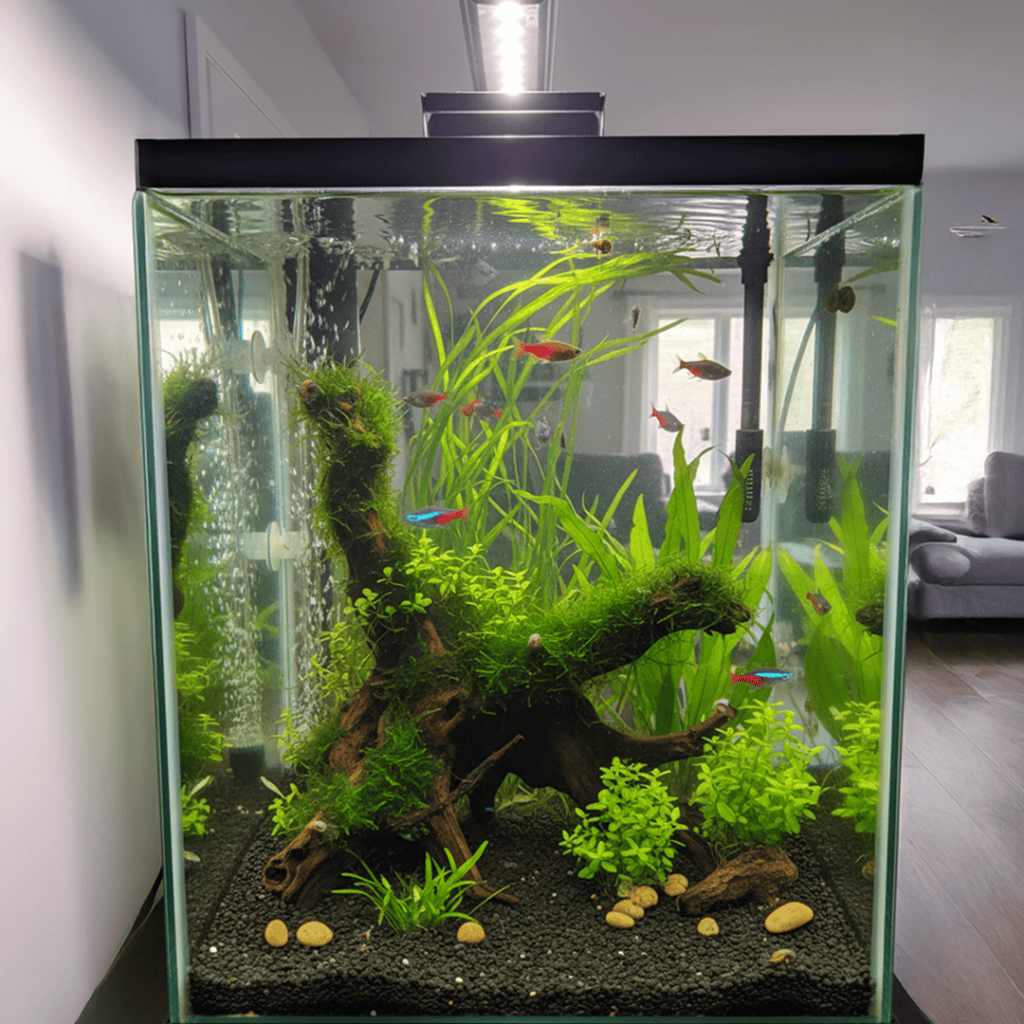
New aquariums are especially prone to cloudy water. In many cases, this is completely normal and part of the tank establishing itself.
When a tank is newly set up, beneficial bacteria have not yet fully colonised the filter, substrate, and surfaces. As fish waste and food begin producing ammonia, bacteria populations grow rapidly to meet demand. This rapid growth often appears as a white or milky haze known as a bacterial bloom.
New gravel or sand can also contribute. Fine dust particles may not have been fully rinsed and can stay suspended for days, especially in tanks with strong flow.
The biggest mistake people make at this stage is overreacting. Large water changes, aggressive cleaning, or filter replacements often reset the cycle and prolong cloudiness.
Pro Tip:
In a new aquarium, patience is often more effective than cleaning. Let beneficial bacteria establish before making major changes unless ammonia levels are dangerously high
Cloudy Water in an Established Aquarium
Cloudy water in an established tank usually means something has changed. The tank may have been stable for months or years, then suddenly develops haze. This is where most aquarium owners get frustrated, because the tank was “fine yesterday”. In established aquariums, cloudy aquarium water is almost always a symptom of imbalance rather than a standalone issue.
Common triggers include overfeeding, overcleaning, filter disruption, sudden stocking changes, or changes in routine.
Overfeeding is one of the most frequent causes. Uneaten food breaks down into waste, increasing ammonia and feeding bacterial growth. Overcleaning, especially rinsing filter media under tap water, removes beneficial bacteria and destabilises the system. Even rearranging decorations or vacuuming too aggressively can release trapped debris into the water column.
If you have recently cleaned the filter, added fish, changed food, or altered feeding habits, those changes are often the answer.
Fish Fact:
Beneficial bacteria live on surfaces, not in the water itself. When those surfaces are stripped clean, the tank must rebuild biological balance from scratch.
Cloudy Aquarium Water After a Water Change
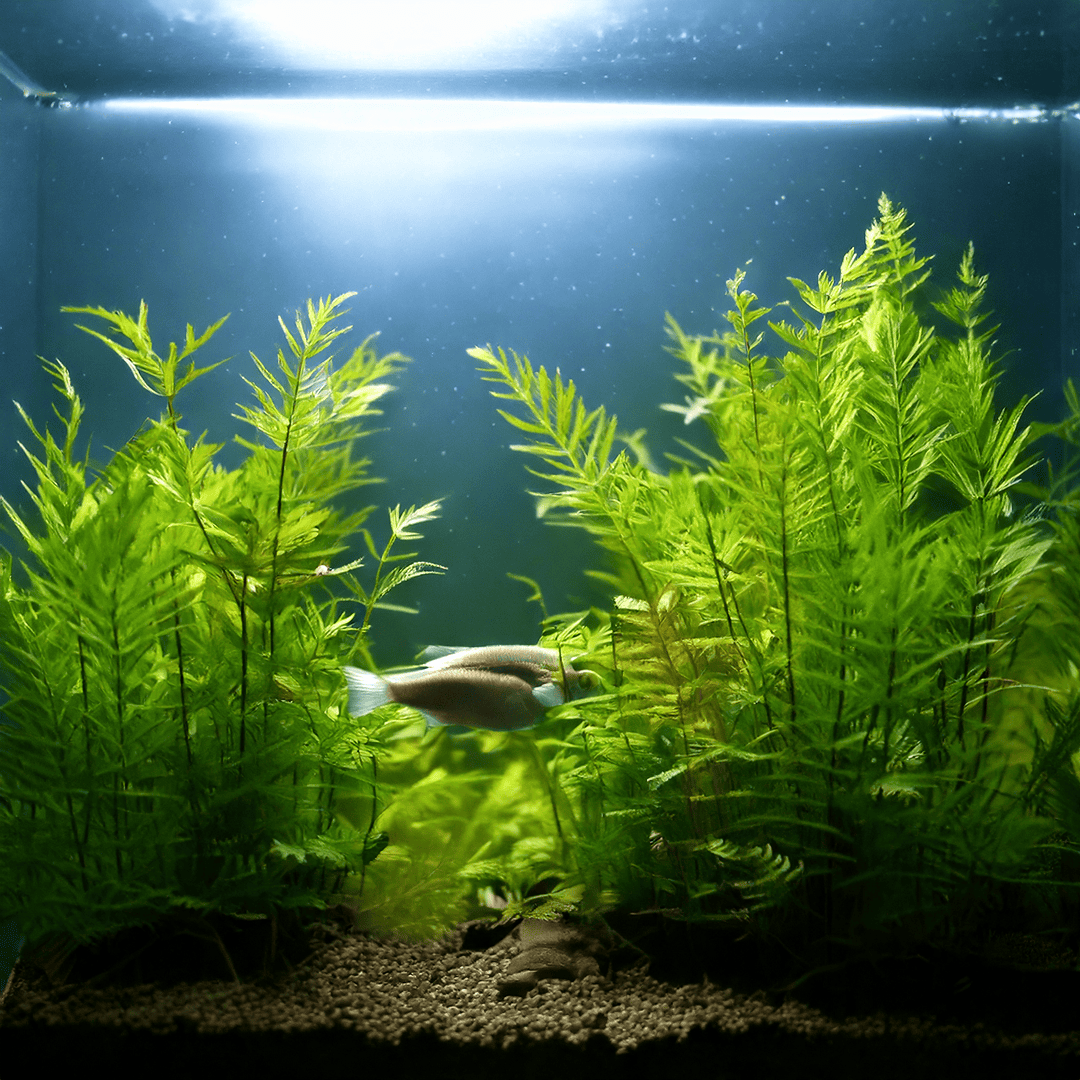
Many people notice cloudiness appear shortly after a water change. This is usually caused by a combination of temperature differences, untreated tap water, or disturbed substrate.
Even in Queensland, tap water temperature can vary significantly from tank water, especially in winter or during hot summer days. Sudden temperature changes stress fish and bacteria alike. Chlorine or chloramine in tap water can further disrupt bacterial populations if not neutralised properly.
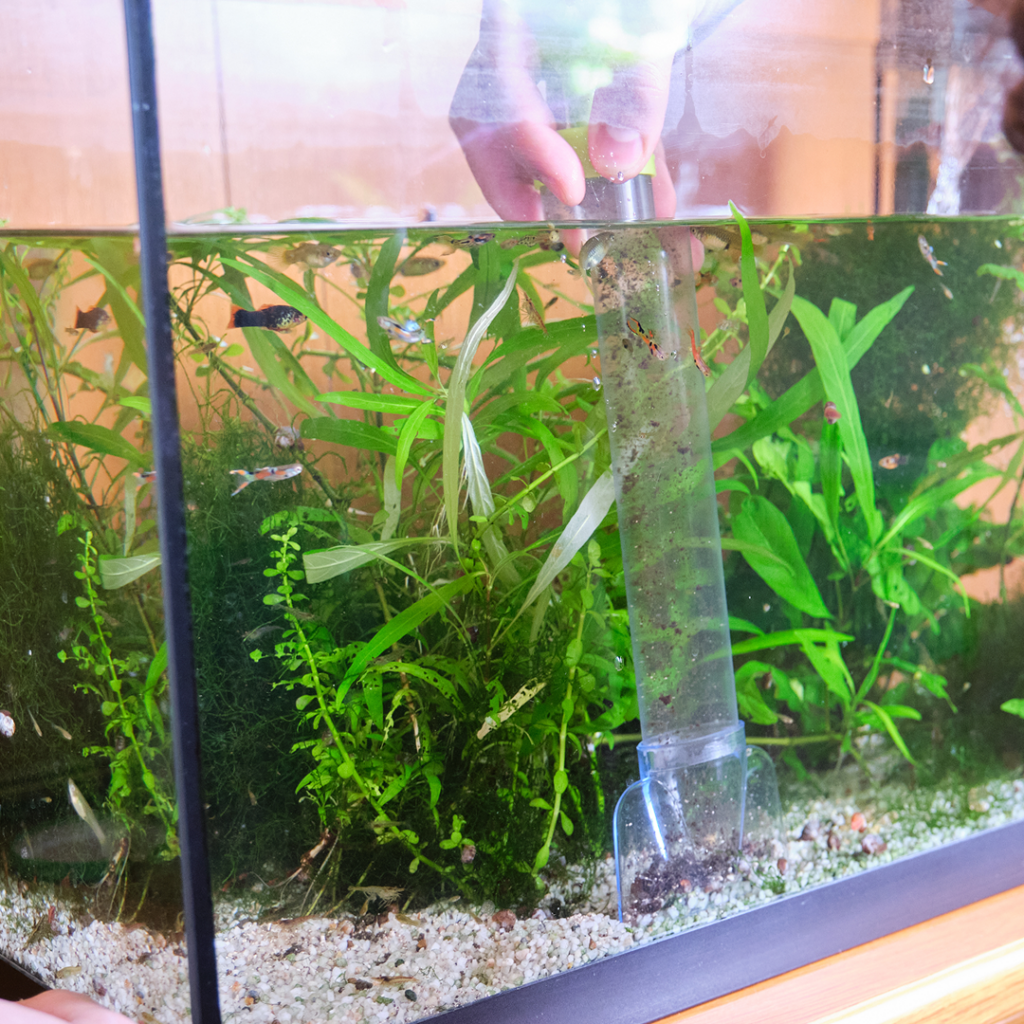
Stirring gravel too deeply can also release fine debris and organic waste that was previously settled.
Consistency matters more than volume. Smaller, regular water changes are far safer than large, irregular ones.
Pro Tip:
Matching temperature and using a quality dechlorinator prevents most post-cleaning cloudiness before it starts.
Green and Cloudy Aquarium Water (Algae Blooms)
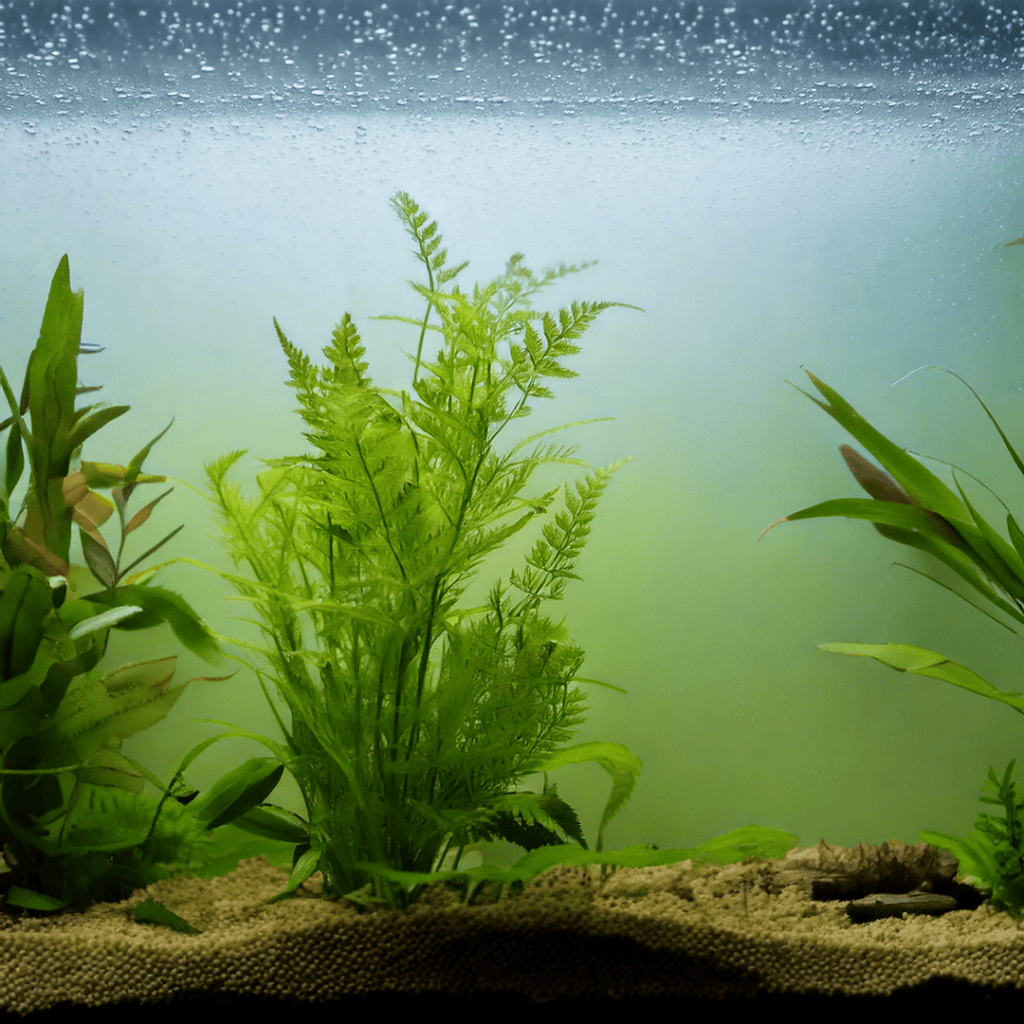
Green, cloudy water is caused by suspended algae, not dirt. Algae blooms thrive on light and nutrients, and they often appear when lighting duration is too long or feeding and water changes are inconsistent.
This type of cloudiness is more common in tanks exposed to direct sunlight or tanks with long lighting periods. It is also more frequent during warmer months when biological processes speed up.
Scrubbing glass or doing large water changes rarely fixes green water long-term. The underlying imbalance in light and nutrients must be addressed.
Fish Fact:
Algae grows faster than most aquarium plants. When conditions favour algae, it will always win unless light and nutrients are controlled.
Bacterial Bloom or Debris: How to Tell the Difference
Not all cloudy water is the same, and knowing what you are dealing with helps determine the correct response.
A bacterial bloom usually appears as a uniform white haze. The water looks cloudy but particles are not visibly floating. Debris cloudiness looks dusty, with particles settling over time. Algae blooms create a green tint that does not settle.
Smell can also be a clue. A sour or earthy smell often accompanies bacterial or organic issues. Filters clogging quickly can also indicate excessive suspended matter.
Correct identification prevents unnecessary treatments that may prolong the issue.

How Long Should Cloudy Aquarium Water Last?
How long cloudiness lasts depends on the cause and how it is handled.
- New tank bacterial blooms often clear within one to two weeks
- Bacterial blooms in established tanks usually resolve within a few days once feeding and cleaning are adjusted
- Debris cloudiness often settles within 24 to 48 hours
- Algae blooms can persist indefinitely without changes to lighting and nutrients
Trying to force clarity too quickly often resets the clock rather than solving the problem.
Pro Tip:
If cloudiness is improving slowly, that is usually a sign the system is correcting itself.

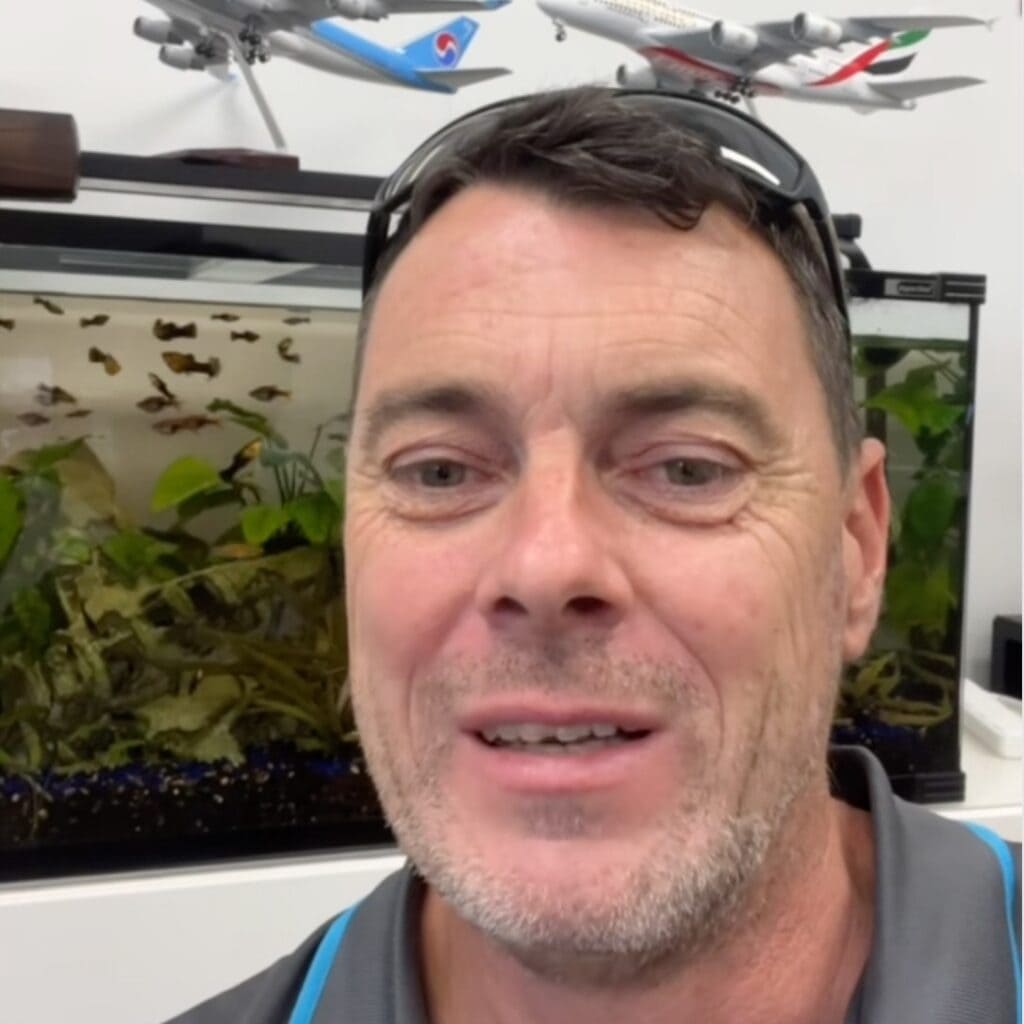
A 4-foot Aqua One Horizon aquarium sits on a custom white cabinet in an office setting. The tank is planted with live greenery and contains numerous small fish swimming throughout. A container of Tetra Tropical fish food is placed to the left of the aquarium, while model airplanes are displayed on the wall above.
Will Cloudy Aquarium Water Harm Fish?
Cloudy water itself is not always harmful. The danger lies in what caused it. Elevated ammonia or nitrite levels can stress fish quickly, even if cloudiness appears mild.
Watch fish behaviour closely. Rapid breathing, clamped fins, hiding, or loss of appetite are warning signs that water quality may be unsafe.
Fish Fact:
Fish often show stress days before water quality issues become visible to the human eye.
Testing water parameters when cloudiness appears is a smart precaution, especially in established tanks.
How to Clear Cloudy Aquarium Water Safely
The safest way to clear cloudy water is to correct the cause rather than chase clarity.
Start by reducing feeding. Feed smaller portions and remove uneaten food. Avoid replacing or aggressively cleaning filter media. Perform gentle, partial water changes with temperature-matched, treated water. Ensure filter flow is adequate and unobstructed.
Always use high-quality appropriate food such as Tetra XL colour granules
Avoid chemical clarifiers unless absolutely necessary. Many provide short-term clarity without fixing underlying problems.
When to Call a Professional Aquarium Cleaning Service
If cloudy water keeps returning despite consistent care, it may indicate deeper issues such as overstocking, poor flow design, or long-term nutrient buildup. Time-poor aquarium owners may also struggle to maintain consistency.
Professional aquarium maintenance focuses on stability, not cosmetic cleaning. Identifying patterns and correcting routines often permanently resolve recurring cloudiness.
About Australian Aquarium Cleaning (AAC)
At Australian Aquarium Cleaning, we work with aquariums every day. Across Brisbane, the Gold Coast, and the Redlands, we see firsthand how small changes in feeding, cleaning, or lighting can quietly tip a system out of balance. Our team genuinely cares about fish health and helping clients enjoy their aquariums without the ongoing stress of recurring issues.
We provide expert aquarium maintenance and fish tank cleaning for homes, offices, and commercial spaces across Brisbane, the Gold Coast, and the Redlands. Our approach focuses on long-term stability, not quick fixes.
If you are ready for an aquarium that stays clean without constant effort, visit our Services page or contact us for a free quote. We would love to help you and your fish thrive.

Frequently Asked Questions
How long does cloudy aquarium water usually last?
It depends on the cause. In new aquariums, bacterial blooms often clear within one to two weeks as the nitrogen cycle stabilises. In established tanks, mild cloudiness may resolve within a few days once feeding and maintenance are adjusted.
Should I change water if my aquarium is cloudy?
Small, consistent water changes can help restore balance. However, large or aggressive water changes may worsen the issue by disrupting beneficial bacteria. Focus on gradual correction rather than drastic action.
Can cloudy water kill fish?
Cloudiness itself is not usually dangerous. The real risk comes from elevated ammonia or nitrite levels that may be causing the cloudiness. Testing water parameters is the safest way to determine whether fish are at risk.
Is cloudy water normal after cleaning?
Yes, mild cloudiness can occur after cleaning if debris is disturbed or filter bacteria are disrupted. This should clear within 24 to 48 hours if the tank is otherwise stable.
Does a planted aquarium prevent cloudy water?
Live plants help absorb excess nutrients and improve stability, but they do not eliminate the need for proper aquarium maintenance. Consistent feeding, filtration, and water changes are still essential.
Why is my fish tank cloudy but my filter is working?
A functioning filter does not guarantee clear water. Cloudiness may be caused by bacterial blooms, overfeeding, disturbed substrate, or excess nutrients. Filters remove debris, but they rely on stable bacteria colonies to maintain water clarity.
What causes green aquarium water?
Green aquarium water is caused by suspended algae. It is usually triggered by excess light, nutrient buildup from overfeeding, or inconsistent maintenance. Reducing light duration and improving water change routines typically resolves the issue.
How do I fix a bacterial bloom in my aquarium?
The best approach is patience and stability. Reduce feeding, avoid replacing filter media, perform gentle partial water changes, and allow beneficial bacteria to rebalance naturally. Most bacterial blooms resolve within several days once the system stabilises.