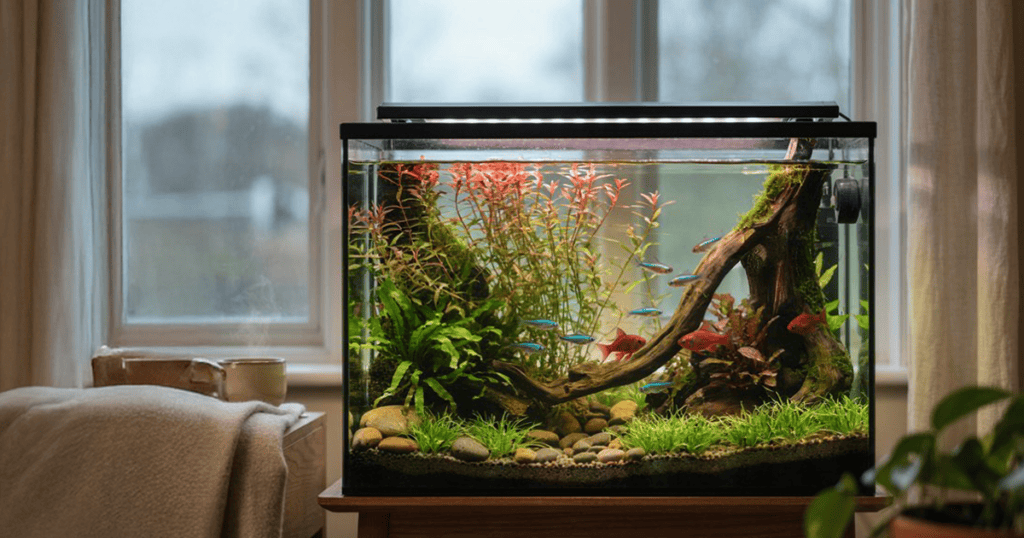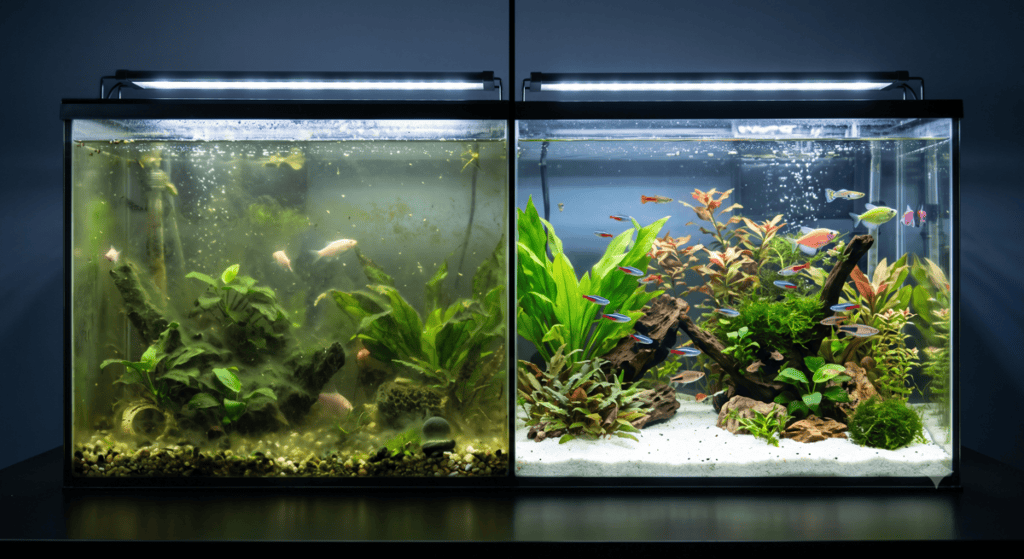

As a proud aquarium owner and lover of freshwater fish, you will know that an aquarium can look perfectly fine right up until the moment it isn’t. One week, the water is clear, the fish are eating well, and everything appears stable. Next, you are dealing with cloudy water, stringy algae, or fish that look stressed and behave differently. In this blog, we focus on the Top 5 Aquarium Cleaning Mistakes and how to avoid them.
In many cases, this is caused by one or two aquarium cleaning mistakes that quietly push the ecosystem out of balance. The tank may still look clean on the surface because the problem begins chemically and biologically long before it becomes visible. Poor aquarium maintenance, inconsistent fish tank care, or missed water changes often allow small issues to build into ongoing problems that are difficult to reverse.
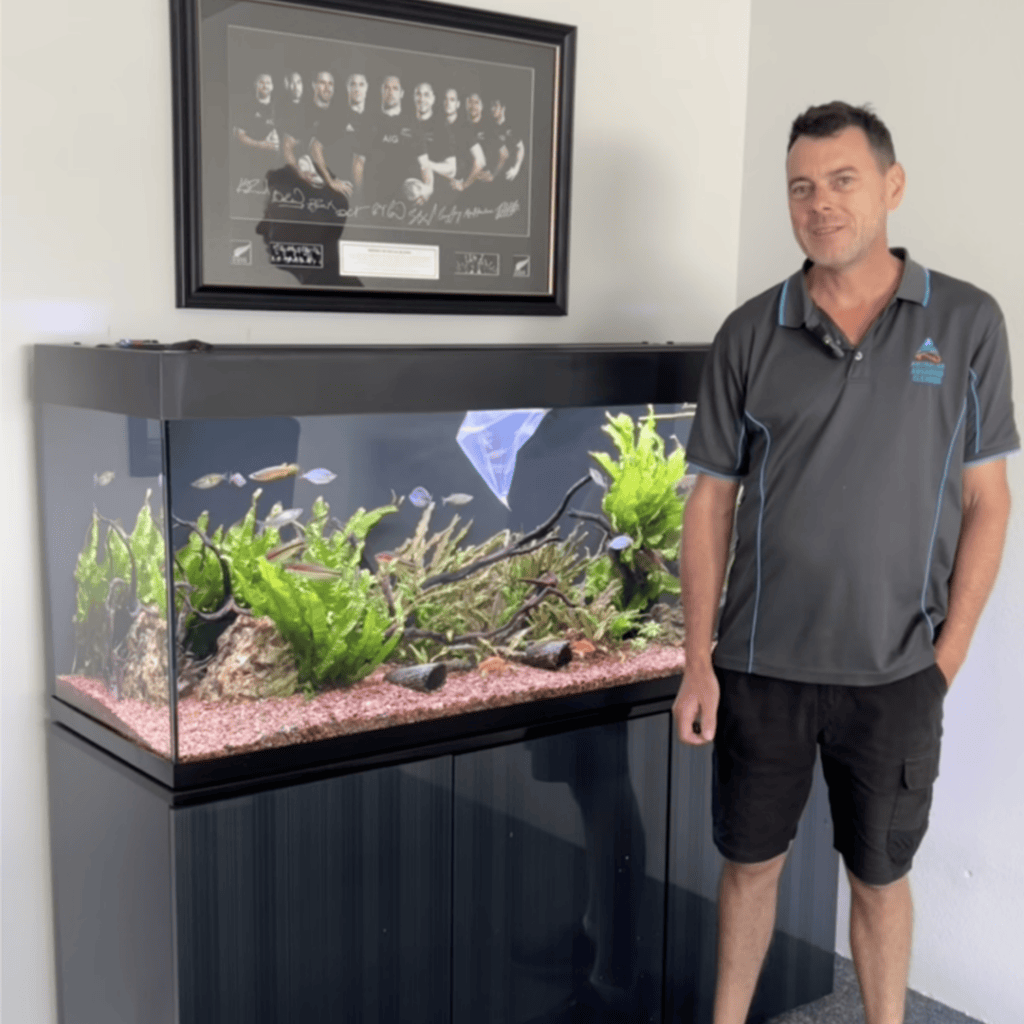
If keeping up with regular cleaning and maintenance becomes overwhelming, Australian Aquarium Cleaning is always here to help. Our professional aquarium cleaning service in Brisbane provides reliable fish tank cleaning and ongoing maintenance plans, so you can enjoy a healthy, clear aquarium without the stress of constant upkeep. Having the right tank setup is so important thats why we recommend Aqua One tanks such as the Brilliance, a favourite of Brenden’s, seen on our recent reel
The guide below is written for freshwater and planted tanks, based on the patterns our team sees every week, maintaining aquariums across Brisbane, the Gold Coast, and the Redlands. Think of it as a practical introduction to aquarium maintenance that keeps your water stable rather than simply clear. These are the five mistakes most likely to hurt your fish, along with what you can do to prevent them.
Clean Is Not the Same as Stable
A healthy aquarium is a miniature ecosystem. Your filter is not just a dirt trap; it is home to billions of beneficial bacteria that keep the water safe. The glass, substrate, driftwood, and plants all host colonies of these microbes. Together, they run the nitrogen cycle, quietly converting harmful waste into compounds your fish can tolerate.
Every fish produces ammonia, and uneaten food or decaying plant material adds even more. In a balanced system, bacteria convert ammonia to nitrite and nitrite to nitrate. Nitrate is far less toxic, but it still accumulates over time. It is removed mainly through regular water changes, healthy plant growth, and sensible feeding.
When that invisible balance breaks down, your fish will show it first. You might notice clamped fins, dull colours, or unusual behaviour long before the water turns cloudy. These are early warning signs that proper aquarium maintenance is slipping and the ecosystem is under stress.
If left unaddressed, these small imbalances often lead to algae outbreaks, unstable water chemistry, and repeated cleaning issues. This is where professional fish tank maintenance services can help restore stability before problems become severe.
Fish Fact: Clear water does not mean clean water. Ammonia and nitrite are completely invisible, which is why water quality issues often show up in fish behaviour before the tank ever looks dirty.
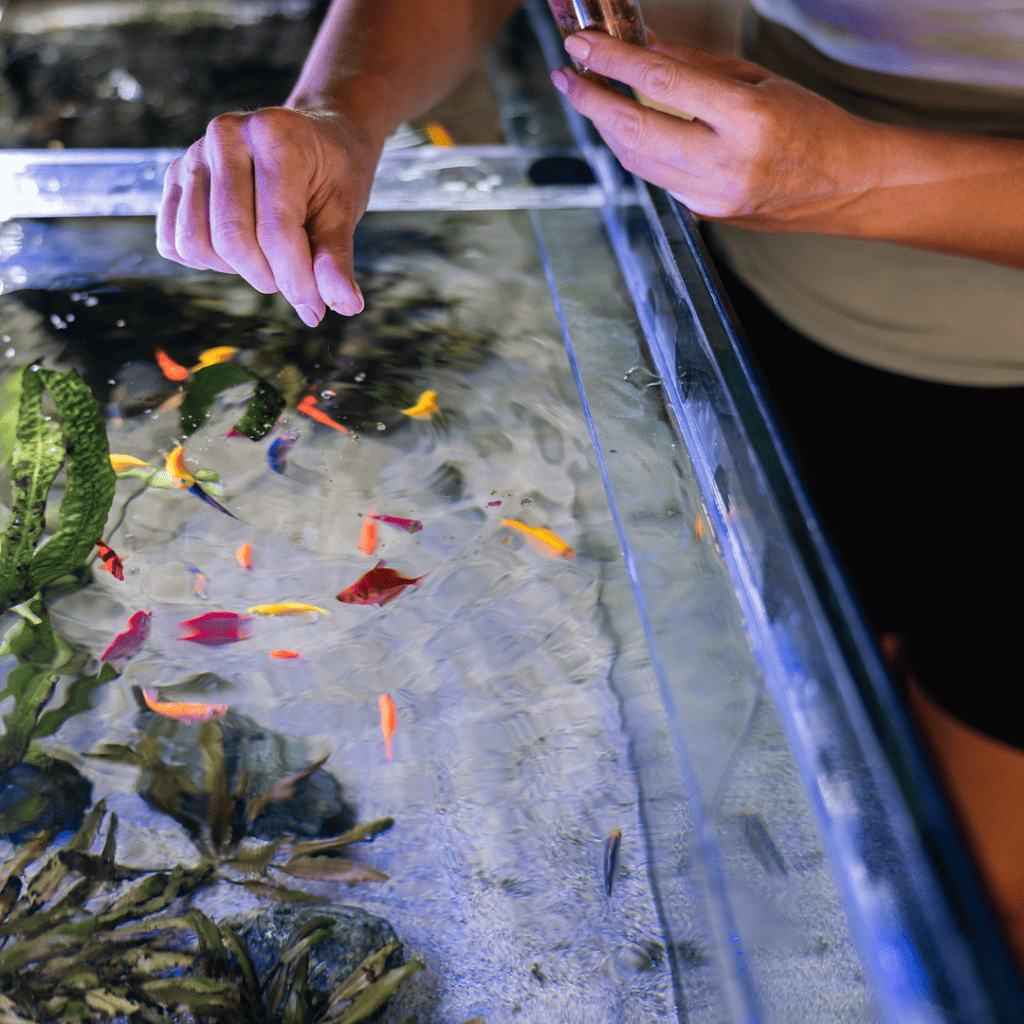
1. Overfeeding: Hidden Pollution in Disguise
Nothing disrupts stability faster than too much food. Many aquarium owners overfeed because it feels caring. Fish rush to the surface, and it is easy to assume they are hungry. In reality, most aquarium fish are opportunistic feeders that eat whenever food appears, simply because in the wild, they may not find it again for some time.
Uneaten food does not just vanish. It drifts into plants and gravel, breaks down, and releases ammonia. The filter struggles to process the excess waste, algae grows more quickly, and the tank can begin to smell even if the water still looks clear. These problems are often worse during warm weather aquarium problems when higher temperatures speed up waste breakdown.
The solution is simple. Feed only what your fish can eat within one to two minutes. If food regularly reaches the bottom, you are feeding too much. For bottom dwellers, use sinking pellets rather than increasing food for the entire tank. Many owners also find that automatic fish feeders help maintain consistent portions, especially when routines change or during holidays.
Overfeeding is the first issue we check when a customer in Brisbane calls about cloudy water. In most cases, feeding less solves the problem faster than any additive or water treatment. When problems persist, a professional fish tank cleaning service in Brisbane can help reset feeding habits and restore water stability.
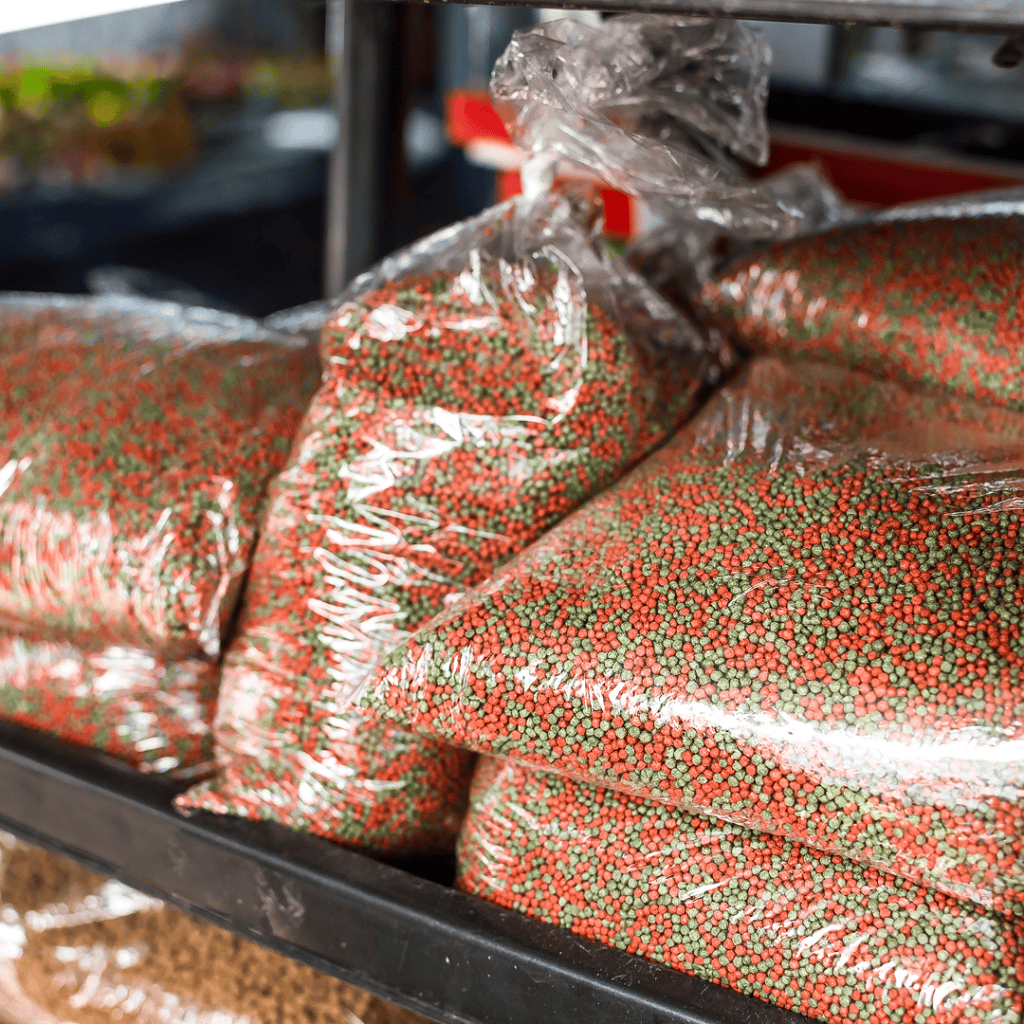
Low-quality, nutrient-poor, or inappropriate fish food is trouble for fish health. ALWAYS use high-quality food and the right amounts
Low-Quality Fish Food and Poor Nutrition
Not all fish food is created equal, and poor nutrition is a common contributor to water quality problems. Low-quality foods often contain excessive fillers that fish struggle to digest. What is not absorbed passes straight into the water as waste, increasing ammonia levels and feeding algae growth.
Quality fish food, when chosen correctly for the species you keep, supports digestion, colour, and overall health. Foods from reputable brands are designed to break down slowly, reducing cloudiness and excess debris in the tank. However, even good food can become a problem if it is overused or not suited to the fish being fed.
Granulated and pellet foods formulated for tropical freshwater fish are generally easier to portion accurately and produce less waste than dusty flakes. Matching food size and formulation to the fish species in your aquarium is just as important as choosing a reputable brand.
If you notice cloudy water, rapid waste buildup, or algae appearing soon after feeding, the issue is often food quality or feeding habits rather than a lack of cleaning. Improving nutrition is one of the fastest ways to stabilise water quality and reduce maintenance.
Pro Tip: If food reaches the bottom of the tank before fish finish eating, you are already overfeeding. Most freshwater fish only need small portions once or twice a day. Talk to the team about an automatic feeder.
ONLY use high quality food as recomended buy Australian Aquarium Cleaning such as Tetra.
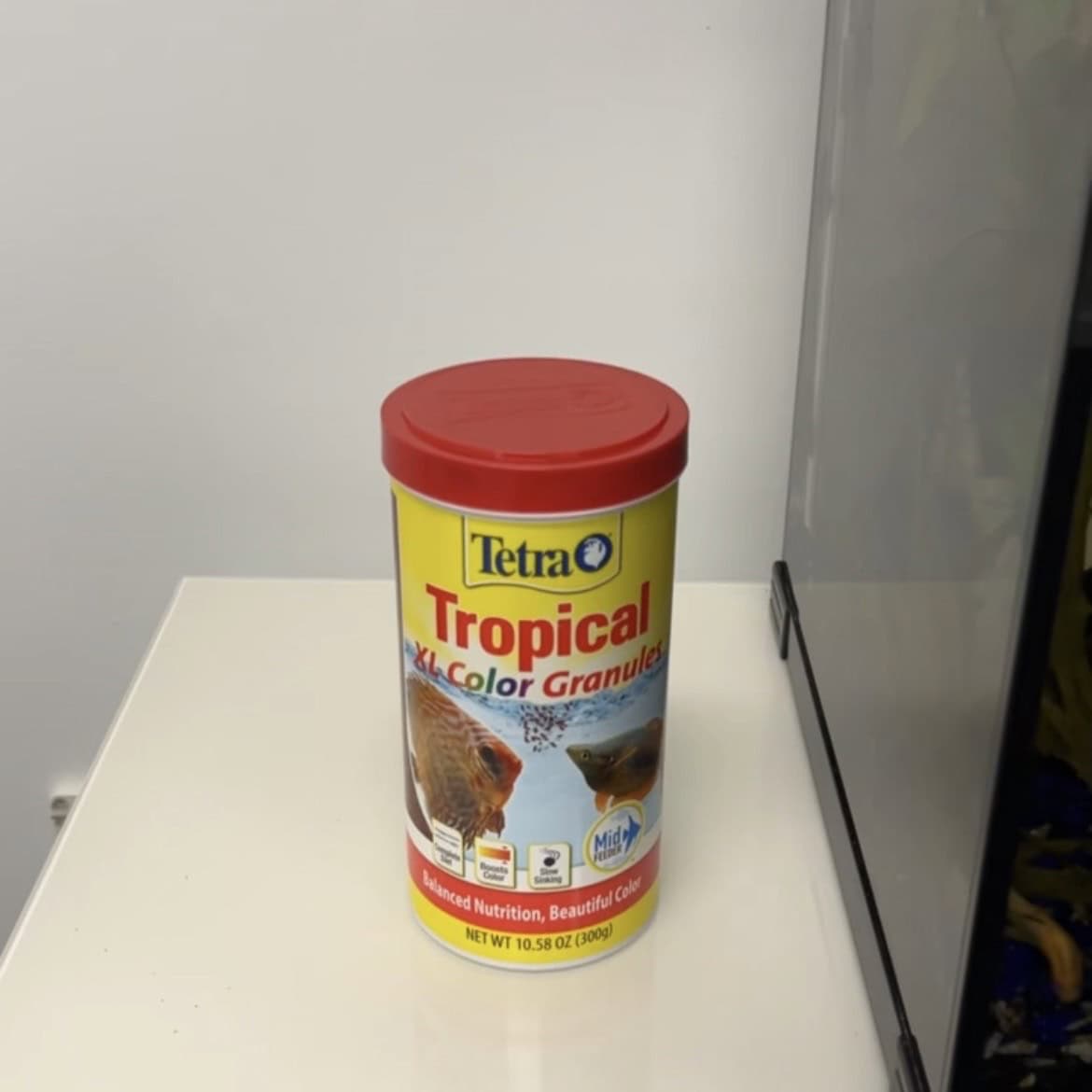
High quality fish food like Terta providing balanced nutrition as part of proper fish tank care
2. Cleaning Too Much and Killing Beneficial Bacteria
This mistake happens when aquarium owners try to be too clean. Many people treat an aquarium like a kitchen bench and scrub everything until it shines. Unfortunately, that can remove the very bacteria that make the water safe.
Beneficial bacteria live on every surface. When you replace all your filter media at once, bleach decorations, or rinse gravel under hot tap water, you destroy the biofilm that controls ammonia and nitrite. The result is a “mini-cycle” where toxins spike and stress your fish.
Gentle cleaning is best. During a routine water change, vacuum only the open areas of gravel and wipe the front glass. Rinse filter sponges in a bucket of old tank water rather than under the tap to preserve bacteria. Replace filter media one piece at a time, leaving a few weeks between changes so colonies can rebuild. Aim for stable water flow, not spotless equipment.
Many tanks crash because the owner proudly replaced “everything at once.” A slight layer of biofilm means your bacteria are healthy and active. That is what keeps your water stable.
Fish Fact: Clamped fins, hiding, or rapid breathing are often signs of water stress, not disease. Fish usually react to water quality problems days before algae or cloudiness appears.
Pro Tip: Replacing all filter media at once can crash a healthy aquarium. Beneficial bacteria live on surfaces, not in the water itself.
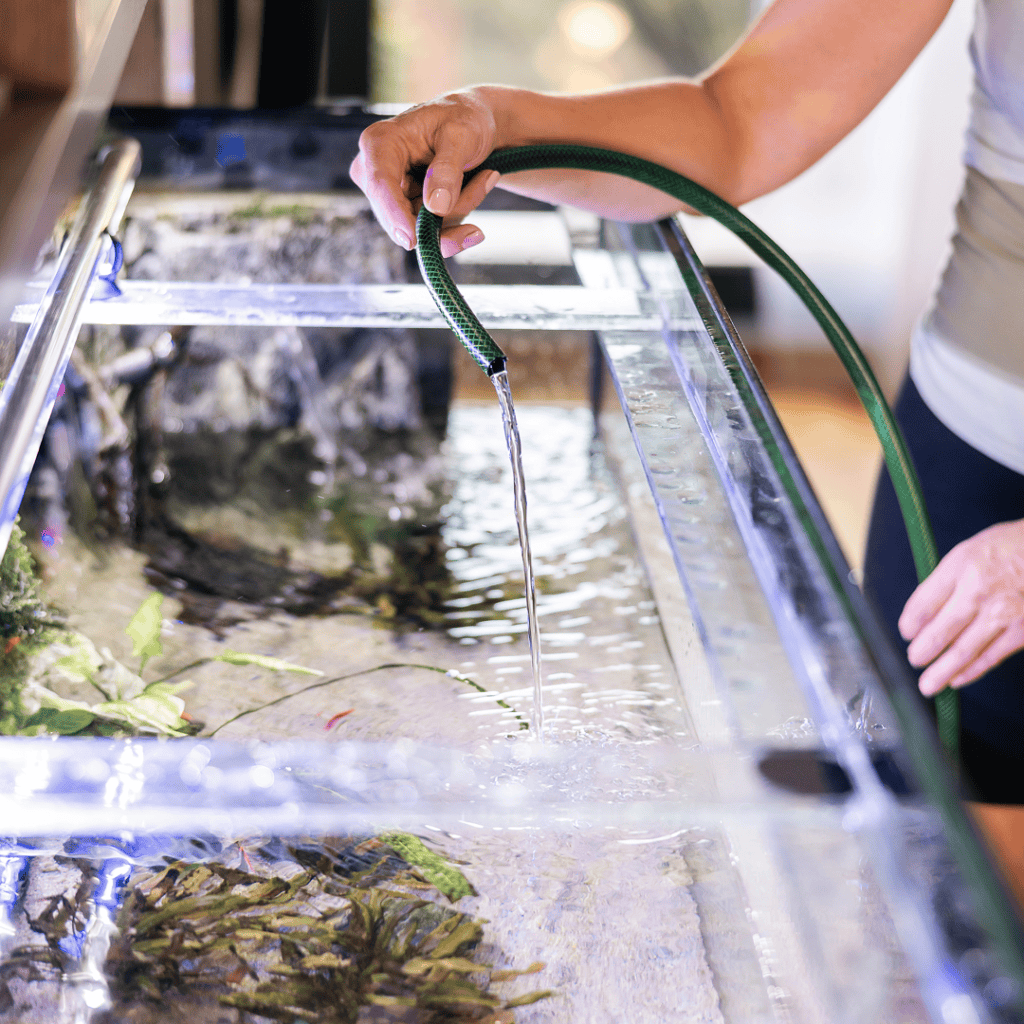
Performing a regular water change as part of proper aquarium maintenance to keep fish healthy and water quality stable
3. Water Changes That Shock Fish
Water changes are vital for good fish tank care, but doing them incorrectly can cause more harm than good. Changing too much water too quickly, using untreated tap water, or adding water at the wrong temperature can shock your fish and damage beneficial bacteria that keep the tank stable.
Even in Queensland, tap water can be several degrees cooler than your tank during winter or noticeably warmer in summer. Combine that with chlorine or chloramine, and you have a mix that irritates fish gills and disrupts the biological balance. These issues are more common during warm weather aquarium care when higher temperatures accelerate waste breakdown.
Consistency is the key to safe water changes. Replacing about a quarter of the tank water each week is far safer than large, irregular changes. Always match the temperature of new water within a couple of degrees, use a quality dechlorinator, and vacuum lightly without digging deep into the substrate. Planted tanks still need water changes too, as plants do not remove every type of waste.
If you would like a detailed routine, read our guide on how often you should clean your aquarium. When done correctly, regular water changes keep the tank clear and fish healthy month after month. If problems persist, professional aquarium maintenance services can help restore balance and prevent repeated water quality issues.
Fish Fact: Nitrate is less toxic than ammonia, but it still stresses fish when allowed to build up. Regular partial water changes are the safest way to control it.
Step 4. Lighting Mistakes That Encourage Algae
Algae can grow in both neglected and over-cleaned tanks, and lighting is usually the reason. Leaving your tank lights on all day or placing the aquarium near a sunny window provides perfect conditions for algae growth. Add a little excess nutrient from overfeeding, and it quickly spreads.
Many people respond by scrubbing the glass harder, but that only treats the symptom. The real fix is controlling the light.
Limit light exposure to eight to ten hours per day and use a timer so the schedule never changes. Keep the tank out of direct sunlight. If algae keeps returning, shorten the lighting period slightly for a few weeks before changing anything else. Constant adjustments confuse plants and make algae worse.
Planted aquariums also rely on stability. Hardy species such as Anubias, Java Fern, and Cryptocoryne prefer a consistent light routine rather than intense brightness. When your plants grow well, they compete with algae for nutrients and help keep the tank balanced.
If warm weather is making algae grow faster than usual, see our article on Fish Tank Cleaning in Summer for local advice specific to Queensland conditions.
Pro Tip: Algae grows faster than most aquarium plants. When lighting or feeding is excessive, algae will always win the race for nutrients.
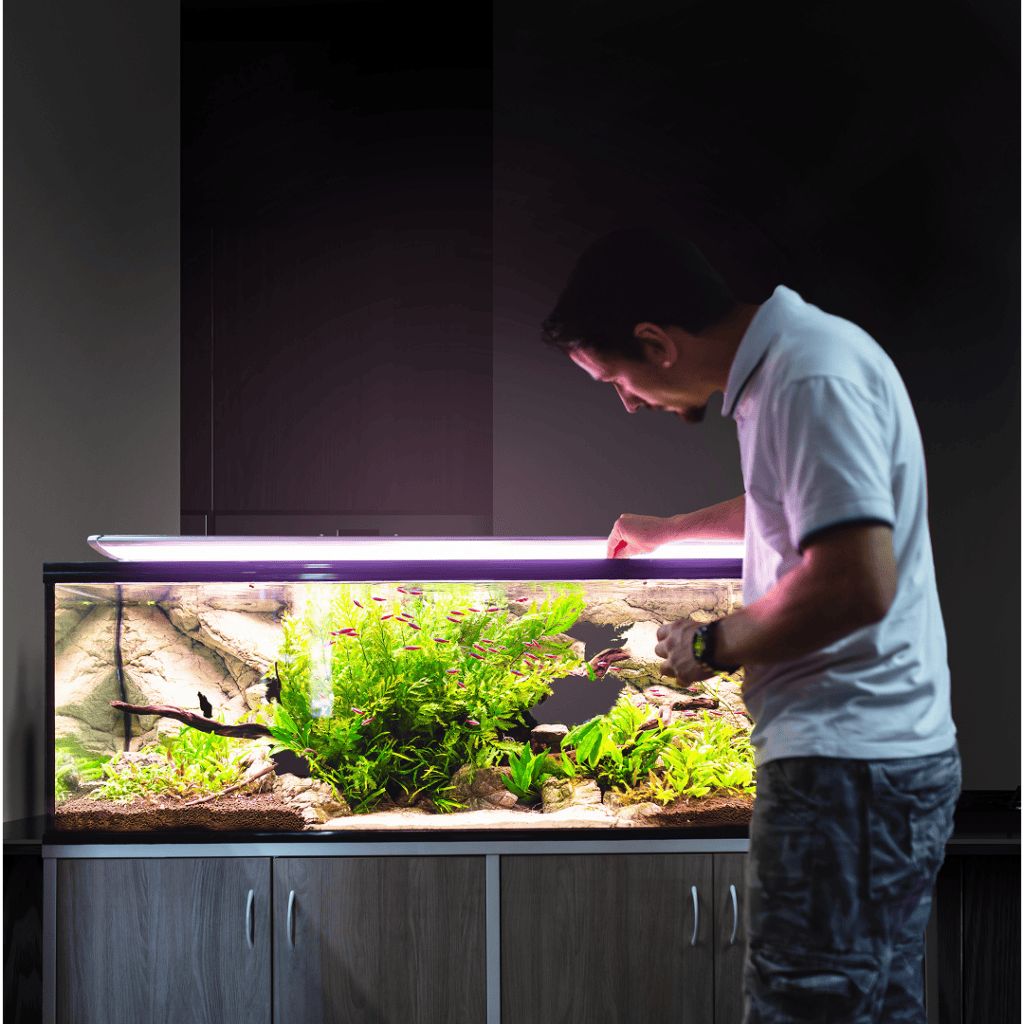
Proper lighting management is a key part of aquarium maintenance, especially in planted tanks where excess light fuels algae.
5. Chasing Clarity Instead of Fixing Stocking, Compatibility and Flow
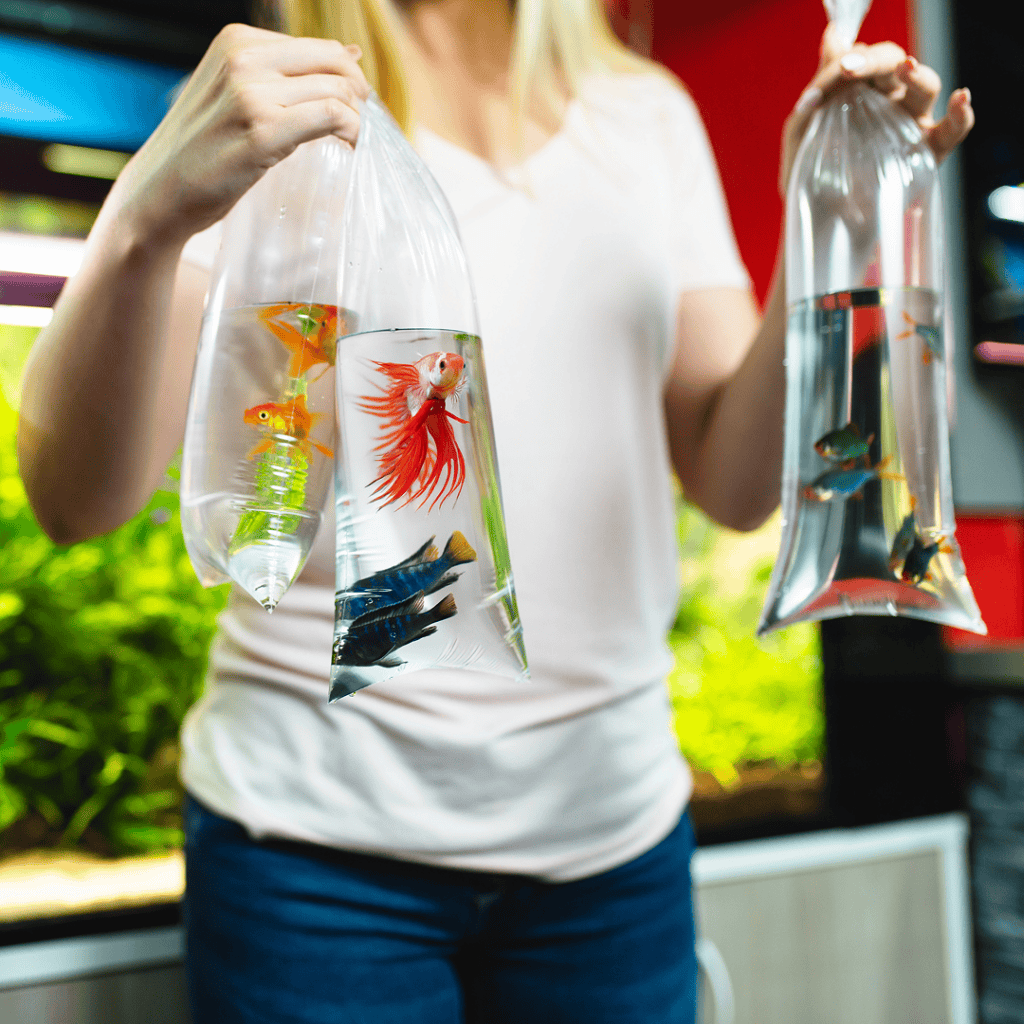
Many aquarium owners focus on appearance rather than the underlying cause. A tank that looks dirty is often not a cleaning problem at all. It may be overstocked, poorly circulated, or home to fish that are simply incompatible.
Too many fish produce more waste than beneficial bacteria can process. Aggressive or mismatched species create constant stress, which weakens immune systems and leads to illness. At the same time, areas with low water movement allow waste to settle and decompose, quietly affecting water quality even when the tank looks clear.
The first step is observation. Watch where debris collects and how your fish interact. If waste consistently gathers in the same spots, adjusting filter output or adding gentle circulation can make a significant difference. If fish are constantly chasing or hiding, the issue is often social stress rather than cleanliness. Adding too many fish too quickly can also overwhelm your filtration system, as bacteria need time to grow and balance the increased waste load.
In many cases, the best cleaning decision is to do less and allow the ecosystem to stabilise naturally. When clarity issues persist despite regular maintenance, professional aquarium maintenance services can help identify stocking or flow problems that are easy to miss.
Fish Fact: Waste settles where water flow is weakest. If debris always collects in the same spot, it is usually a circulation issue, not a cleaning issue.
A Simple Routine for Long-Term Stability
Most aquariums thrive on a simple and consistent routine. Each week, perform a partial water change, vacuum visible debris, and clean the front glass if needed. Feed modestly and keep your lights on a timer. Once a month, rinse filter sponges in old tank water and check water flow. Every few months, review your fish count and prune plants.
Consistent fish tank care is about small, regular actions rather than drastic cleaning sessions. When you stick to a schedule, you rarely face major problems. Stability is what keeps the tank healthy, clear, and easy to enjoy.
When It Is Time to Ask for Help
If you find yourself cleaning constantly yet the same problems return, it is not a sign that you are doing too little. It usually means the system itself needs adjustment. A professional aquarium cleaning service in Brisbane or the Gold Coast can identify underlying issues, reset your filtration, and create a routine that keeps the tank balanced.
A good technician will not just scrub the glass. They will test the water, tune your equipment, and help you understand what caused the problem in the first place. Once the fundamentals are right, your tank will almost maintain itself.
FAQs about Top 5 Aquarium Cleaning Mistakes
How often should you clean a freshwater aquarium?
Most tanks do well with a 20 to 30 percent water change every week or two, along with light gravel vacuuming and glass cleaning.
Can you rinse the filter media in tap water?
No. Tap water often contains chlorine, which kills beneficial bacteria. Rinse your filter sponges in old tank water instead.
Why does my aquarium become cloudy after cleaning?
You might be disturbing too much debris or removing too much bacteria. Gentle cleaning prevents this.
How long should aquarium lights stay on each day?
Eight to ten hours is ideal. Longer lighting periods promote algae growth.
What is the most common cause of algae in home aquariums?
Too much light and too many nutrients from overfeeding or irregular water changes.
Should you deep clean everything at once?
No. Replace or clean items gradually to protect bacterial stability.
About Australian Aquarium Cleaning (AAC)
At Australian Aquarium Cleaning (AAC), aquariums are more than just tanks to us. They are living ecosystems, and often a centrepiece in our clients’ homes and workplaces. Our team genuinely cares about fish health, water quality, and the pride our clients take in their aquariums.
Many of us started out the same way our clients did, by keeping freshwater fish at home and learning firsthand how easily a tank can fall out of balance. Over time, that passion grew into professional experience. Today, we bring that same care and attention to every aquarium we service, whether it’s a small home tank or a large commercial display.
We provide expert aquarium maintenance and fish tank cleaning for homes, offices, and commercial spaces across Brisbane, the Gold Coast, and the Redlands. Our approach is not about quick fixes or harsh cleaning. It is about understanding each aquarium, the fish living in it, and the routine needed to keep everything stable long term.
Our clients trust us because we take the time to explain what is happening in their tank, what their fish need, and how small changes can make a big difference. We know how frustrating it can be to constantly battle cloudy water, algae, or stressed fish, and how rewarding it is when an aquarium finally stays clear and healthy.
Our goal is simple: to make aquarium ownership effortless. Clear water, healthy fish, and a balanced ecosystem that you can enjoy without constant worry or maintenance stress.
If you are ready for an aquarium that stays clean without constant effort, visit our Services page or contact us for a free quote. We would love to help you and your fish thrive.