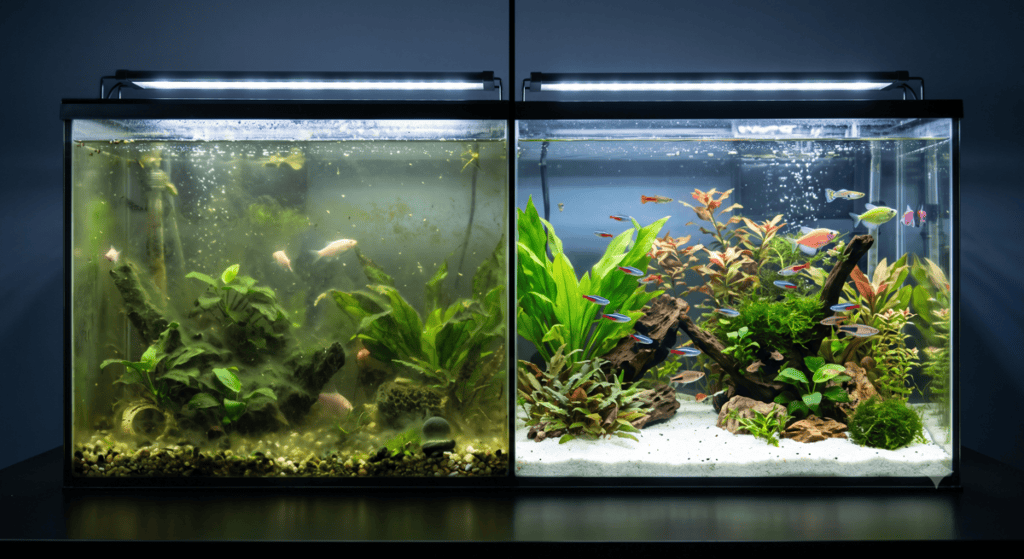

Most aquarium advice is written for summer. Algae, heat stress, evaporation, all real problems, all well covered. Winter gets a lot less attention, and that is exactly why it catches people out.
A tank does not need daily attention to stay stable through the cold months, but it does need a few things checked so a struggling heater gets caught early, not found the hard way. The most common issue we see is not a dramatic failure. It is a heater that has been quietly struggling for weeks, and nobody notices until the fish start showing it.
Even once the calendar says spring, Brisbane nights can stay cold enough to catch a struggling heater out. This is not really about the season on the calendar; it is about whether your tank is ready for cold nights, whenever they show up.
Winter aquarium care mainly comes down to three things: making sure your heater is actually reliable enough to handle a genuinely cold night, keeping water changes temperature-matched, and watching for the small temperature swings that happen near windows, doors and external walls. None of it is complicated, but all of it is easy to skip until something goes wrong.
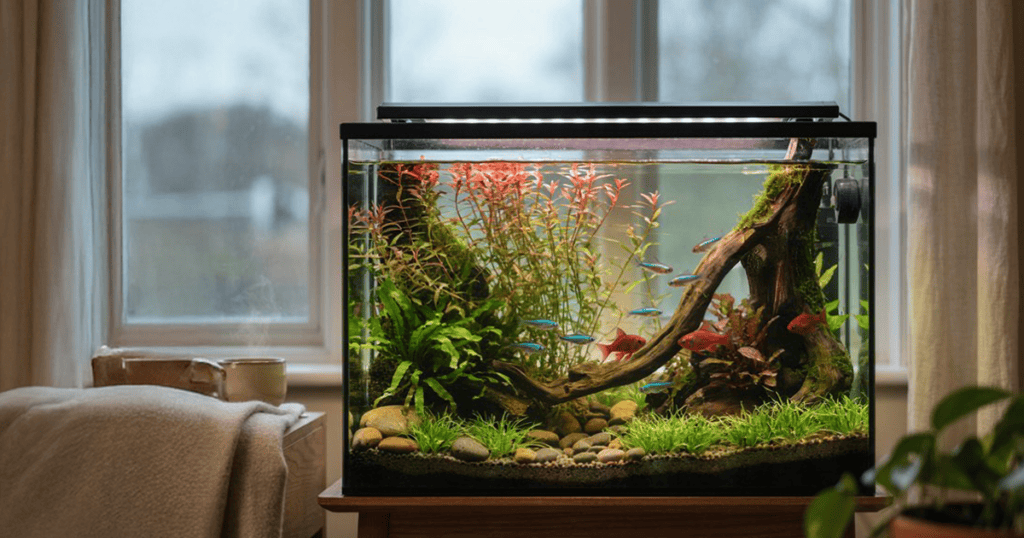
Why Does Winter Put More Stress on a Fish Tank?
Most freshwater tropical fish need water somewhere in the 22 to 28 degree range, and outside of that window they get stressed even if nothing else about the tank has changed. In summer, the room and the tank are usually moving in the same direction. In winter, the aquarium heater is doing all of the work on its own, with no help from the room temperature, and often working harder than it has all year.
That matters because it turns one piece of equipment into a single point of failure. A heater that was perfectly adequate in a warm room can be genuinely undersized for the same tank once the ambient temperature drops. As part of winter aquarium care, you must be on the lookout for variations that could risk fish stress levels. It is not that the heater broke. It was never tested against winter conditions until winter actually arrived.
Feeding patterns shift too. Fish metabolism slows in cooler water, and a feeding routine that was fine in summer can quietly overfeed a tank in winter, adding to the nutrient load right as biological activity in the filter is also running a little slower.
Tank size plays a role too, though not always in the direction people expect. A larger volume of water holds its temperature more steadily and resists sudden swings better than a small tank, which is one of the reasons smaller setups tend to show winter problems first and most clearly. If you have a smaller tank, it is worth treating the checks below as slightly more urgent, not less.
Fish Fact: Most tropical freshwater fish can tolerate a slow, gradual temperature change far better than a sudden one. A tank that drifts down slowly over hours is a much smaller problem than one that swings a few degrees in minutes.
What to Check to Keep Your Tank Ready for Winter
The checks below take a few minutes and are far easier to do now than to troubleshoot later once the tank is already stressed.
Test Your Heater Now, Not When It’s Cold
The easiest way to test a heater is to check whether it is actually cycling on and off as the room cools overnight, rather than running constantly. A heater that never seems to switch off is a heater that is struggling to keep up, and that is worth acting on before it fails outright rather than after.
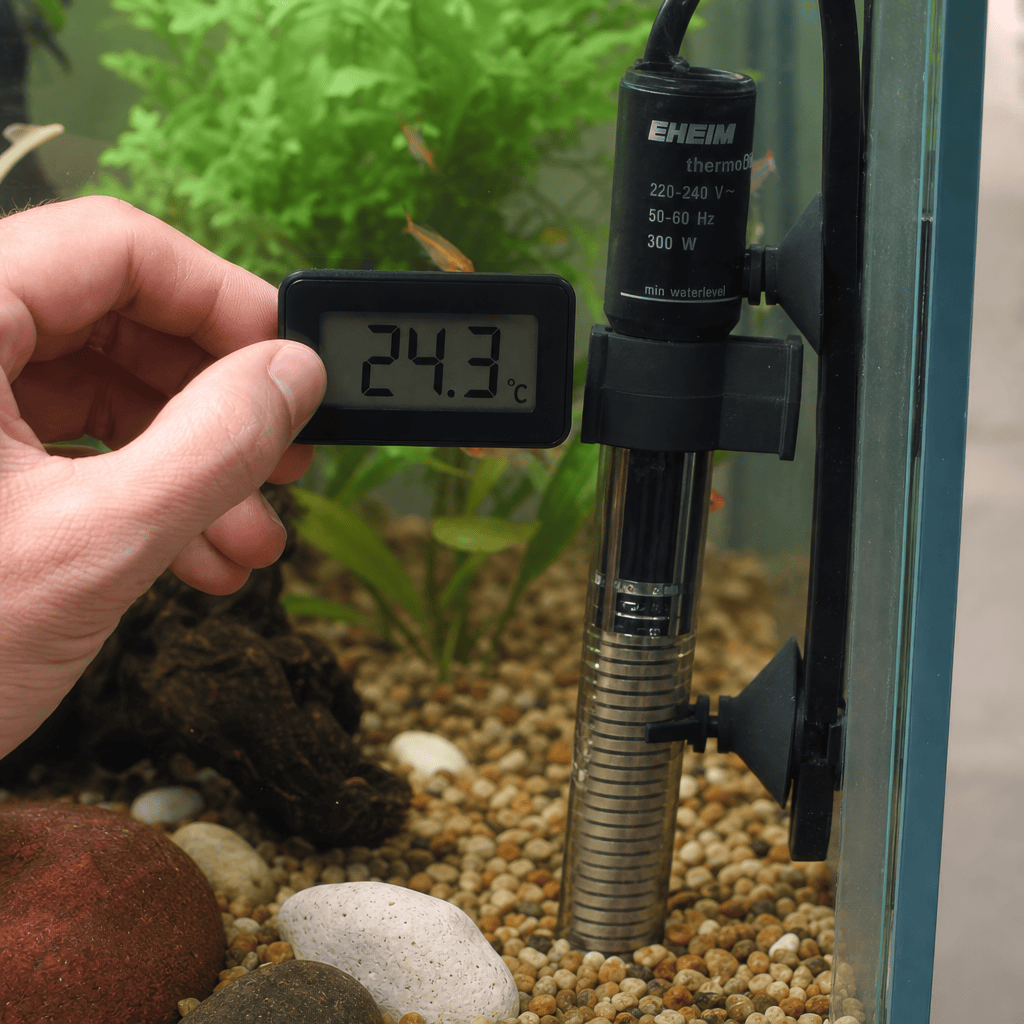
Get a Reliable Thermometer
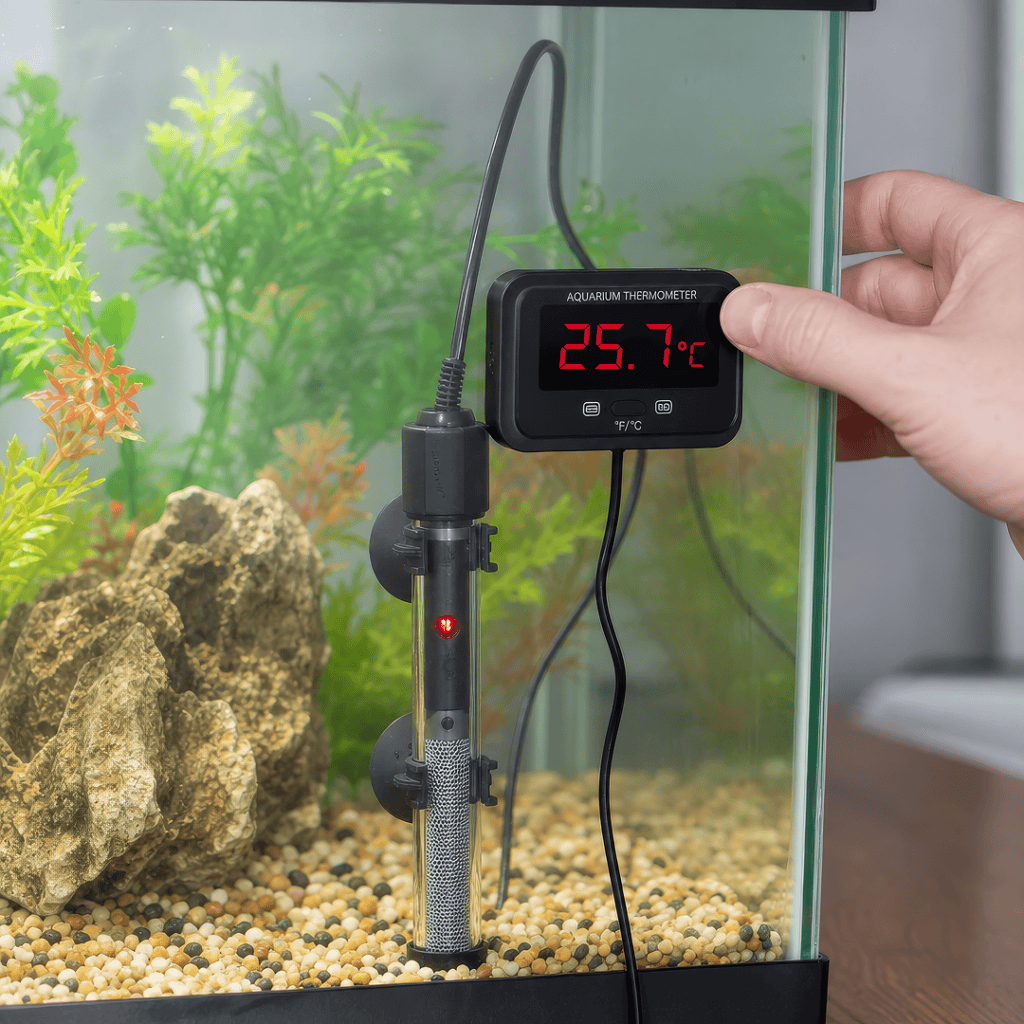
A heater’s built-in dial is a setting, not a measurement. A separate digital thermometer is the only way to know what the water is actually doing, and it is the cheapest insurance available against a heater that is drifting out of calibration.
Watch for Temperature Swings Near Windows and External Walls
A tank positioned against an external wall or near a window can run noticeably cooler than the same tank on an internal wall, even in the same room. If your tank sits in one of these spots, it is worth checking the temperature there specifically rather than trusting a reading taken from a warmer part of the house.
Draughts matter more than most people expect too. A tank near a door that gets opened and closed regularly, or under an air conditioning vent that occasionally switches to heating overnight, can see small repeated temperature dips that never show up unless you happen to check at the right moment. These are rarely dramatic on their own, but they add up over a winter, and they are one of the more common reasons a tank seems to be doing fine on paper while fish still look stressed.
Water Changes in Winter: What’s Different
The single biggest mistake we see in winter is a water change done with mismatched temperatures. Topping up or replacing water that is noticeably colder than the tank can shock fish in a way that a slow seasonal temperature drift never would, because it happens in minutes instead of hours.
Match the new water to the tank temperature before it goes in, not after. A simple hand-check against the side of the tank is usually enough for a small top-up, and a thermometer in the bucket is worth it for a larger change.
Beyond temperature matching, the actual maintenance routine for winter aquarium care does not need to change much. The same principles behind how often you should clean your aquarium still apply in winter, the schedule does not need to change, just the care taken with the water itself.
Pro Tip: If you are ever unsure how cold is too cold for a top-up, err on the side of caution and warm the water slightly before adding it. A water change that is a degree or two warm is far safer than one that is several degrees cold.
What We See in Real Tanks
Across the tanks we maintain as part of winter aquarium care in Brisbane, the Gold Coast, and the Redlands, winter heater failures follow a pattern. The heater has usually been struggling for weeks before it actually fails, and the tank has been running a degree or two cooler than it should for most of that time without anyone noticing. By the time it is obvious, fish have already been under stress for a while.
This is the same pattern covered in our guide on fish tank warning signs, where a slow decline is often harder to catch than a sudden one, precisely because there is no single obvious moment where something clearly went wrong.
Commercial tanks in offices and clinics are worth a specific mention here. Heating and cooling systems in commercial buildings often run on a schedule that has nothing to do with the tank, and a tank that sits fine during business hours can drop noticeably overnight or over a weekend when the building’s climate control shuts off. Nobody is usually watching the tank at 2am on a Saturday, which is exactly when a marginal heater is most likely to fall behind.
This is one of the reasons a scheduled winter check matters more for commercial and childcare settings than for most homes. A home tank owner might notice something feels off within a day or two. A tank in a waiting room or a staffroom can go a full weekend with nobody looking closely at it at all.
When Should You Call a Professional About Winter Tank Issues?
Most winter tank problems are simple to prevent with the checks above. It is worth booking a professional check if you cannot tell whether your heater is actually keeping up, if your tank has shown any of the warning signs of stress after a cold snap, or if the tank sits in a commercial space where nobody is checking on it outside business hours.
A trained eye can usually confirm in a single visit whether a heater is genuinely undersized for the tank, whether the thermostat is reading accurately, and whether the tank’s position is working against it before a proper cold snap tests it.
Local Aquarium Cleaning Support in Brisbane, Gold Coast and Redlands
We check heaters, thermostats and water stability as a standard part of every maintenance visit across Brisbane, the Gold Coast and the Redlands, and this kind of check earns its keep most whenever the cold actually bites. If you are not confident your setup can handle a genuinely cold night, it is worth having it looked at now rather than waiting to find out the hard way.
Our aquarium maintenance services cover exactly this kind of seasonal check, tailored to your specific tank, its position in the room, and how it has been running so far this year.
FAQs
What temperature should my aquarium be in winter?
Most tropical freshwater fish do well between 22 and 28 degrees, and you must be mindful of these temps as part of winter aquarium care. The exact number depends on the species, but in winter, the more important thing is stability, not hitting an exact figure.
How do I know if my aquarium heater is failing?
A heater that runs almost constantly without switching off is usually struggling to keep up. A thermometer that shows a temperature lower than the heater’s dial suggests is another clear sign.
Can cold tap water hurt my fish during a water change?
Yes, if it is noticeably colder than the tank. A sudden temperature drop from an unmatched water change is more stressful for fish than a slow seasonal decline over hours or days.
Do I need to feed my fish differently in winter?
Fish metabolism slows in cooler water, so the same feeding routine you used in summer can end up being slightly too much during winter aquarium care. Watching how quickly food is actually eaten is a better guide than sticking to a fixed amount.
Should I get my tank checked even if nothing seems wrong?
It is worth it if your heater has never actually been tested against genuinely cold conditions, or if your tank sits near a window or external wall. Catching a marginal heater early is far easier than dealing with one that has already failed under pressure.
Ready for Winter, or Not Sure?
If you are not confident your tank’s heater and setup are ready for the colder months, it is far easier to find out now than after a cold snap. Australian Aquarium Cleaning checks heaters, thermostats and water stability as part of every maintenance visit across Brisbane, the Gold Coast and the Redlands.
Call us on 0457 536 205 to book a check now, rather than waiting for a cold night to find the weak point for you, or use the button below to get in touch.