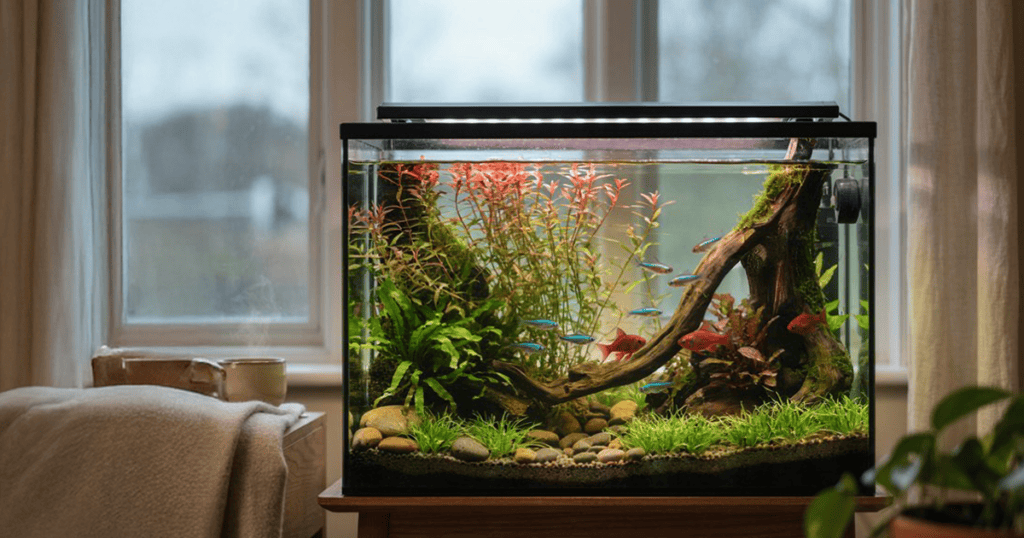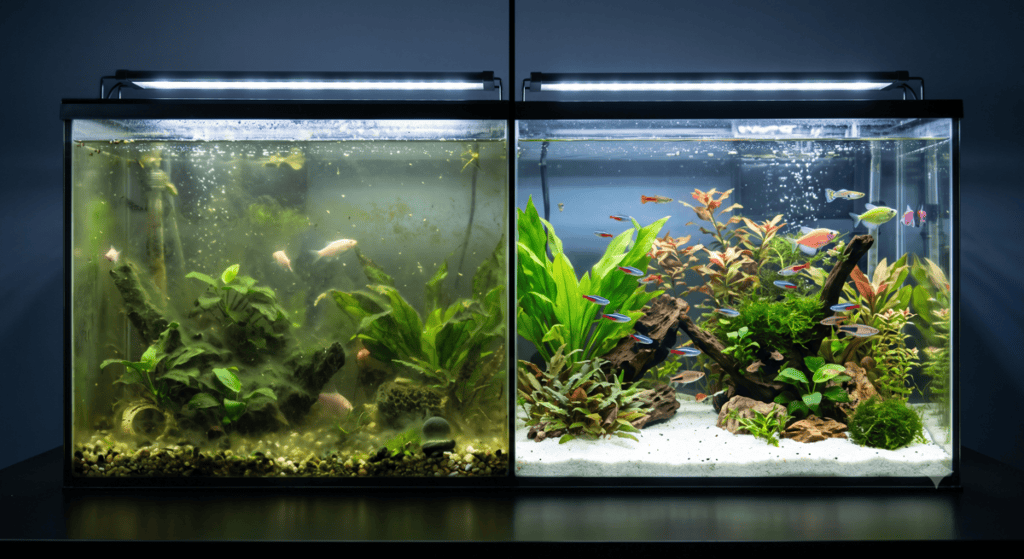

Whether you’re running a small home aquarium or a large commercial display, your aquarium filtration systems are what determine long-term stability. Clear water does not mean healthy water. Stability comes from consistent filtration, correct flow, and properly maintained biological media.
This guide focuses specifically on freshwater aquarium filtration systems, which require different approaches to marine or pond setups.
This aquarium filter guide is built from real-world experience. Australian Aquarium Cleaning (AAC) has been designing, installing, and maintaining aquariums across Brisbane, the Gold Coast and the Redlands since 2013. Founder Brenden Schull brings over 20 years of industry experience, spanning retail, commercial installations, and long-term maintenance systems.
This is not theory. This is what works in real tanks, in real conditions.
Why Filtration Matters
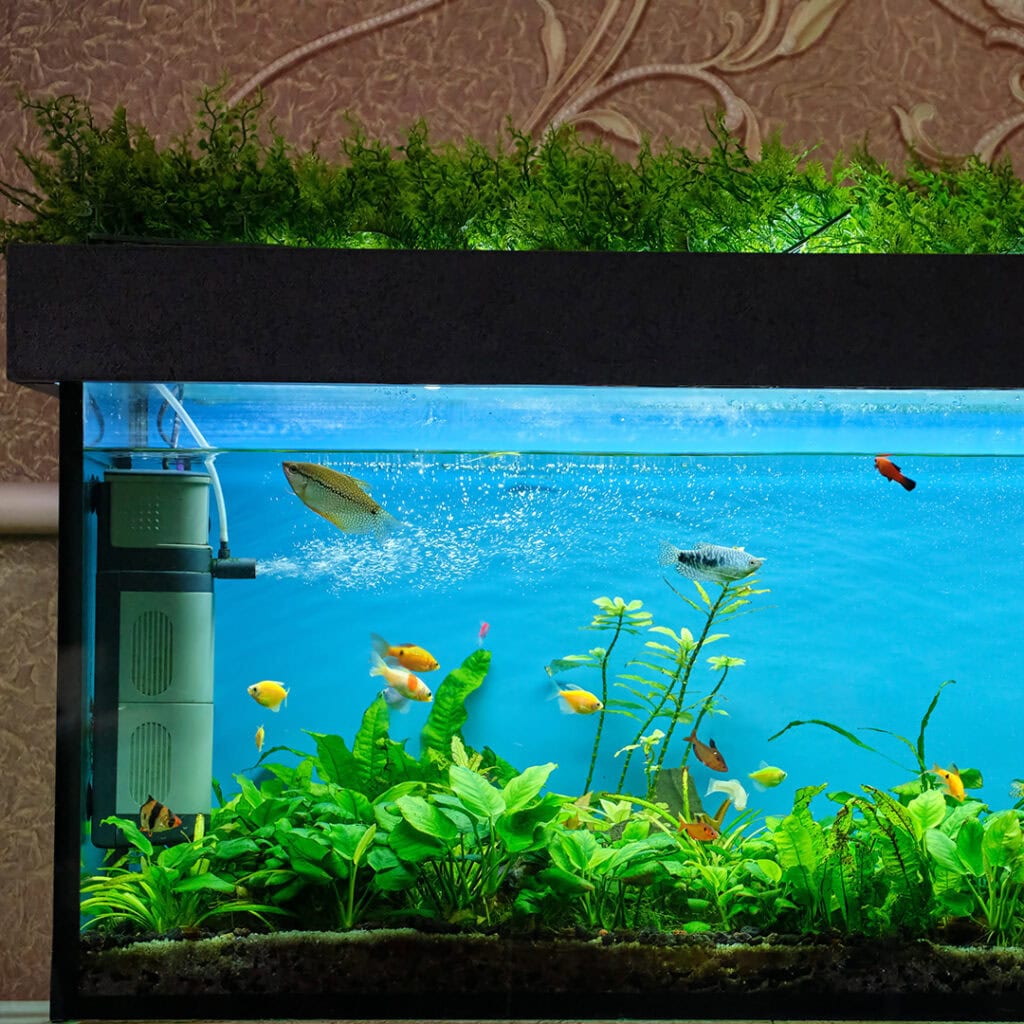
Every aquarium produces waste. Fish release ammonia constantly, and uneaten food breaks down quickly.
Your aquarium filtration systems must:
- Remove solid waste (mechanical filtration)
- Support beneficial bacteria (biological filtration)
- Maintain water clarity and stability
If filtration is undersized or poorly maintained, you will see:
- Cloudy water
- Algae blooms
- Fish stress or illness
This is where most issues begin.
Why Trust AAC’s Advice
AAC doesn’t just recommend products. We maintain them.
Across Brisbane, we service:
- Residential aquariums
- Childcare centres
- Medical clinics
- Restaurants and commercial spaces
We see firsthand:
- What filters fail
- What holds up long-term
- What actually works under load
That’s the difference between a generic aquarium filter guide and real advice.
Filter Types
There are several types of aquarium filters, and understanding how each one works is how you properly choose the right filter for your tank. Each system handles water differently, and the right choice depends on tank size, fish load, and how much maintenance you want to take on.
If you’re searching for a reliable aquarium filter Brisbane solution, this is where most decisions go right or wrong.
Sponge Filters

A sponge filter is a simple, air-driven unit consisting of a porous foam attached to an uplift tube. An air pump pushes bubbles through the tube, drawing tank water through the sponge. The large surface area becomes home to beneficial bacteria, and the gentle flow makes sponge filters ideal for fry tanks, shrimp tanks and any setup with delicate fish.
They are inexpensive, easy to maintain and provide excellent biological filtration. However, they offer only basic mechanical filtration and are not suitable as the sole filter on heavily stocked community tanks without supplementary flow.
This type of system is often included in a beginner aquarium filter guide, but it’s rarely the full solution for larger tanks.
Best suited for:
- Nano tanks and breeding setups
- Shrimp tanks and fry protection
- Supplemental filtration alongside larger systems
Limitations:
- Limited waste removal
- Not suitable as a primary filter for larger tanks
Internal/Corner Filters

Internal filters sit inside the aquarium and draw water through a compact chamber containing sponge, cartridges or ceramic media. They are a straightforward solution for smaller tanks and are often included in starter kits.
They provide a mix of mechanical and biological filtration, but their small size limits how much waste they can process. In practice, they require more frequent cleaning to maintain flow and efficiency.
For basic setups, they can work, but they are not ideal if you’re trying to properly choose the right filter for your tank long-term.
Best suited for:
- Small aquariums under 60L
- Low bioload setups
- Basic home tanks
Limitations:
- Small media capacity
- Can clog quickly
- Limited scalability
Hang‑On‑Back (HOB) Filters
Hang-on-back filters are among the most common types of aquarium filters, mounted on the back of the tank and drawing water through a cartridge or media chamber before returning it as a waterfall.
They are widely used in mid-sized setups and are often recommended in any general aquarium filter guide. They create good surface agitation, which helps with oxygen exchange.
However, their limitation is media capacity. Stock cartridges are rarely sufficient for long-term performance, especially in higher-load tanks.
Best suited for:
- 60L to 200L aquariums
- Beginner to intermediate setups
- Light to moderate stocking
Limitations:
- Limited media volume
- Requires consistent maintenance
- Not ideal for heavy bioloads
Canister Filters – Canister Filter vs Hang on Back Filter
Canister filters are external units that sit below the aquarium and push water through multiple layers of filtration media. This design provides them with significantly greater capacity than internal or hang-on-back systems.
When comparing a canister filter vs. a hang-on-back filter, the differences are control, capacity, and long-term stability. Canister filters allow you to customise filtration properly and scale with your tank.
This is where most serious aquarium filtration systems move to.
AAC regularly installs systems using trusted brands such as:
- Fluval https://fluvalaquatics.com
- EHEIM https://eheim.com
- Aqua One https://aquaone.com.au
- OASE https://us.oase.com
These are commonly used in larger aquarium filtration systems where reliability and capacity matter.
Best suited for:
- Tanks 200L and above
- Heavily stocked aquariums
- Display tanks and commercial systems
Limitations:
- Higher upfront cost
- More complex servicing
- Requires cabinet space
Sump Filters
A sump system is a secondary tank located below the display that handles external filtration. Water flows down, passes through multiple filtration stages, then returns to the main tank.
This is the most advanced option within aquarium filtration systems, offering maximum stability, flexibility and long-term performance.
AAC uses sump systems in larger builds where long-term reliability matters more than simplicity.
Best suited for:
- Large aquariums
- Custom builds
- Commercial installations
Limitations:
- Complex setup
- Requires planning and space
- Higher install cost
Sizing Your Filter
Different filters are rated for different tank sizes, and choosing the right size is critical when setting up effective aquarium filtration systems. Think in terms of turnover rate (litres per hour divided by tank volume) and total media capacity.
For most setups:
- Standard community tanks should aim for 4–6× turnover per hour
- Heavily stocked tanks or messy species like goldfish and cichlids may need 8–10× turnover
If you’re trying to choose the right filter for your tank, sizing slightly above your minimum requirement is one of the safest decisions you can make. Larger filtration systems provide more biological stability, reduce maintenance pressure, and handle unexpected spikes in waste more effectively.
This is especially important in real-world aquarium maintenance Brisbane conditions, where feeding habits, temperature, and stocking levels can shift quickly.
Overstocked tanks or high-protein diets generate significantly more waste, so undersized filtration will always struggle. In many cases, combining systems, such as a canister filter with a sponge filter, gives you better overall performance and redundancy.
For anyone searching for a reliable aquarium filter Brisbane setup, the rule is simple: More filtration capacity equals more stability, not more problems.
Matching Filter to Tank Size
- Nano tanks (≤ 60 L):
Sponge or internal filters provide gentle flow. A small HOB can add extra polishing. Avoid canister filters as they may overwhelm small volumes. - Mid‑size tanks (60–200 L):
HOB filters with adjustable flow or small canister filters work well. Ensure the model has space for biomedia and swap the stock cartridge for ceramic rings or sponges. - Large tanks (> 200 L):
Canisters or sumps are preferred. Their large media capacity handles bioloads, and external placement keeps the display uncluttered. Multiple canisters can be staggered so that you clean only one at a time.
Recommended Brands & Models
When building reliable aquarium filtration systems, the equipment you choose has a direct impact on performance, maintenance, and long-term stability.
If you’re working through an aquarium filter guide or trying to choose the right filter for your tank, these are the brands AAC sees consistently perform well across real-world installs and ongoing aquarium maintenance Brisbane environments.
- EHEIM
https://eheim.com
Known for durability and quiet operation. EHEIM canister filters use high-quality components like ceramic shafts and modular baskets, making them ideal for planted tanks and long-term setups where reliability matters. - Fluval
https://fluvalaquatics.com
The FX6 is a high-capacity canister filter designed for large freshwater systems (400L+). It’s commonly used in larger installs where strong flow and high media volume are needed to support stable aquarium filtration systems. - Aqua One
https://aquaone.com.au
A widely used Australian brand offering strong value and accessibility. The Ocellaris range provides reliable filtration for mid-size tanks and is a practical option for many home setups. - OASE
https://us.oase.com
Premium filtration systems with built-in pre-filters and easy access for maintenance. Well-suited for planted aquariums or setups where quiet operation and clean servicing are priorities.
While not part of core aquarium filtration systems, supporting equipment still impacts overall performance.
- EHEIM Everyday Fish Feeder
https://eheim.com
AAC recommends this as a reliable automatic feeder, helping maintain consistent feeding and reducing excess waste entering your filtration system.
Choosing the right equipment is not about brand preference. It’s about consistency, stability, and how well the system holds up over time. The right setup reduces maintenance, improves water quality, and supports long-term success, especially in demanding aquarium maintenance Brisbane conditions.
Maintenance Tips
- Rinse media in old tank water:
Never clean sponges or biological media under the tap; chlorine or chloramine in Brisbane’s water can kill beneficial bacteria.
Swish media in a bucket of tank water during water changes. - Don’t clean all filters at once:
Stagger maintenance so some bio‑media stays undisturbed.
For canisters, only clean one at a time or alternate weeks. - Replace media carefully:
Mechanical pads and floss can be replaced when clogged, but ceramic rings and bio‑foam should only be replaced when they crumble.
Never replace all at once. - Check flow regularly:
Reduced flow indicates clogging.
On canisters, check intake screens and hoses; on HOBs, remove debris from impellers. - Watch the fish:
Lethargy, gasping or clamped fins can indicate filtration or water quality issues. Test for ammonia and nitrite and perform water changes if needed.
Local Considerations for Brisbane & South‑East Queensland
Brisbane’s climate is warm and humid, which affects oxygen levels and water quality. In summer, higher temperatures reduce dissolved oxygen and increase metabolic rates, so your filter must maintain strong surface agitation to aid gas exchange. External canisters and sumps also add extra water volume, helping to buffer swings.
Some municipal water supplies in South‑East Queensland are treated with chloramine, not just chlorine. Chloramine is harder to remove and requires a conditioner that breaks the chlorine-ammonia bond. If you use HOBs with replaceable cartridges, consider adding extra biological media (ceramic rings or sponge) to handle the small amount of ammonia released during chloramine treatment.
When to Upgrade or Seek Professional Help
- Persistent ammonia or nitrite despite water changes and proper feeding could mean your filter is undersized or clogged.
- Cloudy or foul‑smelling water may indicate inadequate mechanical filtration or decaying organic matter.
- Large tank upgrades (e.g., moving from 60 L to 200 L) often require new filtration; adding more fish without increasing filtration invites problems.
- Complex setups (commercial displays, custom aquascapes) benefit from professional design and maintenance. AAC hides plumbing and heaters behind rockwork and uses external canisters like the Fluval FX6 to keep the display uncluttered .
Need a second opinion on your setup?
If you’re unsure about filter sizing, maintenance or a persistent water quality issue, get in touch with the Australian Aquarium Cleaning team. We design, install and maintain aquarium filtration systems and offer aquarium maintenance Brisbane services for homes, businesses and institutions across Brisbane, the Gold Coast and the Redlands. The right filtration system will keep your water clear and your fish thriving.
Contact AAC today for a friendly consultation and discover how our expertise can transform your aquarium.
Frequently Asked Questions (FAQs)
Q1: Do I need a licence or permit to keep or exhibit aquarium fish in Queensland?
A1: Private hobbyists typically do not require a licence to keep a home aquarium. However, Queensland has state and national laws governing the exhibition of animals; these rules are set out in the Exhibited Animals Act 2015 and the Animal Care and Protection Act 2001.
If you display fish in a public venue (for example, at a childcare centre, clinic or restaurant), you may need approval and you must ensure the animals’ welfare meets legislative standards. Always check the current regulations before setting up a commercial display.
Q2: What is the best filter setup for a heavily stocked aquarium?
A2: For heavily stocked tanks, a combination system is often the most effective. This typically includes a canister filter for primary filtration and a secondary system such as a sponge or internal filter for redundancy. This approach improves stability and reduces the risk of system failure.
Q3: What happens if your aquarium filter is too small?
A3: Undersized filters struggle to process waste, which leads to rising ammonia and nitrite levels. This can cause cloudy water, algae growth, and fish stress. In most cases, upgrading filtration or adding a secondary system is required to stabilise the tank.
Q4: Can aquarium filters be too powerful?
A4: Yes. Excessive flow can stress fish, especially species that prefer calm water. This is common in small tanks using oversized canister filters. Flow can usually be adjusted using spray bars, valves, or by redirecting output.
Q5: How do I know if my aquarium filtration system is working properly?
A5: A properly functioning system maintains stable water parameters, consistent clarity, and healthy fish behaviour. Warning signs include reduced flow, cloudy water, unusual odours, or fish showing stress. Regular testing and observation are key.