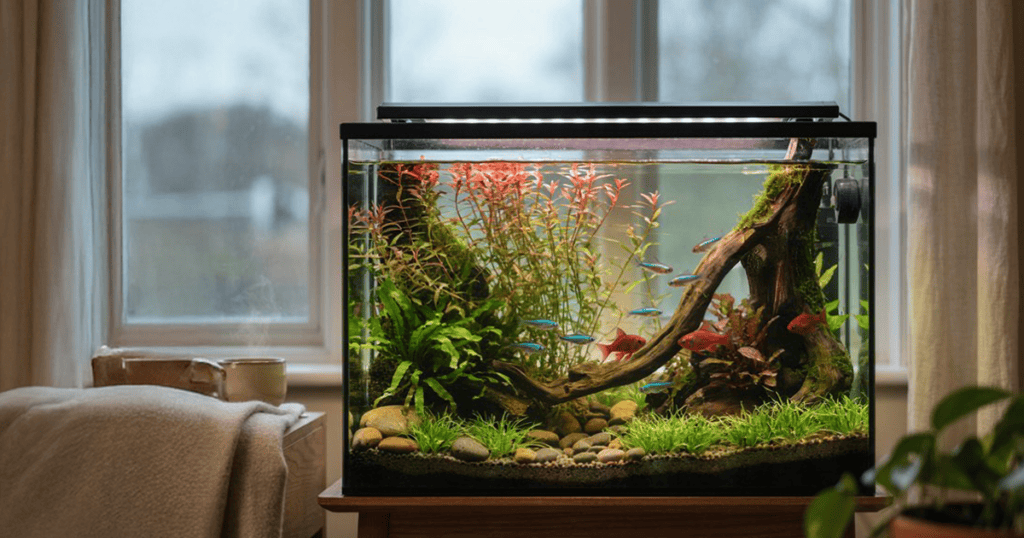

If you own an aquarium, your filter is doing far more than trapping visible waste.
It is one of the main reasons your fish tank stays stable.
A good aquarium filter helps move water, collect debris, support oxygen exchange, and provide a home for beneficial bacteria. These bacteria are a major part of what keeps your aquarium safe for fish.
That is why aquarium filter cleaning needs a careful approach.
Good aquarium filter cleaning helps keep water clear, protects beneficial bacteria, and reduces stress on fish.
If you clean the filter too aggressively, rinse media under tap water, or replace everything at once, you can remove the bacteria your tank depends on. This can lead to cloudy aquarium water, stressed fish, algae problems, poor water quality, or a mini-cycle that throws the aquarium out of balance.
Done properly, aquarium filter cleaning protects water quality instead of disrupting it.
At Australian Aquarium Cleaning, we see this often across Brisbane, the Gold Coast, and the Redlands. Most people are trying to do the right thing. The problem is that one small mistake during fish tank filter cleaning can undo months of stability.
This guide explains how to clean an aquarium filter safely, what to clean, what to leave alone, and how to protect the beneficial bacteria that keep your aquarium healthy.
Clean Does Not Mean Sterile
A clean aquarium filter is not a sterile aquarium filter.
That is one of the most important things to understand before you start cleaning.
Your filter media is alive with beneficial bacteria. These bacteria live on sponge, ceramic rings, bio media, substrate, hardscape, glass, and other surfaces inside the aquarium. Their job is to help process waste so your fish are not sitting in unsafe water.
If too many of these bacteria are removed at once, the aquarium has to rebuild its biological balance.
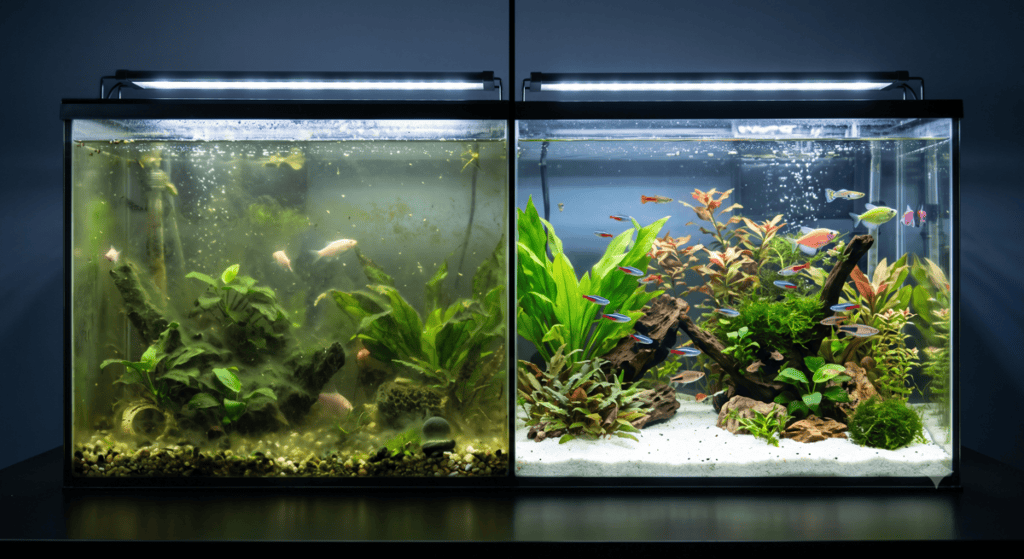
That is one of the main reasons fish tanks turn cloudy after a big clean. The water may look physically cleaner at first, but the biological system has been disturbed.
This is why aquarium filter cleaning should be gentle, not aggressive.
Fish Fact: Most of the beneficial bacteria your aquarium relies on live on surfaces such as filter media, sponge, substrate, hardscape and glass, not freely floating in the water.
What Your Aquarium Filter Actually Does
Most aquarium filters do three main jobs.
They remove visible waste, support beneficial bacteria, and sometimes hold chemical media such as activated carbon.
Mechanical filtration is the part most people notice first. This is where sponge, filter wool, filter pads, or filter floss trap debris before it floats around the tank.
Biological filtration is the part that matters most for long-term aquarium health. This is where beneficial bacteria grow and help process waste from fish, uneaten food, and decaying plant matter.
Chemical filtration can be useful in specific situations. Activated carbon, for example, may help remove odours, tannins, medication residue, or certain dissolved compounds depending on the media being used. It is useful when needed, but it is not a replacement for biological filtration or regular aquarium maintenance.
Understanding how filtration works makes aquarium filter cleaning far safer and more effective.
When people think about aquarium filter cleaning, they often focus only on visible dirt.
In reality, the filter’s biological role is what keeps the aquarium stable.
Why Beneficial Bacteria Matter
Fish constantly produce waste. Uneaten food, plant matter, and organic debris also break down in the aquarium.
This process creates ammonia.
Ammonia can be highly toxic to fish, especially in uncycled or unstable aquariums.
In a stable tank, beneficial bacteria and other microorganisms help convert ammonia into nitrite, then nitrite into nitrate as part of the nitrogen cycle. Nitrate is less harmful and can be managed through regular water changes, healthy plant growth, sensible feeding, and good aquarium maintenance.
Without beneficial bacteria, an aquarium cannot stay stable for long.
That is why your goal during aquarium filter cleaning is not to make the filter look brand new. Your goal is to restore flow while keeping the filter biologically active.
This is why aquarium filter cleaning should focus on biological stability, not making the filter look spotless.
A slightly brown or stained filter sponge is not automatically dirty in a bad way. In many cases, it is doing its job.
RSPCA Australia also advises against cleaning filter media with tap water, as chlorine or chloramines may damage beneficial bacteria inside the filter.
Read the RSPCA Australia water quality guide.
If your tank has already gone cloudy after cleaning, our guide on cloudy aquarium water causes and fixes explains what may be happening and how to correct it safely.
When Should You Clean an Aquarium Filter?
Aquarium filters should not be cleaned just because the calendar says so.
They should be cleaned when performance starts to drop.
If the filter is flowing well, the water is clear, fish are active, and water quality is stable, the filter may not need cleaning yet. Cleaning it too often can disturb bacteria for no real benefit.
A filter usually needs attention when water flow slows down, debris builds up inside the filter, surface movement drops, the filter becomes noisy, or waste starts collecting around the tank.
Cloudy aquarium water can also be a sign that something is wrong, but it does not always mean the filter needs a heavy clean. In some cases, the filter has already been cleaned too much.
Good aquarium filter cleaning is based on flow, water quality, and tank behaviour, not just a date on the calendar.
Pro Tip: Cleaning your filter too aggressively is usually more harmful than leaving a stable filter alone for a little longer.
For a broader maintenance routine, see our guide on how often you should clean your aquarium.
The Biggest Mistake: Cleaning Filter Media Under Tap Water
This is one of the most common aquarium cleaning mistakes we see.
Tap water is treated with chlorine or chloramine to make it safe for people to drink. That is good for drinking water, but it is not good for aquarium filter media.
Those chemicals are designed to kill bacteria.
Unfortunately, that can include the beneficial bacteria living inside your filter.
Even a quick rinse under the tap can weaken the filter’s bacteria colony. The result can be cloudy water, fish stress, ammonia problems, bacterial blooms, or unstable water quality.
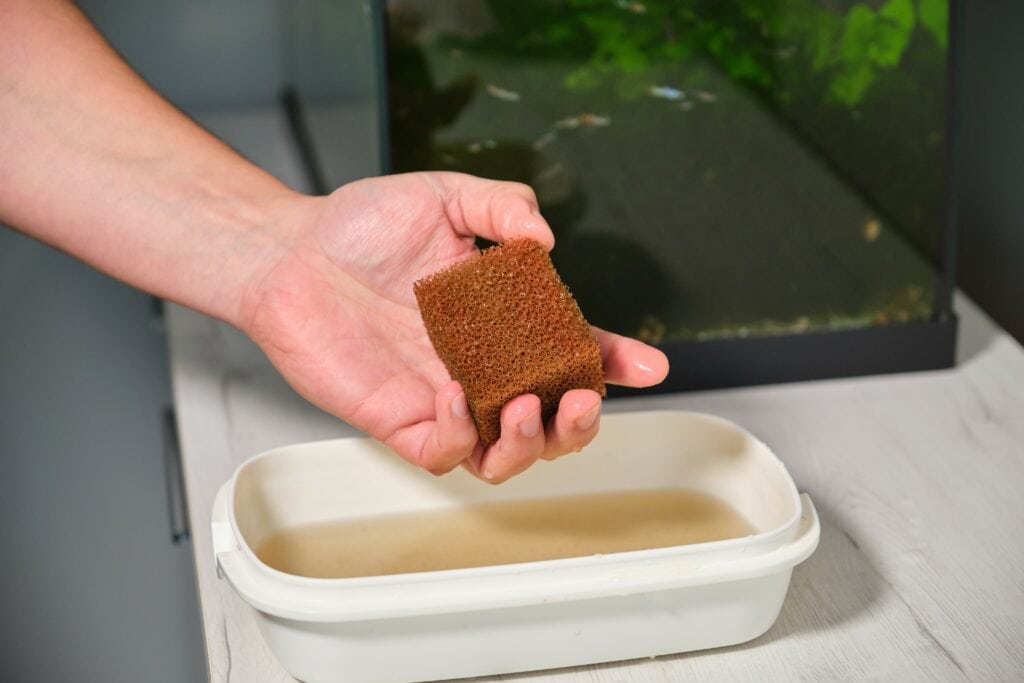
The safer method is to rinse filter media gently in old aquarium water during a water change.
You are not trying to sterilise the media. You are only removing enough sludge to restore water flow.
Many aquarium filter cleaning problems start with rinsing media too aggressively or replacing too much media at once.
Fish Fact: Chlorine and chloramine help make drinking water safe, but repeated or prolonged exposure can damage the beneficial bacteria living inside aquarium filters.
The Correct Way to Clean an Aquarium Filter
The safest method is simple.
When you do a water change, keep some of the old aquarium water in a clean bucket. Turn the filter off, remove the mechanical media, then gently squeeze or swish it in that bucket of tank water.
Do not scrub it.
Do not rinse it under the tap.
Do not try to make it look new.
Once the worst of the sludge has been removed, place the media back into the filter, reassemble everything, and turn the filter back on.
Then check that the water is moving properly and that the filter is not rattling, grinding, leaking, or struggling to restart.
The media only needs to allow water through again. It does not need to look spotless.
Safe aquarium filter cleaning means removing enough sludge to restore flow while leaving the biological system intact.
Pro Tip: If the bucket water turns brown, that does not mean you have done anything wrong. It means the filter was holding waste. Remove enough sludge to restore flow, but do not strip the media completely clean.
What Parts of the Filter Should You Clean?
Not every part of the filter should be cleaned the same way.
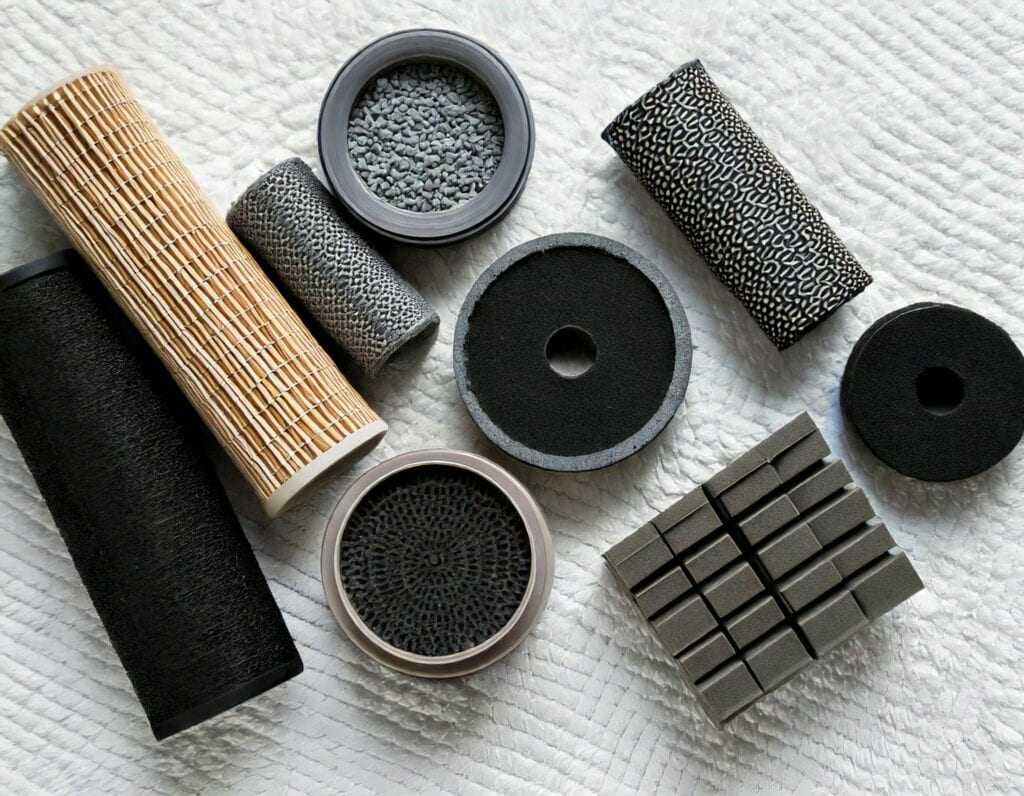
Mechanical media, such as sponge, filter wool, filter pads, and filter floss, catches visible debris. This is usually the part that needs cleaning first because it clogs before the deeper media.
Biological media, such as ceramic rings, bio balls, porous stone, and sintered glass, should be disturbed as little as possible. This media is there to house beneficial bacteria. If it is heavily clogged, give it a very light rinse in old tank water. Do not scrub it clean and do not rinse it under the tap.
Chemical media, such as activated carbon or phosphate remover, should be treated according to the product instructions. It has a specific job and usually needs replacing once exhausted.
The impeller, intake pipe, spray bar, hoses, and filter outlet also matter. If these parts become clogged with slime or debris, the filter may lose flow even when the media itself is fine.
If your filter still has weak flow after cleaning the sponge, the problem may be in the impeller or intake path.
The main rule is simple. Do not aggressively clean every part of the filter on the same day unless there is a serious reason.
Protect the bacteria first.
Sponge Filters, Internal Filters and Canister Filters
Different filters need slightly different care, but the same principle applies to all of them.
Keep the water moving and protect the beneficial bacteria.
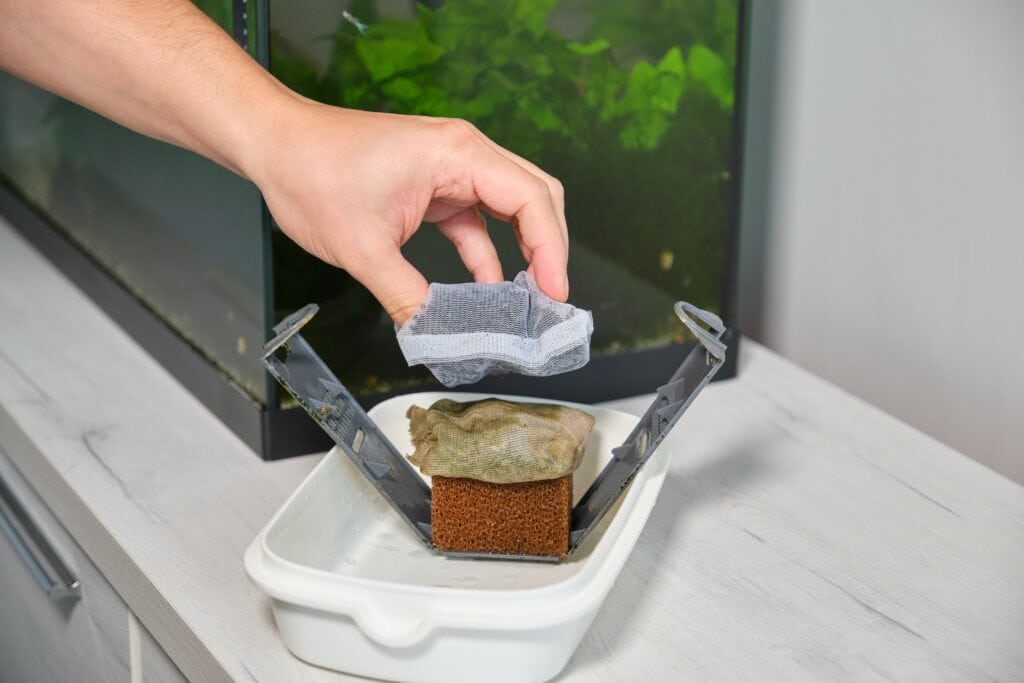
Sponge filters are simple and reliable. To clean one, gently squeeze the sponge in old tank water until the flow improves. A stained sponge is normal. It does not need to look new. However, if the sponge is compacted, falling apart, or still blocking flow after rinsing, it may need gradual replacement.
Internal filters are common in smaller aquariums and all-in-one tanks. These may contain sponge, cartridges, or small media chambers. Clean the sponge or mechanical section in tank water and avoid replacing every cartridge or media piece at once.
If your filter uses disposable cartridges, be careful. Many cartridge systems encourage frequent replacement, but replacing the whole cartridge too often can remove useful bacteria. If a cartridge does need replacing, try to stagger the change so the tank does not lose too much bacteria in one go.
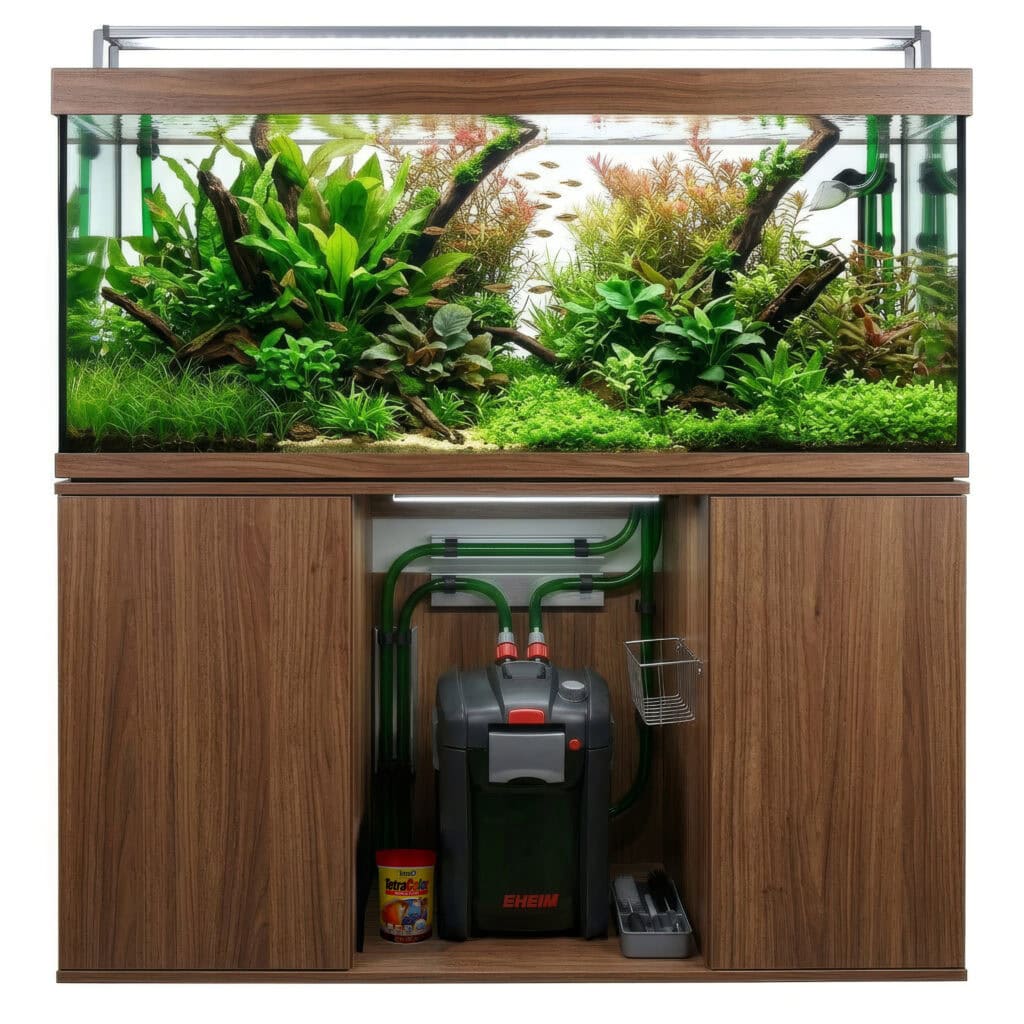
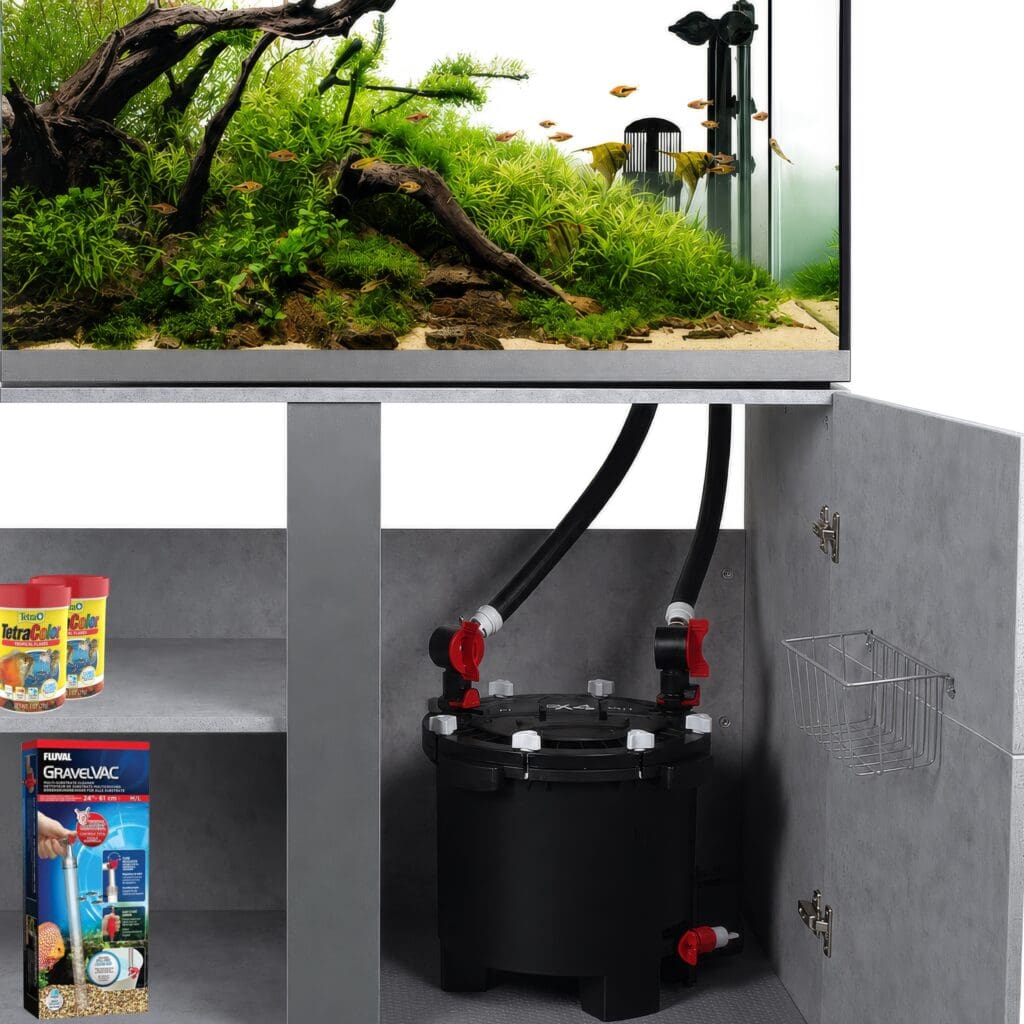
Canister filters are common in larger aquariums and planted tanks. They hold more media and can provide strong, consistent filtration. They usually contain layers of sponge, ceramic media, bio media, and sometimes chemical media.
When cleaning a canister filter, start with the mechanical sponge. Leave the biological media mostly alone unless it is clogged. Check the impeller, hoses, intake, and outlet for buildup. When everything is back together, make sure the filter restarts properly and that there are no leaks.
Canister filters can often run longer between cleans than smaller internal filters, provided water flow remains strong and the aquarium is not heavily stocked or overfed.
Trusted Aquarium Filter Brands
At Australian Aquarium Cleaning, we work with trusted aquarium brands such as Aqua One, EHEIM, and Fluval because reliable filtration makes a major difference to water quality, flow, and long-term stability.
Reliable equipment can make aquarium filter cleaning easier because better flow and media capacity help maintain long-term stability.
A well-matched filter can reduce recurring issues such as cloudy aquarium water, algae growth, poor circulation, waste buildup, and stressed fish.
Fluval aquarium filtration is a strong example of high-quality internal and external aquarium filtration.
EHEIM external aquarium filters are well known for classic and professional canister filter systems.
Aqua One aquarium filtration products include internal filters, hang-on filters and canister filters.
The right aquarium filter is not always the biggest or most expensive one.
It is the filter that suits your aquarium size, fish load, planting level, flow needs, and maintenance routine.
What Not to Do During Aquarium Filter Cleaning
Some cleaning habits create more problems than they solve.
Do not replace all filter media at once. This can remove too much beneficial bacteria and destabilise the tank.
Do not wash filter media under tap water. Chlorine and chloramine can damage the bacteria colony your aquarium depends on.
Do not clean the filter and substrate aggressively on the same day. The substrate also holds bacteria, so disturbing both areas at once can place extra pressure on the system.
Do not use soaps, detergents, disinfectants, or hot water inside the filter. These can leave residues that are dangerous to fish.
Do not chase a spotless filter. Your goal is healthy water flow and a stable aquarium, not a filter that looks brand new.
If you want to understand how over-cleaning affects the wider aquarium, read our article on the top aquarium cleaning mistakes.
Why Cloudy Water Happens After Filter Cleaning
Cloudy aquarium water after cleaning is often caused by bacterial disruption, disturbed debris, or both.
When too much beneficial bacteria is removed, the tank can struggle to process waste efficiently. This can lead to a bacterial bloom, which often looks like milky or hazy water.
Cloudiness can also happen when trapped debris is stirred into the water column during heavy cleaning.
This commonly happens after replacing filter cartridges, washing media under tap water, cleaning too aggressively, disturbing too much substrate, or making several major changes at once.
The natural reaction is to clean more.
That can make the problem worse.
In many cases, the better response is to slow down and let the aquarium stabilise. Reduce feeding slightly, check ammonia and nitrite, and avoid more heavy cleaning unless water testing shows a serious issue.
If fish are gasping, ammonia or nitrite is present, or the aquarium smells strongly unpleasant, test the water immediately and avoid making multiple major changes at once.
Fish Fact: Cloudy water after filter cleaning is often biological, not dirt. The tank may be trying to rebuild balance.
Overfeeding and Filter Problems
Overfeeding puts extra pressure on the filter.
When fish food is left uneaten, it breaks down into waste. That waste adds to the ammonia load and gives the filter more work to do.
This can lead to faster clogging, cloudy water, algae growth, and poor water quality.
Many aquarium owners respond by cleaning the filter more often, but the real issue may be feeding.
Feed only what your fish can eat within a short period. Remove obvious leftovers where possible. If the filter keeps clogging quickly, look at feeding habits before assuming the filter is the problem.
Less waste means less pressure on the filter and a more stable aquarium.
Why Water Flow Matters
A filter only works properly when water can move through it.
Even excellent aquarium filter media becomes less useful if the flow is blocked.
Poor flow can lead to waste buildup, dead spots, reduced oxygenation, poor surface movement, and dull-looking water.
After cleaning, always check the filter output. Water should move steadily through the aquarium without blasting fish around.
Strong flow does not mean harsh flow. The best setup moves water evenly while keeping fish comfortable.
In planted aquariums, good flow helps move nutrients and carbon dioxide around the tank. In fish-heavy aquariums, good flow helps move waste towards the filter intake.
Aquarium Filter Cleaning in Brisbane Conditions
Brisbane and South East Queensland conditions can make aquarium maintenance more demanding.
Warm weather can increase biological activity inside the tank. Waste can break down faster, algae can grow quicker, and filters can clog sooner.
During warmer months, it is worth checking water flow more often. It is also important not to overfeed.
If your tank turns cloudy in summer, do not respond by cleaning everything at once. Big, aggressive cleaning can make the aquarium less stable.
Small, consistent maintenance is usually safer.
For seasonal advice, read our guide to fish tank cleaning in summer.
Commercial Aquarium Filter Maintenance
Commercial aquariums need reliable filtration because they are expected to look clean every day.
Office aquariums, clinic aquariums, childcare centre tanks, and commercial displays have less room for visible problems. Cloudy water, algae buildup, reduced flow, or waste on the substrate can quickly affect how the space feels.
Professional aquarium maintenance should include filter checks, water testing, media care, impeller cleaning, intake cleaning, feeding reviews, lighting checks, and general health observations.
The aim is not just to make the aquarium look good on the day of service.
The aim is to keep it stable between visits.
For business and office tanks, see our aquarium maintenance services.
Signs Your Aquarium Filter Needs Professional Attention
Some filter issues are simple. Others need a more experienced eye.
If your filter clogs constantly, cloudy water keeps returning, fish appear stressed after cleaning, algae is hard to control, or water flow stays weak after maintenance, there may be a deeper issue.
The same applies if the aquarium smells unpleasant, the filter makes unusual noises, or the tank looks dirty soon after cleaning.
Recurring aquarium problems often come back to filtration, flow, feeding, stocking, or long-term imbalance.
At Australian Aquarium Cleaning, we often find that persistent cloudy water and maintenance issues improve once the filter setup, flow pattern, and feeding routine are corrected.
A Simple Aquarium Filter Cleaning Routine
A good routine does not need to be complicated.
Each week, look at the tank properly. Check the water flow. Watch the fish. Look for waste collecting in low-flow areas. Notice whether the filter sounds normal.
During water changes, remove visible debris and check the filter intake.
If flow has slowed, rinse the mechanical media gently in old tank water. Leave biological media mostly alone unless it is clogged. If the filter is still weak, check the impeller, intake, outlet, and hoses.
Do not clean everything at once unless there is a clear reason.
A stable aquarium usually responds better to small, consistent maintenance than big, sudden resets.
When to Leave the Filter Alone
Sometimes the best aquarium maintenance decision is to leave the filter alone.
If the water is clear, fish are active, flow is strong, and water quality is stable, unnecessary cleaning can create problems that were not there before.
A healthy aquarium is not always the one that gets cleaned the most.
It is the one that stays stable.
Good maintenance is about knowing what to adjust, what to clean, and what to leave alone.
About Australian Aquarium Cleaning
At Australian Aquarium Cleaning, we work with aquariums every day.
Across Brisbane, the Gold Coast, and the Redlands, we see how small changes in filter cleaning, feeding, lighting, water flow, and aquarium maintenance can affect long-term tank health.
Our team cares about fish health and helping clients enjoy their aquariums without constant stress.
We provide aquarium maintenance and fish tank cleaning for homes, offices, and commercial spaces, with a focus on clear water, healthy fish, and stable aquarium systems.
If your filter keeps clogging, your water keeps turning cloudy, or you are unsure how to maintain your aquarium safely, we can help restore balance and create a routine that works.
View our aquarium maintenance services.
Frequently Asked Questions
How often should I clean my aquarium filter?
Clean your aquarium filter when water flow slows or debris buildup affects performance. Some tanks need light filter cleaning every few weeks, but stable filters should not be cleaned unnecessarily.
Can I rinse aquarium filter media under tap water?
No. Tap water may contain chlorine or chloramine, which can damage beneficial bacteria. Rinse filter media gently in old aquarium water instead.
Why did my aquarium become cloudy after cleaning the filter?
Cloudy aquarium water after cleaning is often caused by disrupting beneficial bacteria. This can happen if filter media was replaced, washed under tap water, or cleaned too aggressively.
Should I replace aquarium filter cartridges every month?
Not usually. Replacing all filter media too often can remove too much beneficial bacteria. Replace media gradually and only when necessary.
What happens if I clean my aquarium filter too much?
Over-cleaning can remove beneficial bacteria. This may lead to ammonia issues, cloudy water, algae problems, and stressed fish.
Is brown sludge in an aquarium filter bad?
Not always. Some brown sludge is normal. The goal is to remove enough buildup to restore water flow without stripping the filter completely clean.
What is the safest way to clean aquarium filter media?
The safest method is to gently rinse or squeeze filter media in old aquarium water during a water change. This removes excess sludge while helping protect beneficial bacteria.
Do I need to clean biological filter media?
Only when it is heavily clogged. Biological media should usually be left alone or lightly rinsed in old tank water. Do not scrub it or rinse it under tap water.
Final Thoughts
Aquarium filter cleaning is one of the most important parts of aquarium maintenance, but it is easy to get wrong.
Your filter is not just a dirt trap.
It is one of the main biological foundations of the aquarium.
Clean it carefully. Protect the beneficial bacteria. Keep the water moving. Avoid sudden, aggressive changes.
Consistent aquarium filter cleaning is one of the best ways to maintain clear water and healthy fish over the long term.
When aquarium filter cleaning is done the right way, your tank stays clearer, healthier, and more stable between services.
The goal is not a spotless filter.
The goal is a stable aquarium.
Clear water. Healthy fish. A tank that stays balanced.