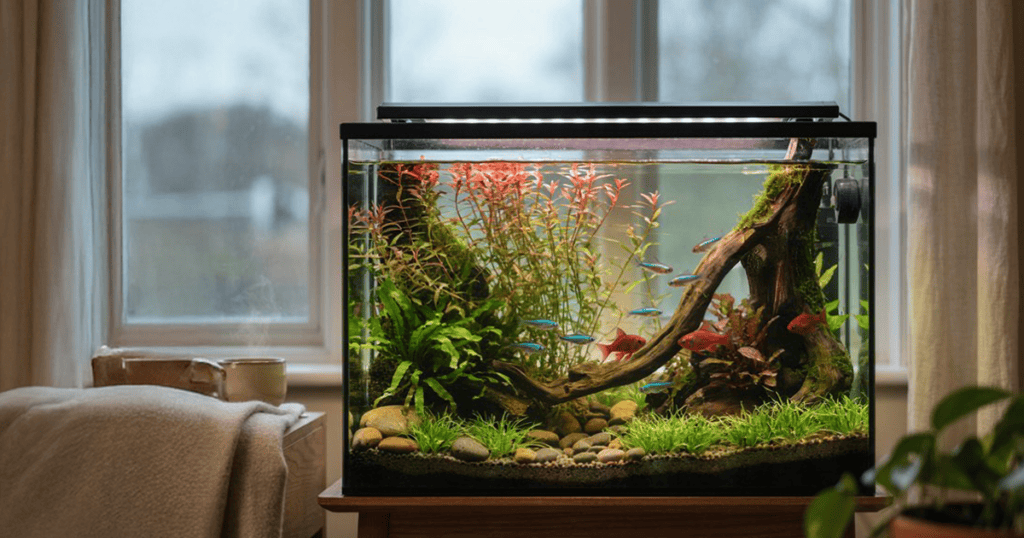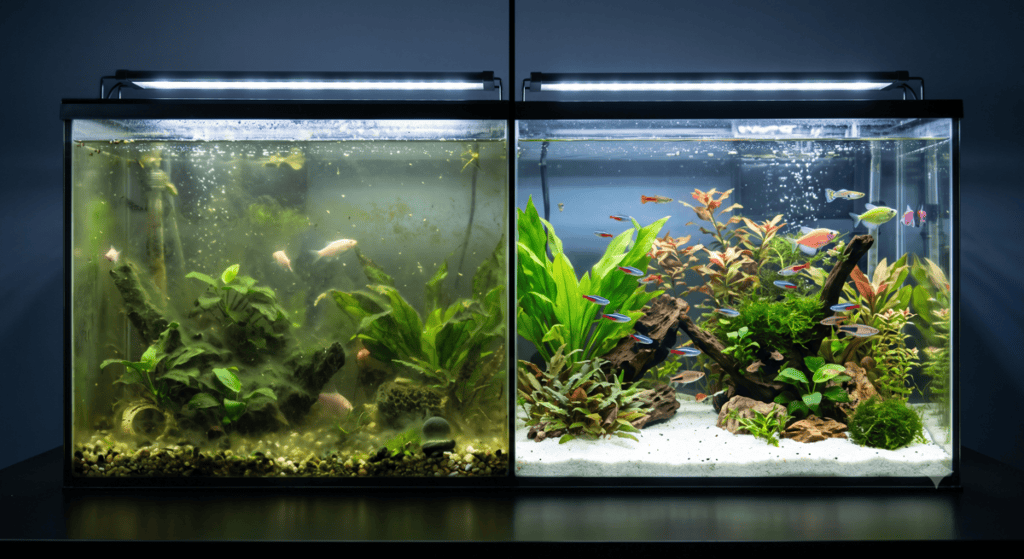

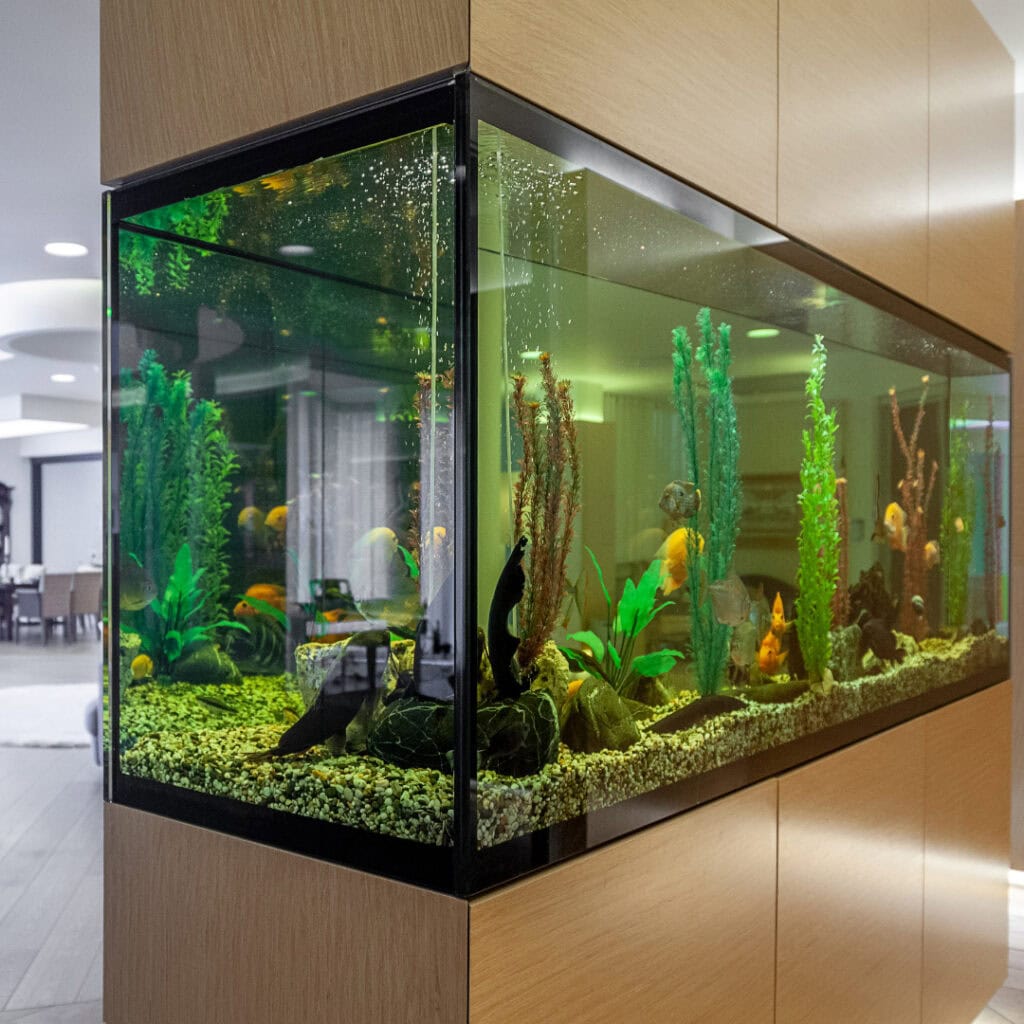
Fish tank cleaning in summer is different. Heat, longer daylight hours, evaporation and holiday routines can push a freshwater aquarium out of balance fast. Water can cloud, algae can take off, oxygen can drop, and filters can struggle to keep up. Tank size plays a major role in how stable your aquarium remains during these changes, so if you are still deciding “what size fish tank should I get“, choosing the right volume early can make summer maintenance much easier.
This guide covers what changes in summer, how to clean without stressing fish, and what warning signs mean you should stop and get help. If you want the safest path, call us to check your tank before problems start. If something looks like it is going wrong, call us straight away.
Who this guide is for:
This is for freshwater fish tank owners who want:
- A clear tank that stays stable through summer
- A cleaning routine that does not stress fish
- A plan for heatwaves and time away from home
- A simple way to know when it is time to call a professional
If you keep goldfish, freshwater community fish, cichlids, shrimp, or live plants, you will still benefit. You just need to adjust the details for your stocking and equipment.
Common summer tank types that need extra attention:
- Small tanks heat up faster and swing more
- Heavily stocked tanks build waste faster
- Planted tanks can get algae quickly if light and nutrients drift
- Office and shopfront tanks often get extra sunlight and inconsistent feeding
If your tank fits any of these, a preventative check is worth it. Call us to check your tank before problems start.
If you run a planted tank, our Planted aquarium setup Brisbane 400L guide shows how to balance light, nutrients and flow so maintenance stays predictable through summer.
Fish tank cleaning in summer: what changes, and why tanks tip faster
Warm water holds less oxygen than cool water, and oxygen leaves the water more easily as the temperature rises. When fish are warm, they can also breathe faster and become stressed sooner, especially overnight in closed rooms. Low oxygen is one of the quickest ways to turn a normal day into an emergency.
Evaporation is the other quiet issue. Water evaporates, but minerals and dissolved waste stay. Over time, this can concentrate the contents of the tank. Many people top up and think the job is done, but a top-up is not the same as a water change.
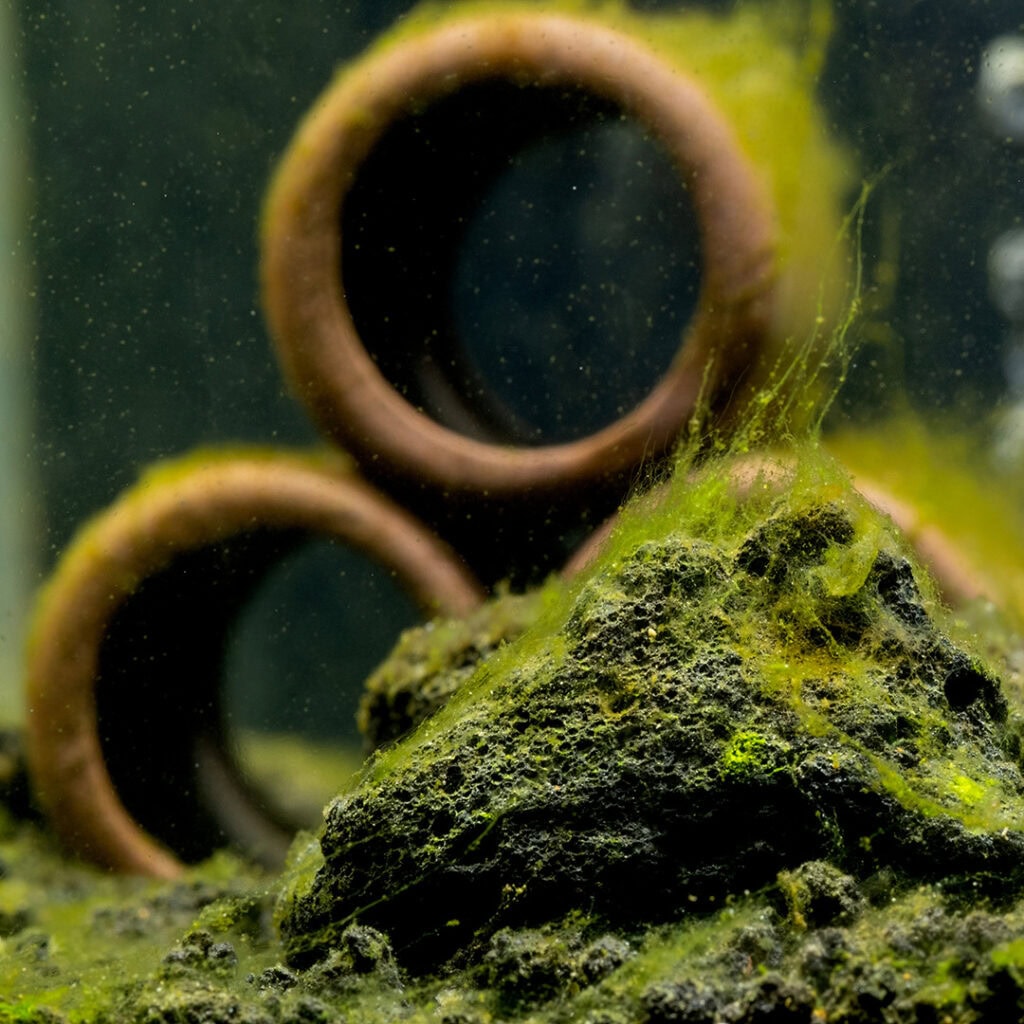
Then there is algae. Summer light and warmth increase the pressure on algae. If the tank gets direct sunlight for part of the day, or if the lights are on longer during school holidays, algae can grow faster.
If you want certainty, this is where professionals help. We can check flow, oxygenation, filtration performance, and water quality, then correct the cause, not just the symptoms.
What we check in a summer tank health visit:
- Water temperature trend and heat stress risk
- Filter flow rate and blockages (intake, impeller, sponges)
- Surface agitation and oxygen transfer
- Visible waste build-up zones and substrate condition
- Stocking pressure versus filtration capacity
- Algae drivers (light exposure, timing, feeding, flow dead spots)
- A staged cleaning plan to stabilise the tank without shock
Fish fact:
Warm water holds less oxygen than cool water.
What this means in real life:
– A tank can look “fine” and still be short on oxygen
– Fish can start hanging at the surface or near the filter outlet
– Problems often show up overnight or early morning when rooms are closed up
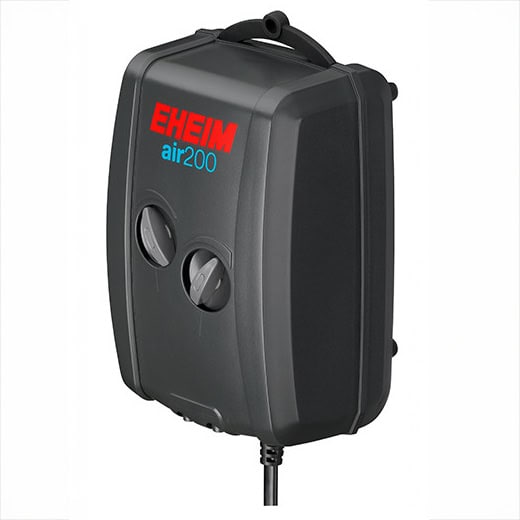
If your tank runs warm overnight, steady aeration can help. A solid option is the EHEIM air200 air pump.
If you ever see surface-gasping, that is a call-us-now situation.
What “clean” really means in a fish tank
In summer, most emergency call-outs we see start with one of three triggers – a drop in filter flow, a sudden algae bloom, or fish breathing hard overnight. A staged clean and flow correction usually stabilises the tank quickly if you act early.
A healthy tank is not sterile. A good cleaning removes waste, improves flow, and keeps the system stable without stripping the tank of its beneficial bacteria. For a simple baseline outside of summer, see our guide: How often should you clean your aquarium.
In summer, people often make one of two mistakes:
- They clean too lightly, waste builds up, flow drops, oxygen drops
- They clean too aggressively, the tank swings, fish get stressed
A professional clean sits in the safe middle. It targets waste and restrictions, protects your filter biology, and reduces stress on fish.
Fish tank cleaning in summer: the step-by-step process that works
This section is the core routine for summer fish tank maintenance. It applies to most freshwater tanks.
Step 1: Fish tank cleaning in summer: the 60-second safety check before you start
Before you start cleaning, look for signs that change how you approach the clean:
- Are fish breathing fast or sitting at the surface
- Is anyone hiding, clamped, or lethargic
- Is the water cloudy or smelly
- Is the filter flow weaker than normal
- Is algae new, fast-growing, or slimy
If you see warning signs, slow down and keep changes small. If you are unsure, call us to check your tank before you start changing things.
Step 2: Prepare water properly
Summer errors often happen here. The goal is to avoid temperature shock and chemistry swings.
- Match temperature as closely as you can
- Condition the water if you use tap water
- Do not rush a large volume change if fish are already stressed
For many setups, smaller weekly changes are safer than big resets. Weekly partial water changes in the 10 to 25 percent range work well for many freshwater tanks. The exact percentage depends on stocking, filtration, and how fast waste builds in your tank.
Important safety note:
Never use soap, household cleaners, or untreated tap water in a fish tank. Avoid large, sudden changes if fish are already stressed. If fish are gasping at the surface, treat it as urgent and contact us.
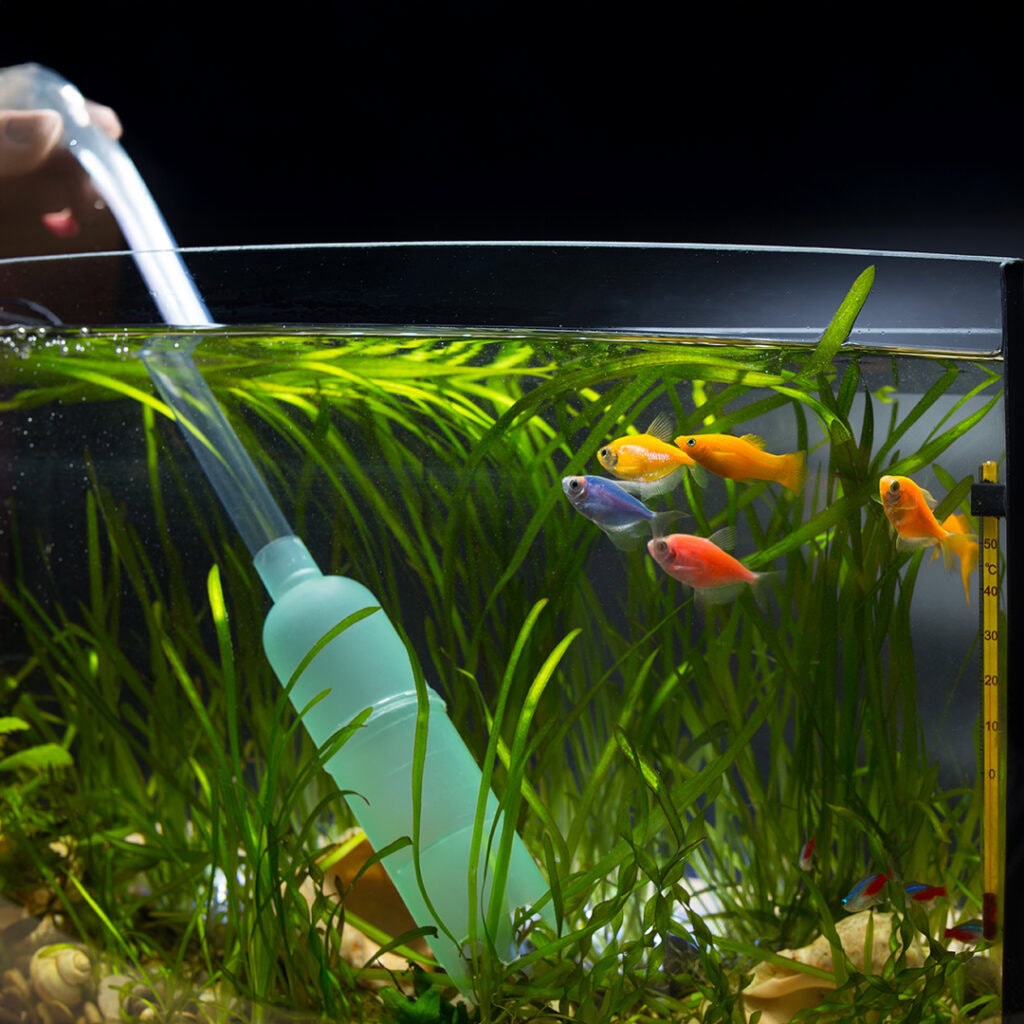
Step 3: Siphon waste from the substrate, gently
This is where most of the “dirty” comes from in freshwater tanks, especially in summer when feeding can increase, and fish metabolism can rise.
Focus on:
- Open areas where waste settles
- Corners and around hardscape
- Under driftwood and dense decor, as practical
You do not need to rip through the entire substrate in one go. A staged approach is safer, especially in heavily stocked tanks.
Step 4: Clean the glass and hard surfaces, without stirring the tank
Remove algae from the glass to keep the light and viewing clean. If algae is heavy, that is a sign you should also address the cause, not just the symptom. We cover that below.
For decor, do a light wipe with the removed tank water. Avoid using soaps or household cleaners.
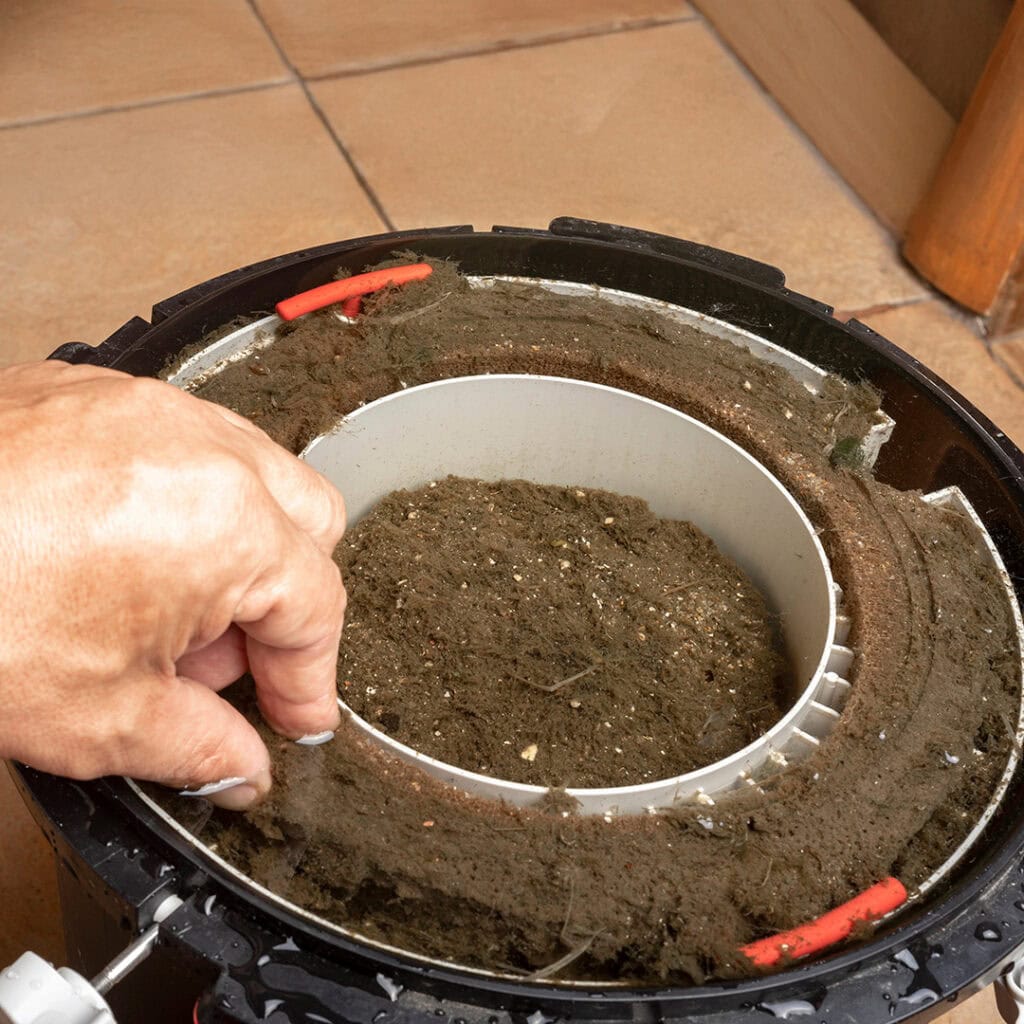
Step 5: Filter maintenance, the summer risk zone
A partially clogged filter can quickly become a summer problem. Flow drops, oxygenation drops, and waste processing slows.
Safe approach:
- Rinse sponges and pre-filter media in the removed tank water
- Keep biological media wet
- Do not replace all media at once unless you understand the impact
- Check the impeller and intake for sludge
If you do not know what media you have or what they do, contact us. Filter mistakes are a common cause of sudden crashes after a “big clean”.
Step 6: Restore flow and surface movement after you reassemble:
- Check that the filter output is strong
- Aim the outlet to disturb the surface slightly, summer oxygen needs this
- Consider adding an air stone during heatwaves or in closed rooms
The goal is stable oxygen transfer, especially overnight.
Step 7: Final check, then leave the tank alone
Once cleaning is complete, avoid any additional changes on the same day unless the fish are in obvious distress. Give the tank time to settle.
If fish still look off after the clean, call us straight away. That is the fastest way to stop a minor issue from turning into losses.
Algae in summer, cleaning helps, but the cause matters more
Algae is not just “a dirty tank”. It is usually a mix of light, nutrients, and timing of maintenance.
Common summer triggers:
- Direct sunlight through windows
- Longer light hours during holidays
- Overfeeding, especially if someone else feeds while you are away
- Slow filter flow, waste sits and breaks down
A timer helps keep lighting consistent. Guidance on fish care often emphasises providing the right environment and setup, and consistent conditions matter. If algae keeps returning after cleaning, that is usually a system issue. This is where a professional tank check saves time. We can adjust flow, cleaning timing, stocking pressure, and light management based on what your tank is doing.
Holiday tank care, the feeding trap that ruins water quality
Most holiday tank problems come from feeding, not from “missing a clean”. If you use a feeding block or automatic feeder, test it before you leave.
Simple holiday rules:
- Do not increase feeding before you leave
- Do a normal partial water change before travel
- Make sure someone checks the tank visually if you are away longer than a few days
- If a friend feeds, pre-portion the food, most people overfeed
If you want the safest option, book a professional service before you go away. Call us to check your tank before problems start, not after you get back to cloudy water and stressed fish.
When you should stop DIY and call the professionals
If you take only one thing from this guide, make it this:
Call us to check your tank before problems start. If something looks like it is going wrong, call us straight away.
Here are the triggers where professional help usually saves fish and money:
- Fish gasping at the surface or hanging at the outlet
- Sudden cloudy water that does not clear within 24 to 48 hours
- Strong odour, slime, or rapid algae bloom
- Filter flow dropping repeatedly
- Unexplained deaths, even if water “seems fine”
- You have a heatwave coming, and the tank already runs warm
- You are leaving for holidays and want the tank stable while you are away
FAQs about fish tank cleaning in summer
What water tests should I prioritise during summer aquarium maintenance?
Check ammonia, nitrite and nitrate first, then pH. In summer, small changes can escalate faster, so testing helps you confirm whether the issue is waste build-up, a filter performance problem, or a sudden swing. If the results look unusual and fish behaviour is changing, call us to check your tank. This keeps fish tank cleaning in summer consistent, and helps you catch small issues before they turn into a tank crash.
Why do I get a cloudy fish tank after a clean in summer?
Cloudiness after cleaning is often caused by disturbed waste, a filter that is not catching fine particles, or an imbalance triggered by over-cleaning. Summer heat can accelerate these changes. If cloudiness persists for 24 to 48 hours or if the fish look stressed, call us straight away.
Should I change my light schedule in summer to reduce algae?
Yes, but do it consistently. Use a timer and avoid direct sunlight. If algae is recurring, the fix is usually a combination of lighting, feeding, and maintenance timing.
Can I turn my heater off in summer?
Sometimes, but it depends on your fish and your overnight room temperature. Many tanks still cool overnight even in summer. Stability matters more than chasing a number. If you are unsure, we can check your tank temperature pattern and advise the safest settings.
Is extra aeration worth it during heatwaves?
Often, yes. Warm water holds less oxygen, and oxygen drops further overnight in closed rooms. Adding surface movement or an air stone during heatwaves can reduce fish stress. If fish are hanging at the surface or breathing heavily, call us immediately.
Can I use frozen water bottles to cool the aquarium?
You can, but it can create rapid temperature swings if done carelessly. Sudden swings are stressful for fish. If your tank regularly runs hot, a safer approach is improving room heat control, increasing surface movement, and adjusting equipment. If you want it handled properly, call us to check your tank before problems start.
Why is evaporation a bigger issue in summer fish tank maintenance?
Evaporation changes your water level and can concentrate what stays behind. A top up restores level, but it does not remove dissolved waste. If your tank is evaporating quickly, we can help you set a routine that prevents parameter creep and keeps the tank stable.
Do I need a professional clean more often in summer?
Not always, but summer is when professional checks prevent emergencies. If you have recurring algae, repeated cloudy water, fish stress signs, or you are leaving town, it is worth booking a check and clean before the hottest weeks.
Contact us to check your tank before problems start
Summer problems rarely appear out of nowhere. Most give small warning signs first, a slight cloud, a small algae spike, a slower filter flow, fish breathing a bit heavier.
If you notice a change in fish behaviour, water clarity, or filter flow, and you are not sure what to do next, contact us. Early action prevents most summer tank crashes.
At Australian Aquarium Cleaning, we support freshwater aquarium maintenance across Brisbane, Redland Shire and the Gold Coast, and we help prevent common summer issues like a cloudy fish tank, a sudden fish tank algae bloom, or a drop in filter flow.
Contact our team of experts to check your tank before problems start. If something looks like it is going wrong, contact us straight away. Getting professionals involved early is the safest option for your fish, and the fastest path back to clear, stable water.