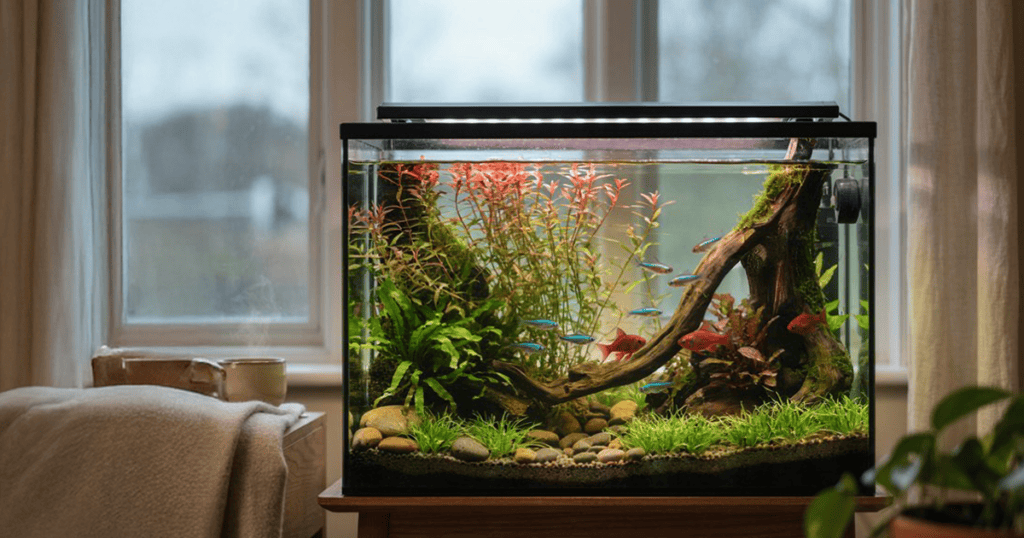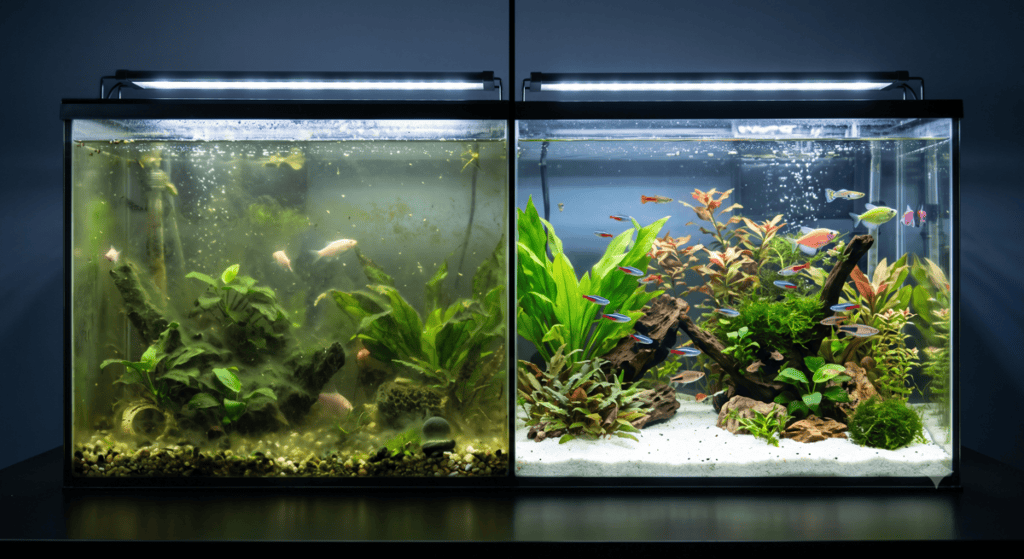

A planted aquarium is living art. Done well, it becomes a calm focal point that rewards daily attention with colour, movement and growth. This guide walks through a full build based on a recent four by two by two foot project at 400 litres, from hardscape and substrates to CO2 tuning and the first few weeks of care. It is written for keen hobbyists in Brisbane who want clear, experience-backed steps, real equipment names and practical aquascaping tips.
Aquascaping a planted aquarium for our client
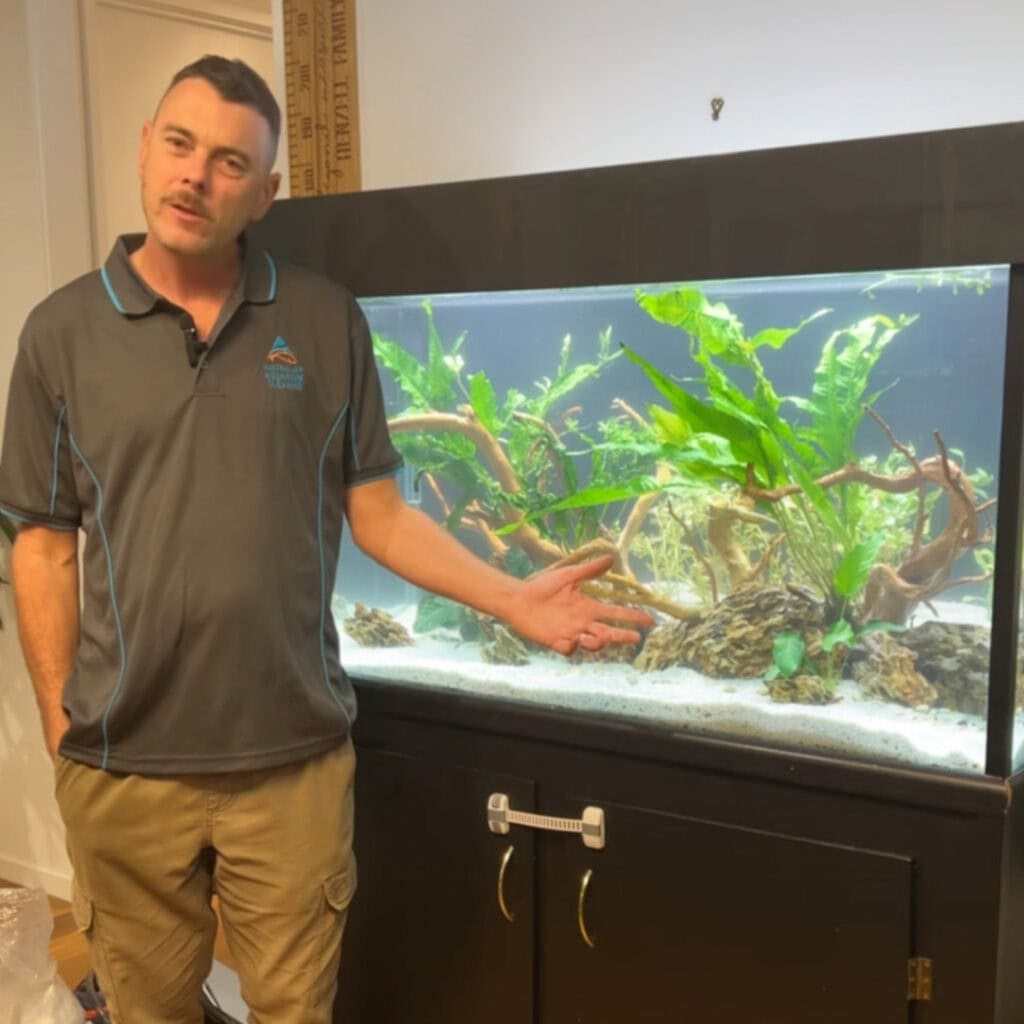
The client already enjoys a large display at their corporate headquarters and wanted the same sense of calm at home. The brief was simple. Create a natural, modern planted layout with strong structure, clean lines and long-term stability. The tank is a standard 4 x 2 x 2 at 400 litres. The design leans on Dragon Rock for form, Gold Vine for height and direction, and a layered substrate system that supports heavy planting and clear front sand.
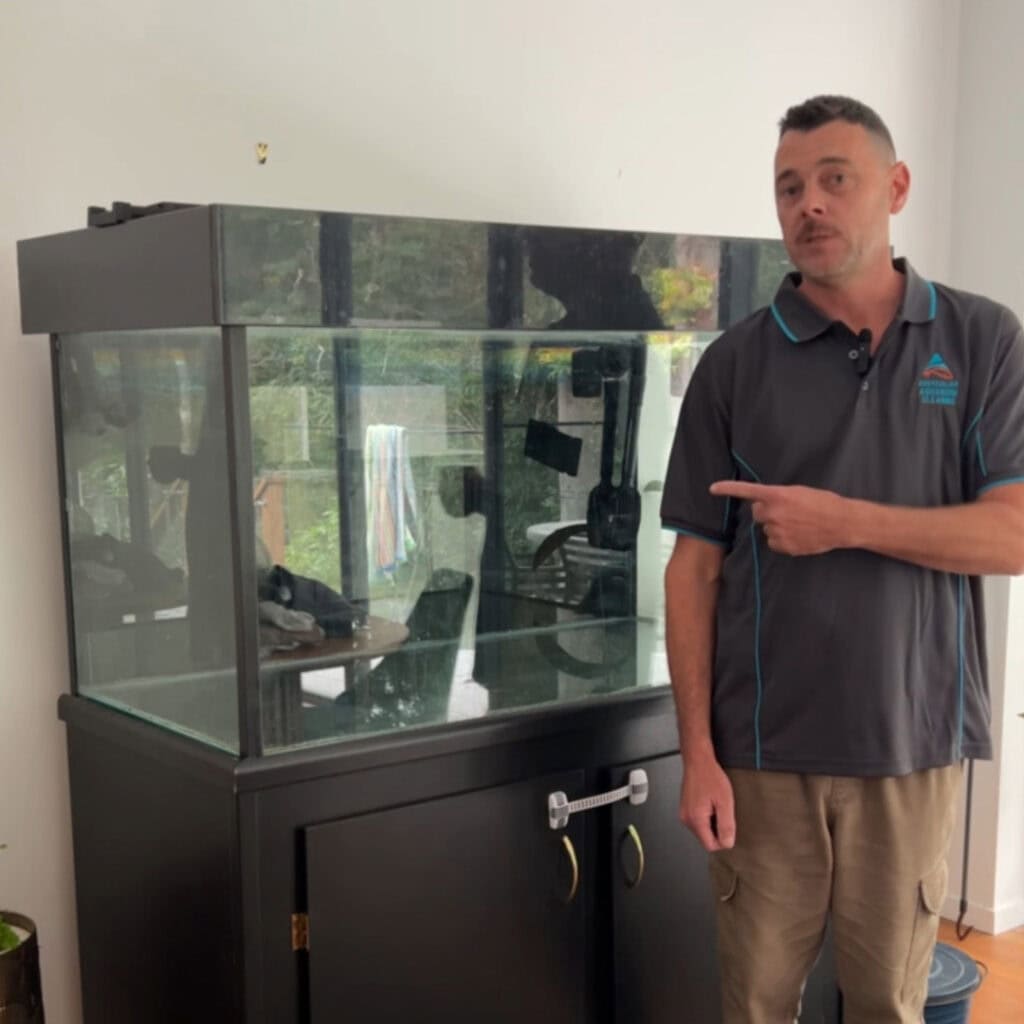
Hardscape and layout plan for a planted aquarium
Dragon Rock, also known as Ohko stone, delivers texture and natural fractures that catch the eye without stealing attention from the plants. Gold Vine adds lift and flow so the viewer’s eye moves from the foreground sand to the mid-ground and into the stems at the rear. The layout places the highest point off centre. This structure gives the planted aquarium depth without crowding the front pane.
Substrate recipe that grows plants and keeps sand clean
A planted aquarium lives or dies on the substrate plan. This build uses layers.
- Base texture layer:
Coffs Harbour gravel spread thinly to create a drainage bed and shape the rear slope. - Nutrient layers at the back:
Aqua Earth aquatic soil is placed where stems will root, with a sprinkle of palagonite for slow-release minerals. - Retaining wall:
A low Dragon Rock line where the rear soil meets the front white sand. - Sand cap at the front:
White natural sand is kept pristine by blocking the gaps in the rock line with small pieces of black sponge, preventing soil from leaking forward.
This simple trick saves hours of maintenance later and protects the clean look that clients love.
Keep it clean at the front and rich at the back. Sand for show, soil for grow.
Gluing wood that never lifts
Gold Vine wants to float. Take time to lock it in. Tissue paper with thin super glue creates strong joints along wood contact points and at rock touch points. Work slowly. Build contact pads with tissue fibres, then wick in glue so it sets hard. Aim for a natural angle that points to the highest rock and frames the future stem mass.
Pro Tip:
If you can lift a piece of wood with one finger, a full tank can lift it too. Build contact pads until the wood feels fused to the rock. Ten extra minutes now prevents a full rescape later.
CO2 system and why stability beats speed
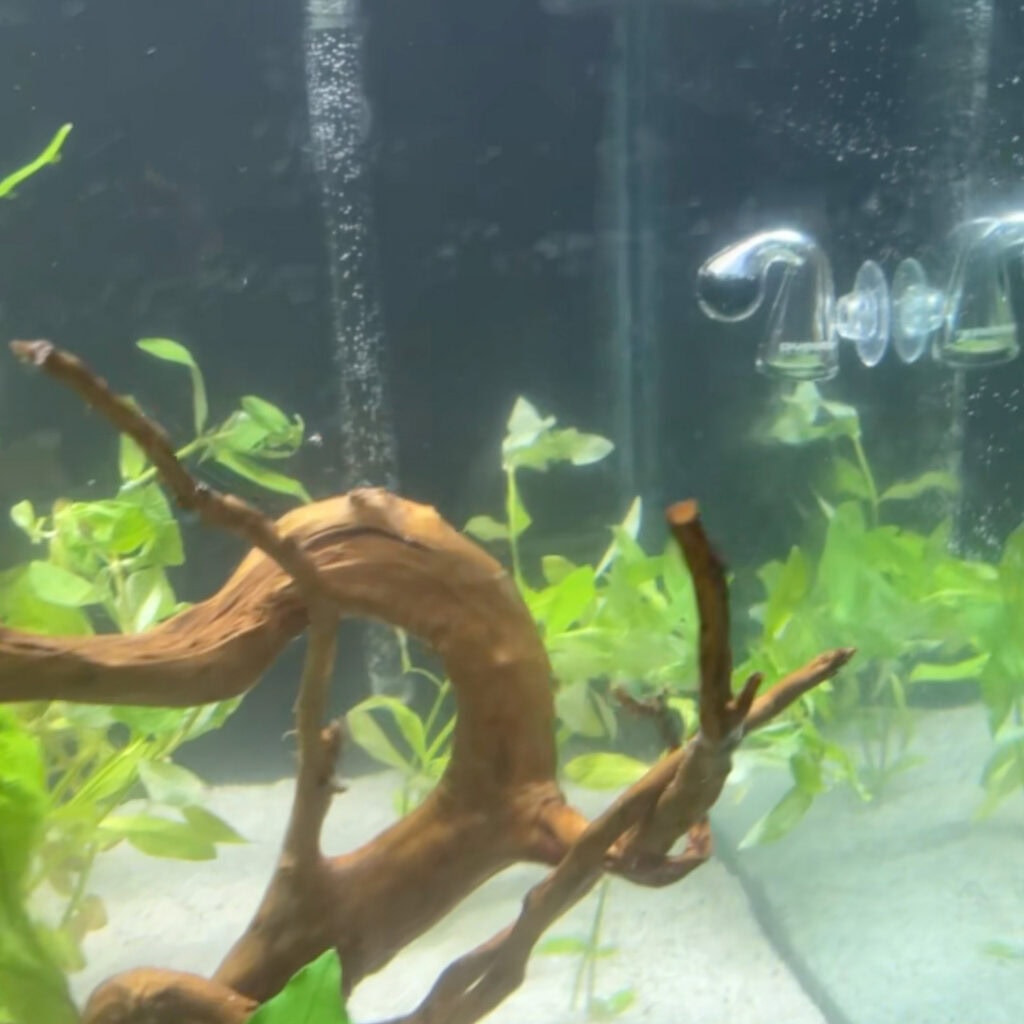
This is a high-energy planted aquarium, so pressurised CO2 is part of the plan. The system uses a Dymax diffuser and drop checker, a quality regulator with solenoid and a large cylinder sourced from a brewing supplier. A 400 litre tank needs real gas volume.
Start with a modest bubble rate, then increase in small steps over days while watching fish behaviour, pearling and pH movement. The goal is consistent saturation through the photoperiod, not a race to the lowest pH.

Jargon Buster: Drop checker.
A small indicator filled with reference solution that changes colour with dissolved CO2 levels. Aim for a lime green tone during peak lighting.
Lighting and plant selection
Strong, even lighting drives growth and colour in a planted aquarium and must match the plant list and CO2 delivery. This build mixes tried-and-true epiphytes with fast growers.
- Java fern. Microsorum pteropus.
Giant, healthy mother plants tied to the wood. - Crested Java fern. Microsorum pteropus Windelov.
Finely branched tips that add detail without fuss. - Anubias coffeefolia.
Heavy, ridged leaves and a rich green that photographs well. - Anubias barteri.
A classic anchor plant that tolerates shade and flows. - Baby tears.
Often supplied as Hemianthus callitrichoides or Micranthemum micranthemoides, depending on the source. Use as a mid to rear filler in this scale to avoid a fussy foreground. - Fast green stems.
A starter mix to kick growth while the hardscape settles. - Red stem accents later.
Add once lighting is confirmed and CO2 is stable to avoid melt.
Tie epiphytes to wood and rock. Plant stems dense at the back in the prepared Aqua Earth. Leave open sand at the front for scale and fish movement.
Filling and first water
- Slow fill into a dish or plastic bag so the sand and soil layers are not disturbed.
- Condition the water for chlorine and chloramine.
- Cap any visible soil edges with a whisper of white sand for a clean finish.
- Turn on the filter and CO2.
- Check for leaks, kinks and trapped air in the canister lines.
Filter choice and flow
A Fluval FX2 canister is used here. It is quiet, reliable and easy to service. Flow is set to create a gentle gyre across the front and back through the stems. This is a planted layout, not a river tank, so push enough water to circulate nutrients without uprooting fresh stems. Position the diffuser where microbubbles can ride the flow across leaves.
Aquarium setup timeline and the ugly phase
Every planted aquarium passes through a settling period. Expect brown diatoms on sand and lower leaves during weeks one to three. Driftwood often grows a white biofilm that looks like cotton. This is normal and temporary.
Do not panic. Keep water changes steady. Introduce a small team of Bristlenose catfish to graze the diatoms once the first week has passed. Clean the glass gently and top up for evaporation since open tanks lose water quickly in Brisbane.
Expert Quote
Brenden, Australian Aquarium Cleaning:
“Take it slow in the first month. Small, regular actions beat big reactions. You want plants to root, bacteria to build and equipment to run the same way every day.“
First livestock and schooling choices
Once plants push fresh growth and the filter cycles, it is time to move the fish from holding. Boesemani Rainbowfish, Melanotaenia boesemani, make a superb centrepiece in a four foot tank with clean water and space to swim. Add small bottom dwellers next. Corydoras for gentle foraging and Bristlenose for ongoing diatom control. Maintain a steady stocking rate rather than adding all at once to protect water quality.
Fish Fact
Boesemani Rainbowfish show their best colour with strong light, plant cover and a dark midground. A planted aquarium with Dragon Rock and Gold Vine gives them all three.
Planted aquarium maintenance rhythm that keeps the look
A planted aquarium is not set and forget. Build a weekly list.
- Water change. Thirty to fifty percent with temperature match.
- Glass clean. Use a dedicated pad for the front pane and a second pad for the sides.
- Sand groom. Lightly stir the top millimetre to lift fine debris into the water column before the water change.
- Filter check. Do not overclean. Rinse the mechanical media in the tank water to protect the biofilm.
- CO2 and pH check. Confirm the drop checker hits lime green during the light window and returns to blue overnight.
- Plant trim. Top fast stems and replant tops to thicken the rear wall. Remove any decaying leaves to keep organic levels low.
Planted Aquarium Checklist
Weekly
Water change, glass clean, sand groom, light filter rinse, CO2 check, trim and replant.
Monthly
Deeper canister service, hose clean, equipment inspection, restock fertilisers.
Fertilisers and dosing
Dose a complete macro and micro fertiliser line in modest daily or alternate-day amounts. Aim for predictability, not spikes. Plants respond best when nutrients arrive on time. Test if you enjoy testing, but watch your plants first. New leaves tell the truth faster than a colour chart.
Aquascaping tips that save time and money
- Build slopes with cheap inert gravel and reserve soil for the rear beds where roots will use it.
- Hide your soil line behind a rock lip. Clean sand is the easiest way to keep a premium look.
- Use one or two wood types and repeat shapes to create rhythm.
- Plant heavy at the start so plants win the biofilm race.
- Add red stems only after light and CO2 are proven steady.
- Keep your hands out of the tank unless you have a job to do.
When to add lids and why evaporation matters
Open tops look modern and help gas exchange. They also evaporate fast. If your schedule makes regular top-ups hard, consider a clear cover. Brisbane summers can swing temperatures, so a cover helps hold conditions steady and prevents curious fish from jumping.
The value of service and a local partner
A big planted aquarium rewards care. Many Brisbane clients prefer a service plan once the layout is established. Regular visits keep the look fresh, the gear tuned, and the water on track. If you need assistance with trims, canister services, or upgrades, the team page and services page are a good place to start.
Explore services and maintenance at https://aquariumcleaning.au/services/ and contact the team at https://aquariumcleaning.au/contact-us/ for a schedule that suits your home or business.
Pro Tip: Do
Plant heavy on day one.
Trim little and often.
Keep records of CO2 bubble rate and pH drop.
Pro Tip: Don’t
Starve the layout of plants.
Planted aquarium troubleshooting the first month
- Brown dust on sand
Normal diatoms. Vacuum lightly and let Bristlenose graze. - White slime on Gold Vine
Biofilm that wood releases while it wets. Manual removal is fine. It fades as wood matures. - Cloudy water
Check filter flow and rinse mechanical media in tank water. Reduce feeding until clear. - Algae on new leaves
Lower light intensity a notch and improve CO2 mixing before you reach for chemicals.
Stocking plan you can build over time
Start with the clean-up crew, then add schooling fish once plants root. Finish with accents.
- Week two to three
Bristlenose catfish. Ancistrus sp. - Week four
Corydoras group. Choose a single species for a clean look. - Week five onward
Boesemani Rainbowfish group. Melanotaenia boesemani. - Optional accents later
A small group of Denison barbs if flow and tank length suit them.
Equipment list from this build
- Canister filter.
Fluval FX2 set for moderate flow. - CO2 hardware.
Quality regulator with solenoid, bubble counter, Dymax diffuser and a large cylinder. - Substrate.
Aqua Earth soil in rear beds, Coffs Harbour gravel base, palagonite minerals and white sand front. - Hardscape.
Dragon Rock and Gold Vine. - Lighting.
High-output LED with a diffused spread to reduce harsh shadows.
Aquarium set up in Brisbane. What changes in this climate.
Brisbane water is generally warm, and the air is humid. This helps fish but can speed evaporation. Plan top-ups or a lid. Summer rain can make water parameters fluctuate at the tap, so use a good conditioner and stick to your weekly routine.
Aquascaping is challenging. If you would prefer us to assist, just like in the video, call us on 0457 536 205, or contact us online.
Aquascaping tips for long-term success
- Think in layers. Foreground sand, midground epiphytes, background stems.
- Repeat textures. Two rock sizes and one wood type are easier to balance than five.
- Hide your gear where flow still works. Diffuser near the return, intake behind a wood line.
- Trim stems as hedges. Top and replant tops for a dense rear wall.
- Photograph early and often. Images help you spot growth patterns and plan trims.
Planted aquarium fish and plant spotlight
Plant spotlight
Anubias coffeefolia:
Thick corrugated leaves, slow growth, thrives tied to wood.
Java fern Microsorum pteropus:
Evergreen and forgiving, perfect for new scapers.
Microsorum pteropus Windelov:
Crested tips add fine texture to midground wood.
Fish spotlight
Bristlenose catfish Ancistrus sp.:
Clears diatoms and drifts through wood without damage.
Corydoras:
Group them for natural behaviour and a busy bottom.
Boesemani Rainbowfish Melanotaenia boesemani:
A bold, active school that shows best colour over plants and rock.
Pro Tip
Stock slowly. Add one group at a time and enjoy the change each addition brings. Your bacteria and your plants will thank you.
What to expect at three weeks, six weeks and three months
- Three weeks
Diatoms fading, stems reaching the surface, first trim due. - Six weeks
Root networks in place, wood biofilm gone, fish settled into routes. - Three months
Rear hedge formed, midground ferns thick, sand still clean, filter rhythm locked in.
When to call a pro for your planted aquarium
If you are busy or want a polished look year-round, scheduled visits make the difference. A technician can reset a hedge, service a canister, tune CO2 and leave the layout ready for the next month of growth. Call our team or send a message through our contact page.

Closing note on your planted aquarium
A planted aquarium is a living project. Build a strong base, keep your routine simple and enjoy the small changes that add up day by day. If you want help with your own aquarium setup or need hands-on support in Brisbane, the team can design, install and maintain a layout that suits your space and schedule. Start with the services page, browse the blog and reach out when you are ready to grow.
Internal links that make your reading journey easier
The Ultimate Commercial Aquarium Setup. Big ideas that apply at home as well.
Creating Calm in the Clinic. A maintenance story that shows why routine beats rescue.
How long can freshwater fish go without food. Holiday planning for planted tanks.
Automatic fish feeders for freshwater tanks. Tools that support your routine.
Products page if you need gear.Main blog index if you want to browse.