
Caring for Your Freshwater Aquarium Over the Holidays
The holiday season is an exciting time for relaxation and travel, but it can leave aquarium owners with an important question: How long can freshwater fish go without food? Whether you’re an experienced aquarist or new to fishkeeping, preparing your tank for your absence is crucial for your fish’s health and happiness.
At Aquarium Cleaning, we’re dedicated to helping you keep your tank in perfect condition, so you can enjoy your time away with peace of mind.

How Long Can Freshwater Fish Go Without Food?
Healthy adult freshwater fish can usually survive between 3 and 7 days without food, depending on the species. For example:
- Hardy species like African Cichlids can sometimes last up to 2 weeks if conditions are optimal.
- Fry (baby fish), however, require regular feeding as they grow rapidly and don’t have fat reserves to rely on.
Pro Tip: Leaving your fish unfed for long periods may lead to stress and long-term health problems. It’s always best to have a feeding plan in place for absences longer than a few days.
Understanding the Needs of Specific Freshwater Fish
Fry vs. Adult Fish: Why Age Matters
Fry are particularly delicate and require frequent feeding to support their rapid growth. Missing even one meal can stunt their development. Adult fish, however, store energy in fat reserves and can tolerate longer periods without food.
Jargon Buster: What are Fry?
Fry are infant or baby fish that are especially vulnerable because they grow rapidly and lack fat reserves. Missing even one meal can hinder their development.
Species Spotlight: African Cichlids
African Cichlids are known for their vibrant colours and lively personalities. However, their active nature means they burn through energy quickly, making consistent feeding essential for maintaining their health and vitality.
Factors That Influence How Long Fish Can Go Without Food
Water Temperature and Metabolic Rates
- Warmer water speeds up metabolism, causing fish to burn through energy reserves faster.
- Cooler water slows metabolism, allowing fish to go longer without food.
Jargon Buster: What is a Metabolic Rate?
A metabolic rate refers to the speed at which fish burn energy, which depends on the water temperature. Warm water increases metabolism, meaning fish will burn through energy reserves faster, while cooler water slows it down.
Tank Environment and Stress Levels
A clean and stress-free environment helps fish endure fasting better. Overcrowded or dirty tanks, on the other hand, can cause stress, making it harder for fish to cope.
Actionable Tip: Ensure your tank is professionally cleaned by Aquarium Cleaning before your holiday to create an optimal environment for your fish. Learn more about our services.
Preparing Your Tank for Extended Absences
Automatic Feeders: Pros and Why You Should Consult an Expert

Automatic feeders can provide reliable feeding while you’re away, but they’re not one-size-fits-all. Incorrect use can lead to overfeeding or blockages.
Expert Advice: Consult the team at Aquarium Cleaning to find the right feeder for your tank and ensure it’s set up correctly. Explore our range of products.
Feeding Blocks: Are They Safe?
Feeding blocks can be useful for short absences but may release excess nutrients into the water, causing algae growth and reduced water quality.
Jargon Buster: What is a Feeding Block?
A feeding block is a dissolvable product that releases food gradually into the water over several days. While convenient, they can cause nutrient build-up and algae growth if overused, especially in smaller tanks.
Better Alternative: Rely on professional tank preparation to minimise risks and ensure balanced feeding.
Trusted Care vs. DIY
While asking a friend or family member to feed your fish may seem convenient, this often results in overfeeding, underfeeding, or missed feedings. Trust the professionals at Aquarium Cleaning to manage your tank care and ensure your fish are well looked after. Contact us to schedule a service.

FAQs About Aquarium Maintenance Over the Holidays
- How often should I clean my tank before leaving?
It’s best to perform a thorough tank cleaning 1–2 days before your trip to ensure the water remains clean and balanced while you’re away. This includes:
- Partial water change (20-30%) – Removing old water and adding fresh, treated water stabilises water chemistry and removes built-up toxins.
- Filter maintenance – Clean or replace filter media to ensure efficient biological and mechanical filtration.
- Gravel vacuuming – Removing uneaten food and debris helps prevent ammonia spikes and algae growth.
- Checking equipment – Ensure heaters, air pumps, and filters are functioning properly to maintain a stable environment.
Proper aquarium maintenance before you leave significantly reduces the chances of water quality issues while your fish are unattended.
- Is it safe to leave my fish without food for a week?
Yes, healthy adult freshwater fish can generally survive up to a week without food. Many species have evolved to endure short fasting periods due to natural food scarcity in the wild. However, fish with higher metabolisms, such as small tetras and rasboras, may require an alternative feeding solution.
For longer trips, using an automatic feeder ensures your fish receive small, consistent meals in your absence. Always test the feeder beforehand to make sure it dispenses the correct amount of food.
- Can I leave my fish without food for 10 days?
Most healthy adult freshwater fish can survive up to 10 days without food, but this depends on species, tank conditions, and overall fish health. Fish that rely on frequent feeding, such as juvenile fish, may experience stress and weakened immunity during extended fasting.
If leaving for 10+ days, consider:
- Using an automatic feeder to provide controlled portions of food at set intervals.
- Arranging a professional aquarium maintenance service to check water quality and feeding while you’re away.
- Adding slow-release food blocks (only in larger tanks with strong filtration) to provide supplemental nutrition.
Long-term fasting should be a last resort, as an automatic feeder is a far safer and more reliable option for maintaining fish health.
- Are feeding blocks suitable for small tanks?
No, feeding blocks are not ideal for small freshwater tanks. While they are marketed as a “set and forget” solution, they often:
- Release excess nutrients too quickly, leading to water quality deterioration.
- Break down unevenly, resulting in inconsistent feeding.
- Cause ammonia and nitrate spikes, especially in smaller tanks with limited filtration.
Instead, an automatic feeder is the best choice for controlled, reliable feeding while maintaining clean, balanced water conditions.
- What’s the safest way to automate feeding?
An automatic feeder is the safest and most reliable way to ensure your freshwater fish receive consistent meals while you’re away. Choose a programmable feeder that allows you to:
- Set portion sizes to avoid overfeeding.
- Schedule feeding times according to your fish’s regular routine.
- Use high-quality, non-perishable fish food such as pellets or flakes designed for automated feeding.
Test the automatic feeder at least a week before your trip to confirm it dispenses food accurately. If unsure which model suits your tank, consult a professional aquarium maintenance service for recommendations.
- Is fasting healthy for freshwater fish?
Short-term fasting (3–5 days) is generally safe for most freshwater fish and may even provide digestive benefits, reducing the risk of bloating and overfeeding-related issues. However, prolonged fasting beyond a week can:
- Increase stress levels, making fish more susceptible to illness.
- Cause weight loss, especially in smaller or highly active fish.
- Lead to aggression as fish compete for limited food resources.
For extended absences, a well-maintained automatic feeder ensures fish receive small, steady portions, keeping them healthy and stress-free.
- How do I prevent water quality issues while I’m away?
To prevent water quality deterioration while your freshwater fish are unattended, follow these steps before your trip:
- Perform a water change (20-30%) to remove accumulated waste.
- Test ammonia, nitrites, and nitrates to confirm water parameters are stable.
- Clean the filter without removing too much beneficial bacteria.
- Ensure aeration and circulation are sufficient to prevent oxygen depletion.
- Avoid overfeeding before leaving, as excess food breaks down and causes water contamination.
Proper aquarium maintenance before departure is the best way to keep water conditions stable while reducing stress on your fish.
- How often should I clean my tank before a holiday?
Performing a partial water change and equipment check 1–2 days before your trip is essential to maintaining stable water conditions. Deep cleaning too close to departure can disrupt the tank’s biological balance, so it’s best to:
- Clean the glass, remove debris, and vacuum gravel to prevent nutrient buildup.
- Check filtration and heating systems to ensure they are running optimally.
- Replace filter media if necessary, but avoid over-cleaning to retain beneficial bacteria.
- Confirm your automatic feeder is functioning properly if used.
By following these pre-trip aquarium maintenance steps, you can leave with confidence knowing your freshwater fish are in a stable, well-maintained environment.
Why Professional Aquarium Cleaning Services Matter
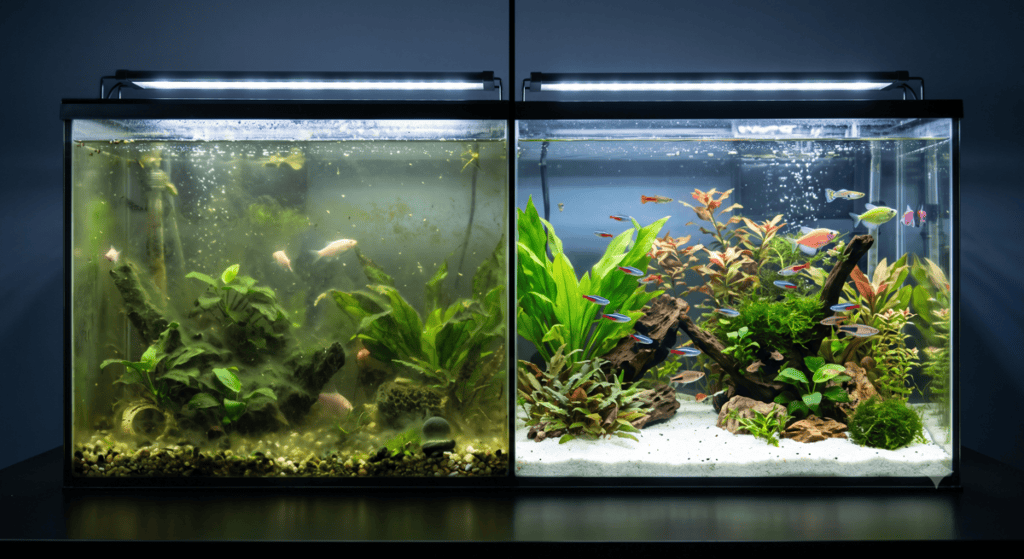
Owning an aquarium – whether at home or in a commercial setting – is a rewarding experience, but it comes with responsibilities beyond simply feeding the fish. Maintaining a clean, balanced environment is crucial for fish health, water clarity, and overall system stability. Without regular upkeep, tanks can develop harmful ammonia spikes, algae overgrowth, and poor water quality, all of which put fish at risk.
For businesses with commercial fish tanks, such as restaurants, offices, and childcare centres, the stakes are even higher. A cloudy or poorly maintained aquarium can quickly go from being a stunning centrepiece to an unpleasant distraction. That’s why partnering with Australian Aquarium Cleaning ensures your tank remains pristine and thriving – without the hassle of constant upkeep.
Here’s how our professional aquarium maintenance services make a difference:
1. Thorough Cleaning for Optimal Water Quality
A clean tank is about more than just aesthetics – it directly impacts the health and longevity of your fish. Our thorough aquarium cleaning services include:
✅ Removing algae buildup to maintain crystal-clear water.
✅ Vacuuming substrate to eliminate waste and uneaten food.
✅ Water changes to refresh and rebalance the tank’s ecosystem.
✅ Deep-cleaning filtration systems to prevent clogging and maintain efficient water circulation.
Unlike DIY cleaning, which often removes too much beneficial bacteria, our team knows how to deep-clean your tank while preserving its biological balance, ensuring optimal water conditions for your fish.
Leave the hard work to us, so you can enjoy a worry-free holiday knowing your fish are thriving. Discover our full range of services.
2. Tailored Feeding Plans to Support Fish Health
Feeding your fish properly is just as important as keeping the water clean. Many fish owners unknowingly overfeed, leading to waste buildup, declining water quality, and digestive issues in fish.
At Australian Aquarium Cleaning, we create custom feeding schedules based on:
- Your fish species and dietary needs (e.g., herbivores, carnivores, omnivores).
- Tank size and bio-load to prevent excess food waste.
- Whether an automatic feeder is in use—ensuring portions are correctly measured.
We also advise on the best high-quality fish food brands to maintain optimal fish health, growth, and coloration.
3. Expert Monitoring of Fish Health & Tank Conditions
Fish don’t always show immediate signs of illness, and poor water quality can quickly lead to disease outbreaks. Our team conducts routine health checks to spot early warning signs of:
🔹 Ammonia or nitrate spikes that could stress or poison fish.
🔹 Unusual fish behaviour, such as lethargy or aggression.
🔹 Signs of disease, including fin rot, ich, or bacterial infections.
🔹 Water temperature fluctuations that may cause stress.
With Australian Aquarium Cleaning monitoring your tank, potential issues are caught early, preventing costly fish loss and emergency interventions.
4. Stress-Free Aquarium Care – So You Can Enjoy Your Tank
Aquariums should be a source of relaxation and enjoyment – not a constant source of stress. Whether you’re a homeowner, a business, or preparing for a holiday, our professional aquarium cleaning services allow you to:
✔️ Save time by letting experts handle routine maintenance.
✔️ Eliminate guesswork when it comes to water chemistry and feeding.
✔️ Enjoy a stunning, healthy aquarium with minimal effort.
For business owners, this means keeping your commercial fish tank in top condition, ensuring guests and clients always see your aquarium at its best.
Best Automatic Feeders for Freshwater Fish
If you’re considering an automatic feeder, here are some of the best options for freshwater fish tanks:
- Eheim Everyday Fish Feeder:
Known for its reliability, this feeder allows precise programming and works well with various types of fish food, including pellets and flakes. - Fluval PF2 Automatic Feeder:
Fluval’s feeder offers multiple feeding times and portions, making it ideal for larger tanks with multiple fish species. - Aqua One Digital Feeder:
A budget-friendly option that’s easy to set up and works best for smaller tanks.
Using an automatic feeder is one of the most reliable ways to ensure your freshwater fish receive consistent meals while you’re away. However, selecting the right feeder is just as important as using one in the first place. Not all automatic feeders are the same, and choosing the wrong one can lead to overfeeding, clogged dispensers, or even food shortages.
Here’s what you need to consider when selecting an automatic feeder for your aquarium:
1. Ensure Compatibility with Your Fish Food Type
Different fish require different types of food, and not all automatic feeders can handle every food type effectively. Before purchasing, check that the feeder can dispense the food your fish regularly eat:
- Pellets & Granules – Most automatic feeders handle pellets and small granules well, as they are uniform in shape and size.
- Flake Food – Some feeders struggle with flake food, as it can clump together and cause uneven dispensing. Choose a model with an adjustable portion control to prevent overfeeding.
- Freeze-Dried or Live Food – Most automatic feeders are not designed to dispense live or freeze-dried food. If your fish rely on these, you may need an alternative feeding plan while you’re away.
Using the wrong feeder for the wrong food type can lead to blockages, inconsistent feeding, or spoiled food. Testing the feeder with the exact food type before leaving ensures it dispenses correctly without any issues.
2. Choose a Feeder That Matches Your Tank Size & Fish Population
The size of your aquarium and the number of fish play a big role in determining which automatic feeder is right for you.
- Small to Medium Tanks (Under 100L) – Choose a compact feeder that dispenses small, controlled portions to avoid excess food buildup.
- Larger Tanks (Over 100L) – Opt for a high-capacity feeder that can hold more food and dispense multiple feedings per day without clogging.
- Densely Stocked Tanks – If you have a large fish population, select a feeder with multiple feeding compartments to ensure all fish receive food evenly.
A feeder that’s too large for a small tank may dispense too much food, leading to water quality issues. Likewise, a feeder that’s too small for a large aquarium may not provide enough food, leaving some fish undernourished.
3. Test the Automatic Feeder for Several Days Before Leaving
Even the best automatic feeders can malfunction, and the last thing you want is to return home to an overfed or starving tank. To avoid this, follow these testing steps:
✅ Run the feeder for at least 3–5 days before your trip to ensure it dispenses properly.
✅ Check the portion sizes – some feeders dispense more or less than expected, so adjust accordingly.
✅ Observe fish behaviour – ensure all fish are getting food and that no excess food is left uneaten.
✅ Place the feeder in a secure position – make sure it’s firmly attached to prevent it from shifting or dropping into the tank.
Many low-quality automatic feeders are prone to jamming, over-dispensing, or failing entirely. By testing the feeder in advance, you can identify any issues and make necessary adjustments or replacements before leaving.
4. Consider Battery Life & Backup Power
If you’re leaving for an extended period, battery life is a crucial factor. Many automatic feeders run on batteries, and if they die mid-trip, your fish will go unfed.
- Choose a feeder with a long battery life or a plug-in option with a battery backup.
- Replace old batteries before leaving to prevent unexpected failures.
- Check for power interruptions – if your feeder relies on an electrical outlet, consider using a UPS backup to keep it running in case of a power outage.
5. Professional Advice & Backup Plans
Even with an automatic feeder, having a backup plan is always a good idea – especially for valuable fish or large aquariums. At Australian Aquarium Cleaning, we help clients:
✔️ Select the best automatic feeder based on tank size, fish type, and feeding schedule.
✔️ Test and calibrate the feeder to ensure proper operation before you leave.
✔️ Provide professional feeding services for long trips, ensuring fish receive proper care while you’re away.
If you’re unsure about choosing an automatic feeder or need expert aquarium maintenance, we’re here to help.
📩 Contact Australian Aquarium Cleaning today for tailored advice on fish feeding and tank care!
Why Stable Water Quality Matters Most
Freshwater Fish are highly sensitive to changes in their environment, and stable water quality is critical when they’re left unfed. Here’s why:
- Ammonia and Nitrite Buildup:
Even if you’re not feeding your freshwater fish, waste continues to accumulate. A functioning filter is crucial for breaking down harmful substances. - Stress Reduction:
Clean water with stable parameters reduces stress on your fish, increasing their ability to endure short periods without food. - Disease Prevention:
Poor water quality can weaken your fish’s immune system, making them more susceptible to diseases. Regular tank maintenance minimises this risk.
Final Thoughts on Keeping Your Fish Happy While You’re Away
Leaving your freshwater fish unattended doesn’t have to be stressful. With proper aquarium maintenance, the use of an automatic feeder, and pre-trip planning, your fish can remain healthy and comfortable while you’re away.
If you want peace of mind that your tank is in the best condition before your trip, Australian Aquarium Cleaning offers professional maintenance services, ensuring your fish thrive even in your absence.
📩 Contact us today to book your aquarium maintenance or get personalised advice tailored to your tank. Let us take care of your fish, so you can enjoy a worry-free holiday without any stress.