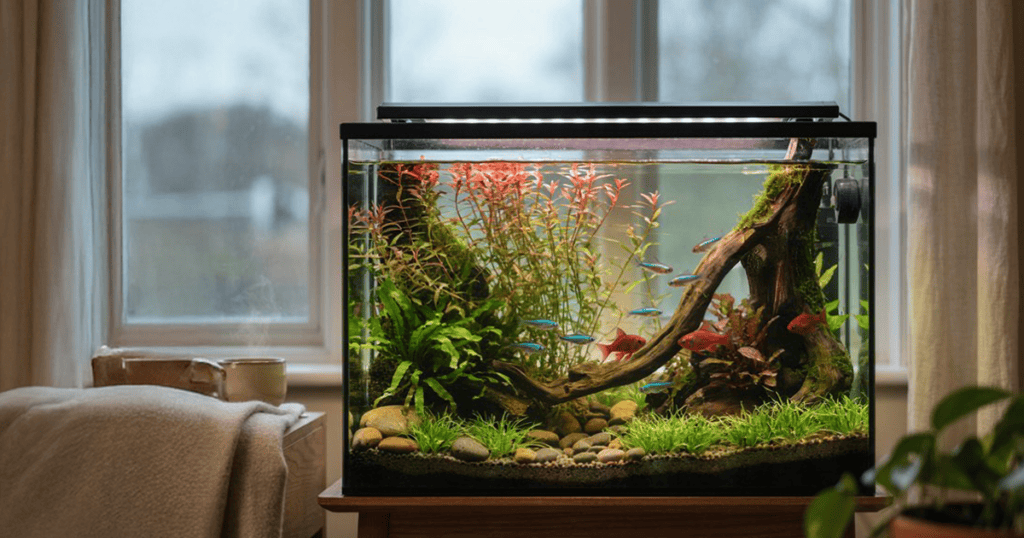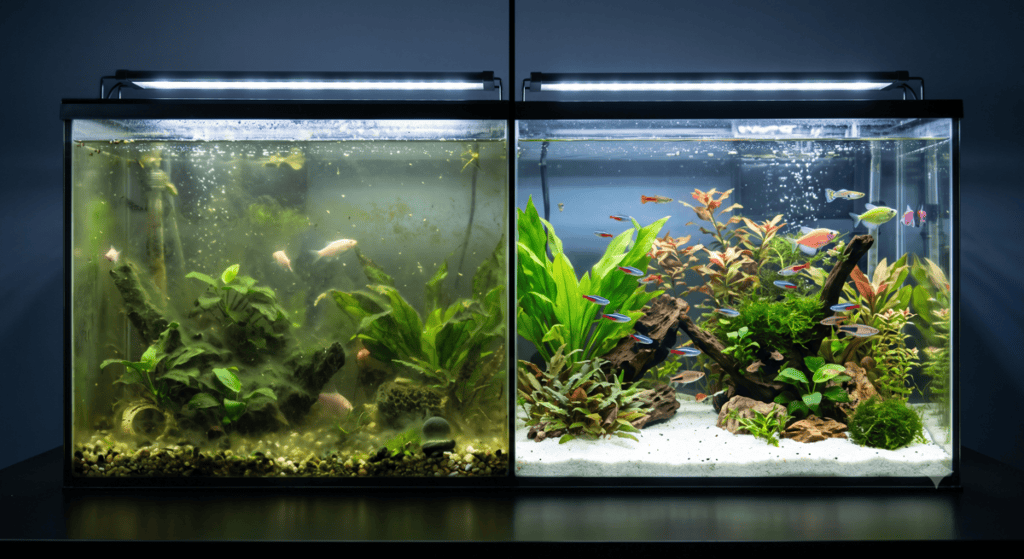

Fish tank maintenance schedule for clear water and healthy fish in Brisbane and South East Queensland.

If you’re asking how often you should clean your aquarium, you’re already ahead of most tank owners. Most problems start when cleaning becomes reactive: cloudy water, sudden algae growth, or fish hiding in corners.
This guide gives you a clear schedule, explains what changes it, and shows you how to keep your tank stable without spending every weekend doing maintenance. It’s written for both home aquariums and commercial displays, such as offices, clinics, cafés, and show tanks.
Tip:
Aquariums are closed systems. Waste doesn’t disappear; it gets processed and stored until you remove it. A simple fish tank maintenance schedule keeps that build-up under control.
How often should you clean your aquarium? The quick answer that actually works
Most established tanks do best with a partial clean every 7–14 days. That usually includes a partial water change and a light substrate vacuum. Larger, lightly stocked tanks can stretch to 2–4 weeks if everything stays stable and the filter is performing well.
A quick guide:
- Up to 60 L — every 7–10 days
- 60–200 L — every 10–14 days
- 200 L + — every 2–4 weeks
A lot of people only start searching once something looks off. If you are wondering what happens if you don’t clean your aquarium, it usually starts with waste building up in the gravel, then cloudy water, then algae that keeps coming back.
Tip:
Smaller tanks swing faster. Less water means quicker changes in temperature and chemistry, especially in warm Queensland weather, which often affects how often to change aquarium water.
Why “it depends” is actually the truth
Two tanks can be the same size and still need completely different care. Here’s why:
- More fish = more waste. Goldfish and cichlids in particular load a system quickly.
- Overfeeding? It’s the fastest route to cloudy water and green algae.
- If your filter flow drops, your tank’s biological processing slows. Nitrifying bacteria need oxygen.
- Extra light, especially sunlight from a window, fuels algae.
- Plants help with stability, but detritus still builds up underneath.
And in SEQ, some tap water contains monochloramine, which must be neutralised before it’s safe for fish.
“Clear water is nice. Stable water is what keeps fish healthy.”
What “cleaning” really means inside a tank
A healthy aquarium is a balance between biology and maintenance.
Fish release ammonia as waste and through breathing, and the beneficial bacteria in your tank convert it first into nitrite and then into nitrate – part of what’s known as the natural nitrogen cycle. But the process has limits. If your system gets overloaded or disrupted, ammonia rises, and fish become stressed.
Tip:
Warm water holds less dissolved oxygen than cold water, which matters in Queensland summers. Lower oxygen can stress fish and slow biological processing, so keeping a steady fish tank maintenance schedule becomes even more important in hotter months.
Cleaning isn’t about scrubbing everything spotless. It’s about removing waste at the right pace – without stripping the good bacteria that keep your water safe.
How often to change aquarium water
For most established tanks, 20 – 30 percent every 1 – 2 weeks is ideal.
Your goal is stability: smaller, consistent changes beat big, occasional corrections.
Where water changes go wrong:
- Taking out too much at once and shocking the system
- Not treating new water for chlorine / chloramine
- Temperature mismatches that stress fish
- Cleaning every surface at once and killing bacteria
Tip:
Fish gills are sensitive. Disinfectants safe for humans can still harm fish if you don’t neutralise them first.
How to clean a fish tank safely
Step 1: Check before you touch
Before you start cleaning, take 60 seconds to look and listen. This quick check prevents the most common DIY mistakes and keeps your routine safe.
Look for:
- Fish behaviour, normal swimming and normal appetite
- Breathing, heavy breathing at the surface is a warning sign
- Water clarity, cloudy water or a dusty haze usually means waste is suspended
- Smells, a stronger “pond” smell can mean waste is building up in the substrate
- Filter flow, reduced flow often means the filter is clogged and not processing waste efficiently
If something seems off, slow down. The safest move is often a smaller clean, then another small clean a few days later, rather than one big reset. This is the backbone of how to clean a fish tank safely, and it helps you avoid sudden swings.
Practical tip for Brisbane and South East Queensland
In warmer weeks, tanks can change faster. If you notice fish acting differently in summer, bring your next cleaning forward rather than waiting for the schedule.
Step 2: Do a partial water change, not a full reset
A partial water change is the simplest way to reduce waste without upsetting the tank’s balance. Most established tanks respond better to small, consistent changes than big, occasional corrections.
A good baseline for how often to change aquarium water is 20 to 30 percent every 1 to 2 weeks. If your tank is heavily stocked, fed often, or getting more light, you may need smaller changes more frequently.
How to do it smoothly:
- Match the new water temperature as closely as you can
- Treat replacement water properly before it hits the tank
- Avoid draining too much at once unless there is an urgent issue
- Keep the change calm, steady, and repeatable
If your tank keeps going cloudy, consider a short “stabiliser run”, two smaller partial changes in the same week. That approach suits both home and display tanks and fits a realistic fish tank maintenance schedule.
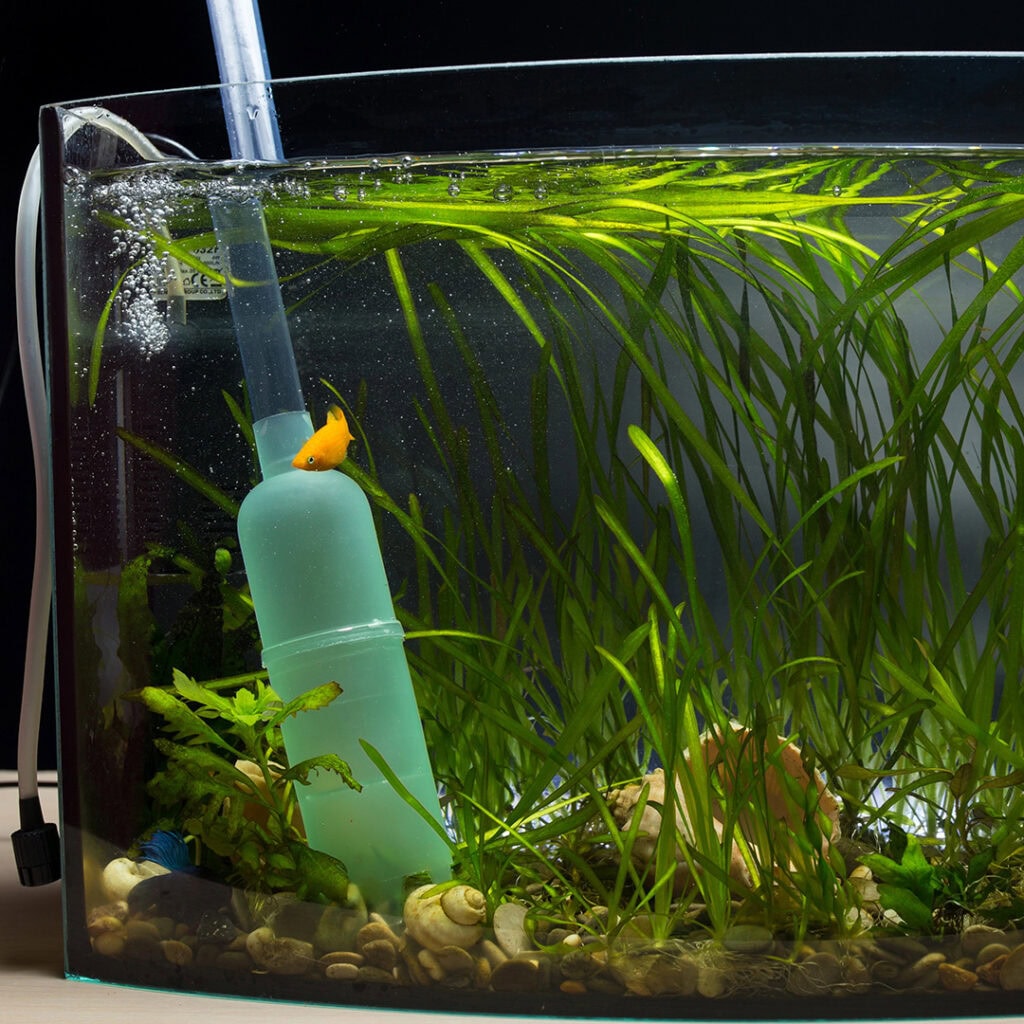
Step 3: Gravel vacuum properly
This is the step most people underestimate. A lot of tank issues are not floating in the water, they are stored in the substrate.
Uneaten food and fish waste sink into the gravel. Over time, that build-up fuels cloudy water and makes algae come back faster. A proper gravel vacuum removes the stored waste, which is why this step often makes the most significant difference to clarity.
How to do it without overdoing it:
- Focus on high-waste areas first, under-feeding spots and near décor
- Work in sections, not the whole tank at once if the tank is sensitive
- Stop when the siphon water runs clearer, you do not need to strip the gravel spotless
If you are maintaining a public-facing tank, this step is a major reason people book a fish tank cleaning service Brisbane businesses can rely on. It keeps the tank looking clean, but, more importantly, it keeps it stable between visits.
Tip:
Excess nutrients and decomposing material can drive oxygen down, especially when temperatures rise.
Step 4: Clean the glass for visibility, not perfection
Glass cleaning is mostly about keeping the tank enjoyable to look at. A light algae film is normal in most aquariums, especially if the tank gets strong light or the system is nutrient-rich.
Aim for a gentle clean that does not stir up debris:
- Wipe the front and side panels you view most often
- Leave the back panel if you like, it can hide equipment and look more natural
- Avoid heavy scrubbing that kicks waste into the water
- If the water looks cloudy right after you clean, you have likely stirred up debris, not created a new problem
If you feel like you are wiping the glass every couple of days, that is a good signal to check the cause rather than scrubbing harder. Too much light, too much feeding, and waste stored in the gravel are the usual drivers.
This is also why the answer to how often should you clean your aquarium is not just about water changes. If the glass keeps filming over quickly, your tank is telling you the system needs a steadier routine, not more elbow grease.
Step 5: Keep the filter working, without wiping out the good bacteria
Your filter does more than move water. It is where a lot of the beneficial bacteria live, and those bacteria help keep waste under control. This is also why properly set up aquarium filtration systems play such a key role in keeping cleaning routines predictable and water quality stable. If you clean the filter too aggressively or replace everything at once, the tank can lose stability, and the water can turn cloudy.
Do this instead:
- Rinse sponges or pre-filter pads in a bucket of removed tank water, not under the tap
- Keep biological media wet, and only clean a small portion at a time
- Clean the filter when the flow drops, or the media is visibly clogged, rather than on a strict timer
If you are unsure, a safe rule is to clean mechanical parts more often than biological media and avoid replacing media unless it is falling apart. If you are wondering how often to clean the fish tank filter, watch your flow and your water clarity; they usually tell you before the calendar does.
“The filter isn’t just a pump. It’s a living part of the system.”
A schedule you can actually follow
If you want a simple fish tank maintenance schedule, follow the routine below and adjust based on fish load, feeding, and algae.
- Every 3–6 months:
Clean hoses, replace worn tubing or clamps, and review feeding habits if algae keeps returning. - Weekly:
Feed sensibly, remove visible waste, wipe the front glass, top up for evaporation, and check flow. - Every 7–14 days:
Partial water change, gravel vacuum, light glass clean, rinse pre-filter sponge if flow slows. - Every 4–6 weeks:
Inspect the filter, trim plants, clean debris traps, and check heater accuracy.
What happens if you don’t clean your aquarium?
What happens if you don’t clean your aquarium is usually not one dramatic failure overnight. It is a slow build-up that turns a tank from easy to own into one that needs constant attention.
Waste settles into the gravel, behind rocks, and under ornaments. Uneaten food breaks down, and fish waste continues to accumulate. The first signs are often subtle: dull water, the glass needing to be wiped more often, and algae returning faster than it used to. As that load increases, water quality becomes less stable, and fish can start showing stress signs like hiding, reduced appetite, acting jumpy, or heavier breathing.
In the background, the tank can start drifting away from its safe baseline. That is why how often to change aquarium water matters, because consistent partial water changes help keep waste from building up to the point where the tank becomes reactive.
Tip:
Even clear water can hide chemistry issues. Clarity ≠ stability.
Commercial tanks need tighter schedules
Commercial display aquariums have a tougher job than most home tanks. They are often lit for longer, seen by more people, and fed by more than one person. That mix makes consistency harder, which is why a clear fish tank maintenance schedule matters in cafés, offices, and clinics.
These tanks also tend to sit in brighter areas, near windows, reception lighting, or signage lighting. More light can mean algae builds faster, even when the water still looks clear. Add inconsistent feeding, and waste can build up quickly in the gravel and filter.
Weekly or fortnightly servicing keeps the system steady and the tank looking its best. It also helps prevent minor issues from turning into complaints, odours, or fish losses. For many sites, it is easier to book a fish tank cleaning service Brisbane businesses can rely on, rather than adding another task to the team’s day.
Common mistakes that cause repeated problems
Most aquarium issues come from good intentions. The problem is usually doing too much at once or fixing the symptom instead of the cause. These are the mistakes that lead to the same problems returning again and again.
Overfeeding “because they look hungry.”
Fish learn to beg. They will rush the glass when you walk past, even if they were fed recently. Extra food becomes extra waste, which feeds cloudy water and algae. Smaller feeds and removing uneaten food are two of the quickest improvements you can make.
Too much light, especially sunlight.
Algae growth is often driven by light more than “dirt”. A tank near a window can get enough extra light to trigger recurring algae, even when your tank light is only on for a normal amount of time. If algae comes back quickly, shorten the light period and reduce direct sunlight before scrubbing harder.
Big cleans followed by long gaps, this creates swings.
A major clean can change conditions quickly, but the long gap lets waste build up again. Fish cope better with steady routines. A simple fish tank maintenance schedule helps you avoid the cycle of big clean-ups and long gaps. A consistent approach also helps you decide how often to change aquarium water, since you make smaller changes on a schedule rather than large corrections when things look bad.
Changing all filter media at once and destroying biology.
Replacing everything at once can remove a large amount of the beneficial bacteria that help keep the tank stable. That is when you see cloudy water, unstable conditions, or a tank that feels like it has gone backwards. Clean mechanical sponges when flow drops, keep biological media intact, and only replace media when it is physically breaking down.
If you are unsure how often to clean fish tank filter, use simple signals. Clean when flow slows, when media looks clogged, or when debris is building up faster than usual.
Using untreated tap water in chloraminated areas.
Replacement water needs to be treated properly before it is safe for fish. If disinfectants are not neutralised, fish can show stress quickly. This is a core part of how to clean a fish tank safely, especially when you are doing partial changes on a regular routine.
When to call Aquarium Cleaning
If you are searching for aquarium cleaning Brisbane locals rely on, we can set a schedule that keeps your tank stable. We also offer a fish tank cleaning service Brisbane homes and commercial sites can book on a regular plan.
You don’t have to wait for a crisis! Book a service if your water keeps clouding, algae returns quickly, fish hide or breathe heavily, or you simply want predictable results without spending weekends testing and guessing.
We service home and commercial aquariums across Brisbane and South East Queensland, focusing on stable water, safe cleaning, and schedules tailored to each setup.
If you want your tank to stay clear and balanced, book a regular clean with Australian Aquarium Cleaning
How often should you clean your aquarium? Check out the FAQs:
How often should I clean my fish tank?
Most established home tanks do best with a partial clean every 7 to 14 days. That usually means a partial water change, a light gravel vacuum, and a quick check that the filter is flowing properly. Smaller tanks often need weekly attention because water chemistry can change faster. Larger tanks can sometimes stretch longer if they are lightly stocked and stable.
If you want a simple fish tank maintenance schedule, start with fortnightly maintenance and tighten it to weekly if you notice cloudy water, faster algae growth, or waste building up in the gravel.
How often to change aquarium water?
A good baseline is a 20 to 30 percent water change every 1 to 2 weeks for most established tanks. This helps keep nitrate and dissolved waste under control without shocking the system. If your tank is heavily stocked, fed often, or warms up in summer, you may need smaller changes more frequently.
If you are unsure, watch for early signs that your aquarium water change frequency should increase, such as water that looks dull, algae that returns quickly, or fish that seem less active than normal.
What happens if I don’t clean my aquarium?
If you skip maintenance, waste and uneaten food build up in the gravel and filter paths. What happens if you don’t clean your aquarium is usually a slow creep, not an overnight disaster. Over time, this can lead to cloudy water, persistent algae, unpleasant smells, and fish that appear stressed or hide more often. In more severe cases, water quality can become unstable and harmful compounds can rise.
If you are searching “what happens if you don’t clean your aquarium”, the practical answer is that small issues become recurring issues. It becomes harder to fix because you are correcting a build-up, not maintaining a stable baseline.
Can I clean the tank without moving the fish?
Yes. In most cases, it is safer to leave fish in the tank and clean calmly around them. Netting and moving fish adds stress and can cause injury, especially if fish get caught in décor or panic during handling.
Professional maintenance is usually designed to keep fish in place. If you are learning how to clean a fish tank safely, focus on small, controlled changes, treat replacement water correctly, and avoid cleaning everything at once.
Do planted tanks need different care?
They do. Live plants can support stability by using nutrients, but planted tanks still need waste removal, pruning, and a plan for light. Dead leaves and trapped debris can still break down and fuel algae. Planted tanks also benefit from consistent routines, because sudden changes in lighting, fertiliser, or maintenance can trigger algae blooms.
A planted tank still needs a reliable schedule, especially if it is a display tank where clarity matters.
Need Aquarium Cleaning in Brisbane? We’ve got you!
A clear, healthy tank is all about consistency. When the routine is right, fish stay calmer, water stays clearer, and algae becomes manageable instead of constant.
If you are still asking how often should you clean your aquarium, we can recommend the right frequency for your setup and take care of the maintenance for you.
If you’d prefer to skip the trial and error, Australian Aquarium Cleaning can maintain your tank on a schedule that suits your aquarium and your lifestyle.