
You clean the tank. The glass is spotless, the water is clear, the fish look happy. A few days later, the same green film is creeping back across the glass, and the decorations are starting to look fuzzy again.
If you’ve found yourself asking why your fish tank keeps getting algae no matter how often you clean it, you are not doing anything wrong by cleaning. You are just cleaning the symptom instead of the cause. Algae that keeps coming back almost always means something in the tank’s conditions is feeding it faster than a wipe-down can keep up with, and no amount of scrubbing fixes that on its own.
We see this pattern constantly across homes, offices, clinics and childcare centres in Brisbane, the Gold Coast and the Redlands. The good news is that recurring algae is one of the more fixable aquarium problems once you know what is actually driving it.
Why Does My Fish Tank Keep Getting Algae in the First Place?
Algae is a plant. Like any plant, it needs light and nutrients to grow, and an aquarium usually has plenty of both. Green algae in particular responds strongly to bright light and unbalanced nutrient levels, which is exactly why it shows up so reliably in home tanks. The mistake most people make is treating algae as a cleanliness problem, when it is really a balance problem.
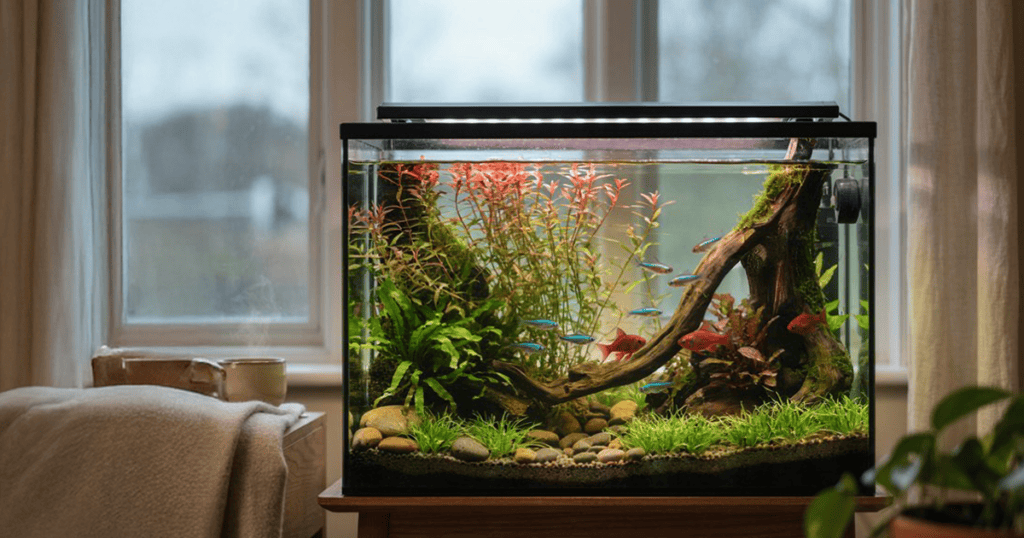
Light is the biggest driver. Tanks positioned near a window, or left with the aquarium light running for too many hours a day, give algae exactly what it needs to thrive. It does not take much. A tank that gets a few extra hours of natural light through a nearby window each afternoon can grow algae noticeably faster than an identical tank across the room.
Nutrients are the second driver, and they build up from ordinary tank life. Uneaten food, fish waste, and decaying plant matter all break down into the nitrates and phosphates that algae feeds on. A tank that is slightly overfed, even by a small amount each day, gives algae a steady supply that a weekly clean cannot fully remove.
Fish Fact: Algae does not need a dirty tank to grow. It needs light and nutrients, and a tank can look completely clean to the eye while still having exactly the conditions algae loves.
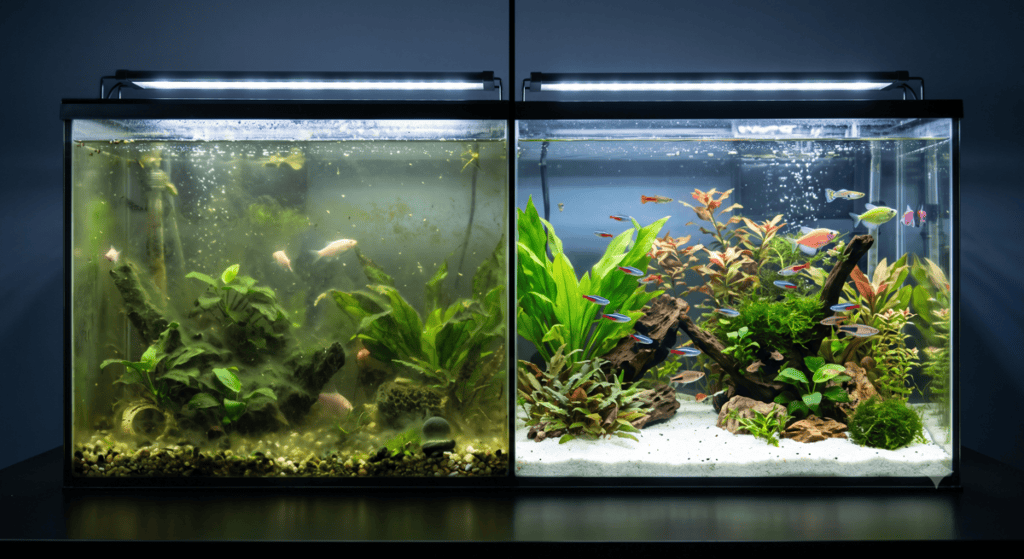
The third driver is inconsistency. Big, irregular cleans followed by long gaps between maintenance create swings in the tank’s nutrient levels, and algae tends to bloom hardest right after those swings. A tank cleaned on a steady, predictable schedule usually has a far easier time keeping algae in check than one that gets an occasional deep clean when it starts to look bad.
The Types of Algae Brisbane Tank Owners Deal With Most
Not all algae behaves the same way, and knowing roughly what you are looking at helps point to the cause.
Green film or green spot algae is the most common type in home aquariums. It coats the glass, decorations and slower-growing plants, and is almost always a light problem. This is the type most people are dealing with when they say their tank “keeps getting algae” no matter how often they clean the glass.
Brown algae, or diatoms, tends to show up in newer tanks, or tanks that have recently been reset or heavily cleaned. It is usually part of a tank settling in rather than a long-term problem, and it often eases off on its own once the tank has stabilised. If it is still hanging around in an established tank, it is worth checking as light and nutrients rather than assuming it will just go away.
Green water, where the whole tank turns a cloudy green rather than algae growing on surfaces, is a different situation. This is a bloom of free-floating algae suspended in the water itself, and it usually points to a stronger imbalance of light and nutrients than surface algae does. It can look alarming, but it responds to the same underlying fixes.
Pro Tip: If you can identify which type of algae you are looking at, you can usually work out the cause faster. Green film points to light. A sudden green water bloom points to a bigger swing in nutrients or light exposure than usual.
What Actually Works Long-Term
The fixes that actually stop algae coming back are rarely about scrubbing harder. They are about adjusting the conditions that let it grow in the first place.
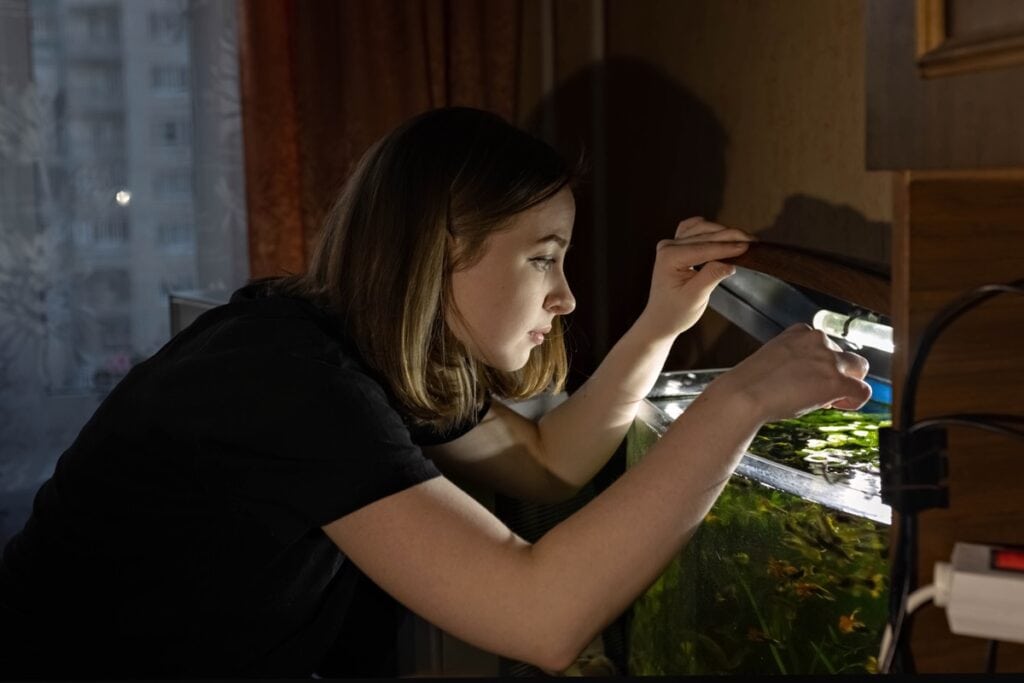
Start with lighting. Most home aquariums only need six to eight hours of light a day. If the tank sits near a window, consider whether curtains or repositioning the tank can cut down the extra natural light it is picking up. A simple timer on the tank light removes the guesswork and keeps the hours consistent, which matters more than most people expect.
Next, look at feeding. Fish generally need less food than owners assume, and uneaten food sitting in the substrate is one of the most common hidden nutrient sources. Feeding a smaller amount that gets eaten within a couple of minutes, rather than a larger amount that leaves leftovers, makes a real difference over time.
A consistent maintenance schedule matters just as much as any single fix. Regular partial water changes, done on a steady rhythm rather than only when the tank looks bad, keep nutrient levels from building up to the point where algae takes hold. This is the same principle behind how often you should clean your aquarium, and it applies just as much to algae control as it does to general water quality.
Some tank owners also introduce algae-eating fish or invertebrates, such as Bristlenose catfish, as part of a long-term approach. These can genuinely help keep light algae growth in check, but they work alongside good lighting and feeding habits, not instead of them. An algae eater in a tank with too much light and too much food is still fighting a losing battle.
If algae keeps returning despite adjusting light and feeding, it is worth checking water parameters rather than guessing further. Elevated nitrate or phosphate levels are common hidden drivers, and a simple test can confirm whether that is what you are dealing with before you spend more time changing things that were not actually the problem.
Fish Fact: A small amount of algae in an established aquarium is completely normal, and even beneficial in some cases. The goal is not zero algae. The goal is algae that stays in check rather than taking over.
What We See in Real Tanks
Across the tanks we maintain in Brisbane, the Gold Coast and the Redlands, the pattern is remarkably consistent. The tanks that keep winning against algae are not the ones that get scrubbed hardest. They are the ones with steady light hours, sensible feeding, and a maintenance routine that happens on a schedule rather than in reaction to how the tank looks that week.
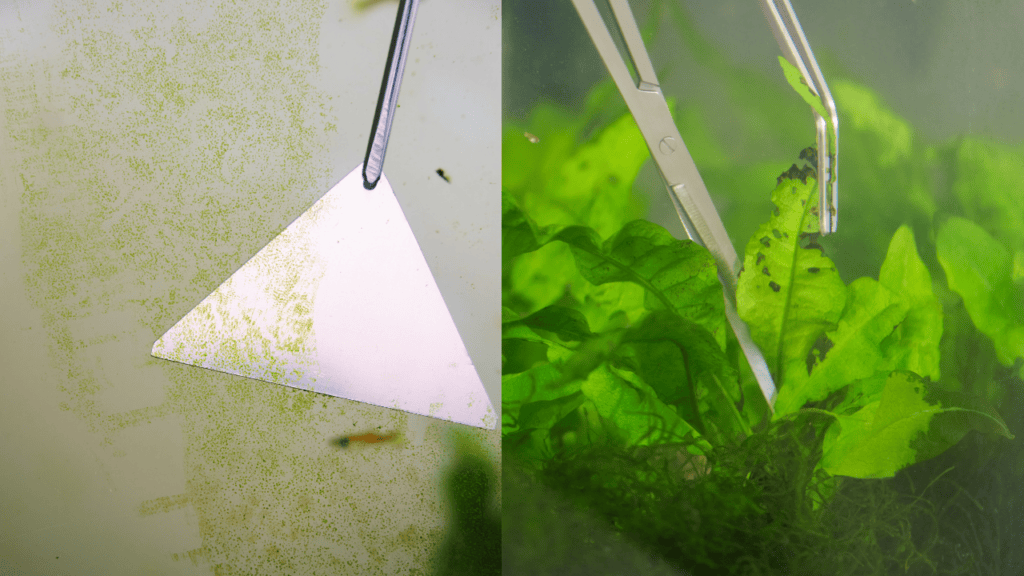
We also see the opposite pattern often enough that it is worth mentioning directly. A tank owner notices algae, does a big clean, and feels like the problem is solved, only for it to return within a week or two. That is usually a sign the clean addressed the symptom but not the underlying light or feeding issue, and it is one of the most common reasons people end up feeling like they are fighting a losing battle with their tank.
This is exactly the kind of pattern covered in our guide on fish tank warning signs, where recurring problems despite regular cleaning are flagged as one of the clearest indicators that something structural, rather than a one-off mistake, is driving the issue.
Commercial and childcare tanks tend to show this pattern especially clearly, because the lighting is often left on for longer hours to keep the display looking good during opening hours, and feeding routines can vary depending on who is on shift that day. Neither of those is a mistake exactly, but together they can quietly push a tank toward the exact conditions algae needs. A tailored maintenance plan that accounts for the display hours and feeding pattern of a specific space usually solves this far more reliably than simply cleaning more often.
When It’s a Sign to Call a Professional
Some algae problems are genuinely simple to fix once you adjust lighting and feeding. Others keep coming back no matter what changes you make, and that is usually the point where a second set of eyes helps more than another round of scrubbing.
It is worth booking a professional check if algae keeps returning within days of a clean despite adjusted lighting and feeding, if you are not sure whether what you are seeing is algae or something else entirely, or if the tank is a commercial, clinic or childcare setting where presentation and consistency matter and there is no time to run trial and error on lighting schedules.
A trained eye can usually spot the actual driver in a single visit, whether that is a lighting setup working against the tank, a filtration issue letting nutrients build up, or a feeding routine that is quietly overloading the system.
Local Aquarium Cleaning Support in Brisbane, Gold Coast and Redlands
We maintain aquariums across homes, offices, dental and medical clinics, and childcare centres throughout Brisbane, the Gold Coast and the Redlands, and recurring algae is one of the most common reasons people first get in touch. If your tank keeps growing algae no matter how often you clean it, it is often faster and more cost-effective to have someone check the underlying cause than to keep buying products that treat the surface problem.
If you would like a professional opinion on your setup, our aquarium maintenance services cover ongoing water quality and algae management, tailored to your specific tank and location.
FAQs
Is algae always a sign of a dirty tank?
No. Algae is driven mainly by light and nutrient levels, not by dirt. A tank can look visibly clean and still have the conditions algae needs to grow.
Does more light always mean more algae?
Generally yes, particularly natural light from a nearby window. Most home aquariums do well with six to eight hours of consistent artificial light a day, and cutting back extra light exposure is often the single biggest lever for reducing algae.
Can I get rid of algae for good?
You can get it down to a manageable, mostly invisible level, which is the realistic goal for most tanks. Completely eliminating algae is unusual and not actually necessary for a healthy aquarium.
Do algae eaters like Bristlenose catfish actually work?
They can help, but only as part of a broader approach. An algae eater added to a tank with too much light or too much food is still working against conditions that keep producing more algae than it can manage.
When should I stop trying to fix it myself and call someone?
If algae keeps returning within days of a clean despite adjusting lighting and feeding, or if it’s a commercial or childcare tank where you can’t afford ongoing trial and error, that is the point to bring in a professional.
Struggling With Algae That Won’t Stay Away?
If your tank keeps growing algae no matter how often you clean it, the cause is usually fixable once someone identifies what is actually driving it. Australian Aquarium Cleaning provides professional aquarium maintenance, water quality checks and algae management across Brisbane, the Gold Coast and the Redlands.
Call us on 0457 536 205 or get in touch through our contact form to book a check and put an end to the cycle.